Tipping in Switzerland: What's Actually Expected
Do I need to tip in Switzerland?
No. Service is included by law in restaurant, bar and taxi prices across Switzerland, Geneva included. Rounding up the bill or leaving a few francs for good service is common and appreciated, but a US-style 15-20% tip is not expected, and leaving nothing at all is never impolite.
I still remember standing at a restaurant till in the Old Town on my first trip to Geneva, mentally doing the 18% math I’d do back home, before the waiter told me — kindly, like he’d said it a hundred times that week — that service was already in the price. I felt a bit silly. I also felt, honestly, relieved. One less calculation to do on a trip that already asks you to convert everything into francs.
If you’re coming from the US, this is probably the single most useful thing I can tell you about money in Geneva: you don’t tip here the way you do at home. Not a little less. Not “just round down a bit.” The whole percentage-based logic doesn’t apply, because Swiss law already builds service into the price on the menu, the bar tab and the taxi meter.
Why there’s no percentage to calculate
In the US, a server’s base wage assumes tips will make up the difference, so not tipping is genuinely unfair to them. Switzerland works differently: service charges are legally included in the displayed price at restaurants, cafés, bars and taxis. The number on the bill is the number you owe — full stop. Staff are paid a proper wage regardless of what happens after that number is settled.
That single fact removes the anxiety I used to carry into every meal here. There’s no 15%, no 18%, no “is 20% for exceptional service.” Those brackets don’t exist in the local system, and reaching for them isn’t more generous — it’s just applying a foreign rulebook to a country that doesn’t use it.
So what do people actually do
What I’ve settled into, after enough meals in Geneva and enough conversations with Genevois friends, is simple: round up.
- A coffee that comes to CHF 5.40 — I leave the coins and let it become CHF 6, or just wave off the small change.
- A restaurant bill of CHF 74 — I might hand over CHF 80 and say “c’est bon” (keep it), or leave a five-franc coin on the table.
- Nothing exceptional happened — I pay the exact amount and that’s completely fine.
This is a “few francs” habit, not a percentage one. It scales with convenience, not with the size of the bill — you round CHF 137 to CHF 140 the same casual way you round CHF 17 to CHF 20, not by calculating a fixed cut of the total. For genuinely excellent service — the kind where a waiter remembers your order from a week ago, or a bartender goes out of their way — some people leave a bit more, maybe CHF 5-10 on a nice dinner. It’s a thank-you, not an obligation, and it’s nowhere near American norms.
Restaurant, bar, taxi, hotel: it’s not all identical
The “service is included” rule covers restaurants, bars and taxis clearly. A few other contexts are worth knowing about separately, since I get asked about them often:
| Context | What’s included | What people actually do |
|---|---|---|
| Restaurant / café | Service included in the price | Round up the bill, or nothing |
| Bar | Service included in the price | Round up, or leave small coins |
| Taxi | Service included in the fare | Round to the nearest few francs |
| Hotel housekeeping | Not itemised | A few francs left in the room is appreciated, not required |
| Hotel porter / bellhop | Not itemised | CHF 1-2 per bag is common, not mandatory |
| Hairdresser / spa | Often included, ask if unsure | Round up if you’d like to |
| Walking tour guide | Not included (freelance-style work) | Rounding up or a small extra is a genuine kindness |
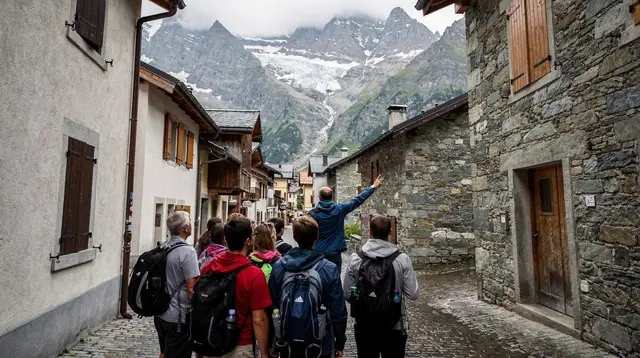
Hotels and independent guides sit slightly outside the strict “included by law” rule that governs restaurants and taxis, since they’re not always selling you a menu-priced service. If you take a guided walk through the Old Town or book something like the audio-guided exploration of Geneva’s hidden corners, a small tip for a guide who clearly went above and beyond is a nice gesture, not an expectation — the same logic as everywhere else here, just without a legal guarantee behind it.
This isn’t a Geneva quirk — it’s Swiss-wide
One thing worth knowing: this isn’t some Geneva-specific local custom you’ll need to relearn in Zurich or Lucerne. The included-service rule applies across Switzerland — French-speaking, German-speaking and Italian-speaking cantons alike. If your Geneva trip extends into a day in Montreux and the lakeside towns further east, or you head up into the mountains toward Zermatt or Verbier, the same rounding-up habit travels with you. You don’t need a different mental model for each stop.
It’s the same story in the mountain resort towns, where staff are used to a mixed international crowd of guests who each arrive with their own tipping instincts. Whether you’re settling a fondue bill after a day on the slopes near Verbier or paying for a coffee at altitude on a clear day out to Glacier 3000, the legal baseline doesn’t change — service is already in the price, and rounding up is a courtesy, not a requirement.
Where it does change is the moment you cross into France — Annecy, Chamonix, Évian. French tipping customs are closer to the Swiss ones than to American ones (service is also generally included there), but you’re now paying in euros instead of francs, which is its own adjustment I’ve written about separately, along with the practical side of crossing the border from Geneva and the fact that Switzerland isn’t part of the EU even though there’s usually no passport check.
What I tell first-time visitors
If you take away one thing from this: nothing is expected of you here. Not 20%, not 15%, not even a fixed 10%. If you pay the exact amount on the bill and walk out, you have done nothing wrong and no one will think less of you. Servers in Geneva are not silently judging your tip the way American service culture trains you to fear. The whole point of the law is that their livelihood doesn’t depend on your generosity.
That said, rounding up is genuinely appreciated when service was good, and it costs you almost nothing — a few francs on a CHF 60 dinner, spare change on a coffee. I’ve come to like it, actually. It’s a small, low-stakes kindness rather than a stressful calculation, and once you stop doing the percentage math in your head, it’s one less thing to think about on a trip through a city that already asks a lot of your budget elsewhere — see my notes on exploring the Swiss Riviera if you want a sense of where those other costs tend to show up.
For what it’s worth, I’ve never once seen a raised eyebrow over exact change at a Geneva till, and I’ve paid exact change more often than not. Save the mental math for converting Swiss francs to your home currency instead — that’s the number that actually moves the needle on a trip here. For a fuller sense of what things cost overall, see is Geneva really this expensive, and if you’re still building out the logistics of the trip, my notes on what the Geneva transport card actually covers and general trip-planning tips for Geneva cover the other budget questions that tend to come up around the same time as tipping.
If you’re planning a wider loop through the region — a day among the Lavaux vineyard terraces, a stop in Montreux, or a longer swing out to Chamonix — the same no-tip-required rule holds on the Swiss side of every one of those stops, and softens gently into French norms once you cross the border near Annecy or Évian-les-Bains.
Tipping in Switzerland: frequently asked questions
Is tipping expected in Switzerland?
No. By law, service is included in the displayed prices at restaurants, bars and taxis throughout Switzerland, including Geneva. You’re not expected to add anything on top, though rounding up or leaving a few francs for good service is a common, appreciated habit.
Is it rude not to tip in Geneva?
Not at all. Because service is already built into the price, paying the exact amount on the bill is completely normal and won’t be seen as rude, cheap or unusual. Staff are not relying on tips the way they might elsewhere.
How much should I tip at a Swiss restaurant?
There’s no expected percentage. The common local habit is to round the bill up to the next convenient franc or note — for example, turning a CHF 74 bill into CHF 80 — or to leave a few coins for particularly good service. Anything from CHF 0 to a handful of francs is normal; 15-20% is not the local benchmark.
Do you tip taxi drivers in Switzerland?
The fare already includes service, so no tip is required. Many people round up to the next franc or two out of convenience rather than obligation.
Should I tip hotel housekeeping or porters?
This isn’t governed by the same “included by law” rule as restaurants, since it isn’t an itemised service charge. A few francs left for housekeeping, or a franc or two per bag for a porter, is a nice gesture some travellers choose to make, but it’s genuinely optional and not a local expectation.
Does the no-tipping-required rule apply outside Geneva too?
Yes. It’s a Switzerland-wide legal standard, not a Geneva-specific custom, so the same approach applies whether you’re in Zurich, Lucerne, Zermatt or anywhere else in the country.
What about tour guides — should I tip them?
Independent guides and freelance-style tours (walking tours, some day-trip guides) fall a bit outside the strict restaurant/taxi rule. A small tip for a guide who clearly went above and beyond is appreciated, but it’s a personal choice, not an expectation, and no guide will treat you differently for not leaving one.
Is tipping different once I cross into France?
The currency changes to euros, but the underlying culture is similar — French service charges are also generally included in menu prices, and large American-style tips aren’t the norm in towns like Annecy, Chamonix or Évian either.
tours.Explainer
Verified deep-linked GetYourGuide tours. Book through these links and we earn a small commission at no cost to you.
GetYourGuide does not provide a product photo for this activity — the image shows the meeting point, photographed by us.