Artisan Workshops in Carouge: Hands-On Craft Classes
What kind of workshops can you do in Carouge?
Carouge is known for small-group hands-on sessions with local artisans — jewellers, ceramicists, and other craftspeople working out of courtyard studios and small shopfronts. Most sessions are booked directly with the individual artisan or studio, run on limited schedules, and cap the group size, so reserving ahead matters more than in central Geneva.
Why Carouge is different from central Geneva
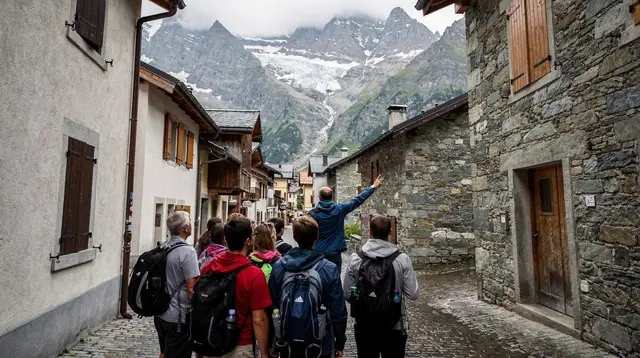
Carouge sits a short tram ride south of the Rhône, and it feels different from central Geneva the moment you arrive. The streets are narrower, the buildings lower, painted in warm ochres and pale plaster, with wrought-iron balconies and tiled roofs that give the district its distinctive look — an architectural style with Piedmontese inspiration, dating to when the town was laid out under Savoyard and Sardinian planning in the late eighteenth century, before it was eventually absorbed into the canton of Geneva. Carouge is a district of the City of Geneva today, not a separate historic Italian town and not an independent commune within the agglomeration — but the look and feel it inherited from that period are real, and they shape everything else about visiting here, including how its workshops work.
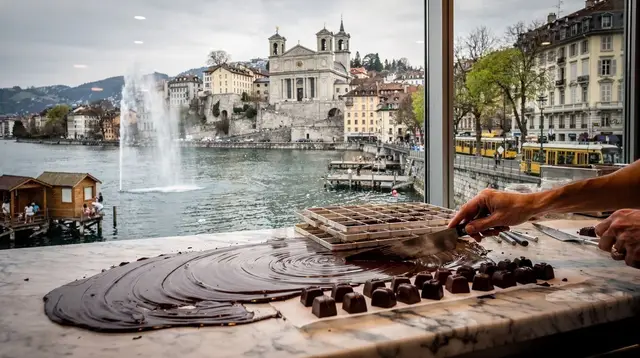
What Carouge has kept from that history is a genuine concentration of independent artisans. Behind unassuming shopfronts and through quiet interior courtyards, jewellers, ceramicists, cabinetmakers, and other craftspeople still work in small studios, many of them open to visitors who want to do more than window-shop. This is the heart of what makes a Carouge workshop worth planning around: not a generic escape-room chain or a large group activity, but a small, hands-on session with someone who actually practices the craft, in the same room where they make their living from it.
If you are looking for a broader mix of escape games and larger-format group activities across Geneva, the Geneva workshops and games guide covers that ground. This page is about the narrower, quieter alternative that Carouge specialises in.
What “artisan workshop” means in Carouge
The workshops most associated with Carouge are built around a single, specific skill, taught in a small group over a defined session — typically somewhere between ninety minutes and half a day, depending on the craft and the studio. Common formats include:
- Jewellery-making: shaping, soldering, or setting a simple piece under an instructor’s guidance, often in a working jeweller’s own studio.
- Ceramics: hand-building or wheel-throwing a small piece, sometimes glazed and fired for later collection.
- General craft sessions: shorter introductory classes in a specific technique — engraving, leatherwork, or similar — run periodically by individual ateliers.
What unites these is the format, not the craft itself: small groups, a specific and narrow skill, and direct contact with the person teaching it. This is a different proposition from a themed outdoor escape game that sends a team roaming across a district solving clues — Geneva’s escape-game format exists and is genuinely popular, including a version set in Carouge itself, but it is a separate kind of activity from an artisan workshop, and this page keeps the two distinct rather than blending them.
Jewellery and ceramics in more depth
The two crafts most visitors associate with Carouge are jewellery-making and ceramics, and they work quite differently as a booked session, which is worth knowing before you pick one.
A jewellery workshop typically takes place in a working jeweller’s own studio — the same bench, tools, and cabinets the artisan uses for commissioned pieces the rest of the week. Sessions are usually built around a single technique: soldering a simple band, setting a stone, or shaping and polishing a small pendant. Because the tools involved (torches, saws, polishing wheels) require close supervision, group sizes tend to sit at the smaller end of the range, and the instructor works closely with each participant rather than demonstrating once to the whole room. What you make is usually finished enough to take home the same day, though a piece that needs a stone set or a final polish may occasionally need a short turnaround.
A ceramics session is more forgiving of group size and more physical: hand-building a simple piece from a slab or coil of clay, or trying a potter’s wheel under guidance, with the shaping itself taking up most of the session. The finishing step is where ceramics differs most from jewellery — a piece needs to dry, be fired in a kiln, and often glazed and fired a second time, a process that takes well beyond the length of the workshop itself. Studios handle this in different ways: some post finished pieces once fired, others hold them for collection on a later visit to Geneva, and a few offer a simplified same-day process for a less finished but immediately collectable result. None of this is standard across studios, which is exactly why confirming the process directly with the atelier before booking matters more here than for almost any other activity in this guide.
Both crafts share the same underlying appeal: you leave with a concrete sense of a skill, not just a souvenir, taught by someone whose actual livelihood is that skill.
Carouge’s craft markets
Beyond individual studio bookings, Carouge is also known for periodic craft markets, when artisans from the district and beyond set up stalls in its squares and streets — a good way to see a wide cross-section of local making in a single visit, even without booking a hands-on session. These events cluster in the warmer months and around key dates in the local calendar, and they draw a noticeably different crowd than an ordinary weekday in the district: more foot traffic, more stalls, and artisans who are on the market circuit rather than in their usual studio for the day. If a workshop with a specific maker matters more to you than a market atmosphere, it is worth checking whether your visit coincides with one of these events, since some artisans reduce or pause their regular studio hours while they are occupied with a market stall instead.
What to expect during a session
Walking into a working studio for a booked session is a different experience from a typical group activity, and a few practical expectations help it go smoothly. Studios are usually small, working spaces rather than purpose-built classrooms, so group sizes stay modest by necessity rather than as a deliberate luxury touch. Expect the instructor to speak from direct experience rather than a scripted tour — questions about technique, materials, or the craft’s history in the region are generally welcome and often answered in more depth than a larger, more formal class would allow.
Because these are working studios, punctuality matters more than it might at a larger attraction with rolling entry: arriving on time (or a few minutes early) respects both the artisan’s schedule and the other participants sharing a limited bench or wheel. Photography is usually fine to ask about, though flash and video can be disruptive in a small working space, so it is worth checking with the artisan rather than assuming. And because sessions are often owner-run rather than staffed by a rotating team, a short thank-you or a look at the artisan’s other work on display is a natural and appreciated way to close out the visit, particularly if you plan to return for a piece that needed later firing or finishing.
Booking directly with artisans
The single most important practical point about Carouge’s workshops is how they are booked. Unlike a large city-centre activity provider with a standing booking platform, most artisan sessions in Carouge are arranged directly with the individual studio or maker — by phone, email, or a booking form on the artisan’s own website. There is no single central booking hub covering every atelier in the district.
This has real consequences for planning:
- Schedules vary enormously. One studio might run a fixed weekly class; another might only take bookings when the artisan has a free afternoon between commissioned work. There is no single opening-hours pattern to rely on.
- Group sizes are often small. Many studios cap sessions at somewhere between four and ten participants, sometimes fewer, because the workspace and the instructor’s attention are both limited.
- Language and format should be confirmed ahead. Ask directly whether the session runs in English, what materials are included, and whether anything you make needs later collection (fired ceramics, set jewellery) or can be taken home immediately.
Because of this, the practical approach for visiting Carouge with a workshop in mind is to treat it as an errand to run before your trip, not something to improvise by walking in. Identify a studio, confirm a date and language directly with them, and build the rest of your Carouge visit — its cafés, boutiques, and courtyards — around that fixed appointment.
A realistic half-day in Carouge
A workshop session pairs naturally with the rest of what Carouge offers, since the district itself is compact enough to see well in a few hours on foot. A workable shape for a half-day visit:
| Time | Activity |
|---|---|
| Morning | Arrive by tram, browse independent boutiques and courtyards near Place du Marché |
| Midday | Lunch at a neighbourhood café or bistro |
| Afternoon | Artisan workshop session (booked in advance) |
| Late afternoon | Coffee or a final wander before heading back into central Geneva |
For a fuller sense of what else the district offers on foot, the Carouge walking tour guide and the Carouge food guide both cover ground this page does not, and combine well with a workshop booked for the same afternoon.
How Carouge compares to central Geneva for this kind of activity
Central Geneva has a larger, more varied roster of bookable group activities, including outdoor escape games that use the Old Town and lakefront as their setting. Carouge’s advantage is scale in the other direction: fewer options, but each one narrower, more personal, and centred on an actual working craftsperson rather than a themed group format.
| Central Geneva | Carouge | |
|---|---|---|
| Typical format | Outdoor escape games, city tours, tastings | Small-group artisan workshops |
| Group size | Often larger, flexible | Often capped, small |
| Booking | Standing platforms, wider availability | Frequently direct with the artisan |
| Setting | Old Town, lakefront, international district | Courtyard studios, small shopfronts |
| Best for | A broader group activity with more built-in structure | A focused, hands-on session with a specific craft |
If your priority is an easy-to-book group activity with flexible timing, central Geneva’s offer is the more dependable starting point — see the main Geneva workshops and games guide for that. If your priority is learning one specific craft from someone who does it for a living, in a quieter setting, Carouge is worth the extra planning it takes.
Pairing a workshop with a guided introduction to Geneva
Because a Carouge workshop is a fixed appointment on the artisan’s calendar rather than something you can improvise, many visitors use the rest of the day for a more structured, guided look at Geneva itself, rather than trying to fit in another self-directed stop. A local guide can cover ground efficiently in the hours before or after a studio session: a private walking tour of Geneva with a local guide adapts its pace and route to whatever time you have left in the day, and works equally well as a morning primer before an afternoon workshop or a wind-down after one. Visitors with a tighter window can instead consider a private sixty-minute express walk with a local guide, which fits into a gap of an hour or so without crowding the rest of the schedule.
For those who want the guide’s focus to stay on craft and culture rather than general orientation, an introductory art and culture tour of Geneva with a local guide is a closer thematic match to a day built around Carouge’s artisan tradition, touching on the city’s broader creative and cultural history rather than only its landmarks.
Bookable Carouge and Geneva activities
Carouge itself also has a bookable outdoor escape-game format that combines puzzle-solving through the district’s streets with wine tastings along the way — a different but complementary experience to an artisan studio session, and one that needs no advance arrangement with an individual maker. You can reserve it through an outdoor escape game through Carouge paired with wine tastings.
For a similar format set in central Geneva instead, with beer tastings along the route, there is an outdoor escape game through central Geneva with beer tastings. Travellers who prefer a tasting-led session over a puzzle format can look at a guided cocktail or mocktail tasting session in Geneva as a lower-key alternative for an evening.
Watchmaking is Geneva’s other great artisan tradition, and it is bookable in a structured format even without a direct studio booking: a mobile introductory watchmaking workshop that runs at locations across Switzerland offers a hands-on taste of the skill behind the city’s watchmaking heritage, which you can read more about in the Geneva watchmaking guide.
Planning notes and nearby options
Carouge is reachable by tram from central Geneva in a matter of minutes, which makes it realistic to fit a workshop into a day that also includes time in the Geneva Old Town or along the Jet d’eau and lakefront. If you are building a broader itinerary around Geneva and its surroundings, the one-day Geneva essentials itinerary and the three-days Geneva on a budget itinerary both allow room to add a half-day for Carouge without disrupting the rest of the plan.
For visitors weighing this district’s other draws, the Carouge walking tour guide covers its streets and courtyards in more depth, and the things to do in Geneva Old Town hub is a natural pairing if you are treating Carouge as an afternoon extension of a central Geneva day. Anyone still deciding between a themed group activity and a craft-focused session should also glance at the Geneva games and workshops guide, which lays out the central-Geneva alternatives to what this page describes.
Because so much of the Carouge workshop experience depends on a specific artisan’s calendar, the most useful single piece of planning advice is the simplest: pick a studio, reach out directly, and lock in a date before finalising the rest of your Geneva schedule around it.
Games and Local Workshops
Verified deep-linked GetYourGuide tours. Book through these links and we earn a small commission at no cost to you.
GetYourGuide does not provide a product photo for this activity — the image shows the meeting point, photographed by us.