What Gstaad actually is, and isn’t
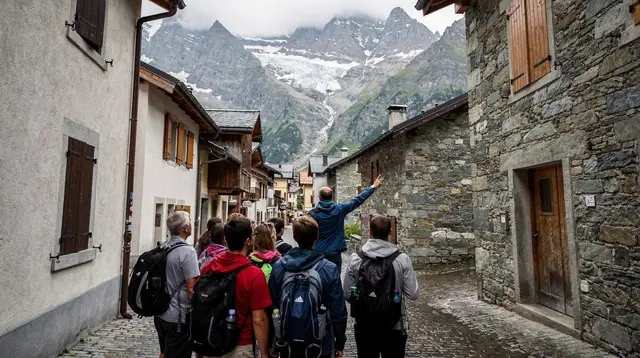
Gstaad has a reputation that arrives well ahead of the village itself: a byword for old-money Alpine chic, wood-shingled chalets, discreet boutiques and a guest list that has included royalty and film stars for the better part of a century. That reputation is largely accurate, and it’s the honest reason to go. What Gstaad is not is a dramatic mountain destination in the way that Zermatt or Glacier 3000 are. The village itself sits at a modest altitude in a gentle, pastoral valley, and there is no single defining view here to rival the Matterhorn or a genuine glacier panorama. If the goal of a Swiss Alps trip is jaw-dropping scenery in the village itself, Gstaad tends to disappoint travellers who arrive expecting one.
A second point worth stating plainly before booking anything: Gstaad is not a short hop from Geneva. It sits in the German-speaking Bernese Oberland, on the opposite side of the linguistic and cantonal divide from the French-speaking Valais resorts most Geneva-based travellers compare it to. Reaching it means a rail journey of roughly three hours with one or two changes, typically via Montreux and the MOB (Montreux-Oberland Bernois) panoramic line, or via Bern. That’s a genuine commitment, closer to a full day trip with limited time on the ground, or better treated as an overnight.
None of this makes Gstaad a bad idea. It makes it a specific idea: a village to visit for its atmosphere, its shopping, its chalets and its festival calendar, and secondarily as a base for skiing or walking in the surrounding Saanenland hills — not a bucket-list mountain panorama stop.
Geography and how Gstaad differs from its Valais neighbours
Gstaad sits in the canton of Bern, in the German-speaking region known locally as the Saanenland, even though the village and much of the local tourism industry operate comfortably in French and English alongside Swiss German. This is the detail that most clearly separates Gstaad from Verbier, Crans-Montana and Zermatt, all of which sit across the border in French-speaking Valais. The four resorts get grouped together informally as “smart Swiss ski towns,” but Gstaad’s identity leans further toward mondaine prestige — see-and-be-seen shopping streets, a famous horse-jumping and polo calendar, classical music in summer — while the Valais resorts lean harder into serious skiing and high-mountain scenery as their primary draw.
The village itself sits at roughly 1,050 metres, considerably lower than Verbier (about 1,500m) or Zermatt (about 1,600m), and well below the altitude needed for the kind of glacier and high-peak views those two offer. Skiing around Gstaad reaches into higher terrain on the surrounding ridges, but the resort’s charm is more about the valley floor experience — the main street, the chalets, the hotels — than about what you see from any single point.
Getting there from Geneva
There is no direct train from Geneva to Gstaad. The realistic routes both take about three hours door to door:
| Route | Approximate time | Notes |
|---|---|---|
| Via Montreux (MOB line) | ~3 hours | Change in Montreux onto the GoldenPass/MOB panoramic line; scenic but slower final stretch |
| Via Bern | ~3-3.5 hours | Faster mainline running via Lausanne and Bern, then a branch line south |
Either way, expect at least one change, and build in buffer time around connections — this is not a route to attempt on a tight same-day return if you also want meaningful time in the village. Given the travel time, a day trip from Geneva to Gstaad realistically leaves only a few hours on the ground before the return journey needs to start, which is one of the clearest reasons this destination sits lower in most Geneva-based itineraries than Chamonix or Lausanne.
Gstaad village: what there is to see
The core of a Gstaad visit is the village itself. The main promenade is lined with wood-shingled chalet-style buildings, many housing high-end boutiques, jewellers and hotels rather than everyday shops — window-shopping here is as much the activity as buying anything. The architecture is genuinely attractive and consistent, a result of strict local building codes that have kept the chalet look intact for decades, and it photographs well in both summer greenery and winter snow.
Beyond the main street, there isn’t a long list of individual sights the way there is in a historic town like Fribourg or Gruyères. Gstaad’s appeal is atmospheric rather than monumental: a walk through the village, a coffee or lunch on a hotel terrace, and time spent absorbing the setting counts as a satisfying visit for most travellers who come with realistic expectations. Those expecting a specific landmark to check off may come away feeling there wasn’t quite enough to do — worth knowing before committing a full day of travel.
The surrounding Saanenland: skiing and hiking
Where Gstaad earns its keep as more than a shopping street is in the surrounding hills, collectively known as the Saanenland ski and hiking region. In winter, lift-linked slopes fan out from several villages around Gstaad (Saanen, Schönried, Saanenmöser, Zweisimmen), with terrain suited to intermediate skiers and a noticeably calmer, less crowded feel than some larger Valais resorts in peak weeks — though peak-season Gstaad itself, driven by its social calendar as much as its ski conditions, can still be busy and expensive.
a private morning ski lesson in Gstaad, pitched to any level is a practical way to make the most of a short winter stay, especially for skiers unfamiliar with the local lift network who don’t want to burn half a day figuring it out alone.
In summer, the valley opens up for hiking and mountain biking across a network of well-marked trails through alpine meadows and forest, generally gentle to moderate rather than high-alpine and exposed. It’s a pleasant, unhurried hiking base rather than a destination for serious mountaineers, which fits the resort’s overall character: comfortable rather than extreme.
Comparing Gstaad honestly to its rivals
It’s worth being direct about how Gstaad stacks up against the destinations Geneva-based travellers usually weigh it against, since the marketing around all four can blur together:
| Resort | Canton / language | Altitude of village | Main draw |
|---|---|---|---|
| Gstaad | Bern (German) | ~1,050m | Prestige, chalets, festivals |
| Verbier | Valais (French) | ~1,500m | Serious skiing, lively après-ski |
| Crans-Montana | Valais (French) | ~1,500m | Sunny plateau, golf, skiing |
| Zermatt | Valais (French) | ~1,600m | Matterhorn views, car-free village |
If the priority is a dramatic mountain panorama in the village itself, Zermatt or a trip up to Glacier 3000 delivers something Gstaad structurally cannot, given its lower, gentler setting. If the priority is a livelier ski scene with strong terrain, Verbier is usually the better match. Gstaad’s case rests on its village atmosphere and social cachet, not on out-competing either on scenery or skiing.
Festivals and the summer social calendar
Gstaad’s summer season centres on the Menuhin Festival, a well-regarded classical music festival running roughly from mid-July into early September, along with equestrian and polo events that draw an international crowd. These events noticeably raise both the atmosphere and the prices during their run — accommodation books up and rates climb, so travellers hoping for a quieter, better-value visit should generally look outside these windows, in late spring or early-to-mid autumn.
Combining Gstaad with the wider region
Because of the travel time involved, Gstaad works best folded into a longer loop through the Bernese Oberland and Swiss Riviera rather than visited in isolation from Geneva. A day that connects Gstaad with Montreux and Château de Chillon via the same MOB corridor makes efficient use of the rail line, and an a private day trip linking Gstaad with Glacier 3000, Montreux and Vevey covers that ground without the logistics of separate train connections.
Travellers heading further into the Bernese Oberland can also consider a private day trip from Gstaad toward Jungfraujoch and Grindelwald, which reaches genuinely high-alpine terrain that the Gstaad valley itself doesn’t offer — useful context for setting expectations correctly before booking. For travellers whose main goal really is a single spectacular Alpine view, it’s worth comparing this against the more direct Zermatt day trip options from Geneva or a stop at Glacier 3000, both closer to that specific goal than Gstaad is.
Two other Bernese Oberland towns often paired with Gstaad on longer trips, Interlaken and Lucerne, sit further north and involve their own separate travel legs — reachable as long day trips or overnights from Geneva in their own right, and worth planning as a distinct extension rather than an add-on to a single Gstaad day.
Budgeting for Gstaad
Gstaad’s prices sit at the upper end even by Swiss standards, reflecting its positioning as a luxury resort rather than a budget mountain town.
| Item | Typical cost (CHF) |
|---|---|
| Coffee | 5-7 |
| Simple lunch | 25-35 |
| Mid-range dinner | 60-90 per person |
| 3-star hotel double room | 200-350+/night |
| Ski day pass (Saanenland) | ~70-80 |
As throughout Switzerland, prices are in Swiss francs, VAT is already included in every displayed price, and no additional tip is expected — service is built into the bill by law, and rounding up is the local norm rather than a 15-20% addition.
A realistic verdict
Gstaad rewards travellers who go in with accurate expectations: a polished, expensive, atmospheric chalet village with a genuine social pedigree, set in gentle rather than dramatic terrain, reached by a real three-hour rail journey from Geneva rather than a quick excursion. It is a legitimate stop for a longer Switzerland trip, a ski base within the Bernese Oberland, or a festival-season visit — but for travellers whose main goal is a single unforgettable Alpine panorama on a tight schedule from Geneva, the Valais resorts or Glacier 3000 are the more direct answer.
Gstaad travel questions, answered
Is Gstaad a good day trip from Geneva?
It’s possible but tight. The journey takes about three hours each way with a change, so a same-day round trip leaves only a few hours in the village itself. Travellers with limited time are often better served by closer options; those set on Gstaad may get more out of an overnight stay.
How do you get from Geneva to Gstaad without a car?
By train, via Montreux on the scenic MOB panoramic line or via Bern on faster mainline services, with one or two changes either way. There is no direct train.
Is Gstaad in French-speaking or German-speaking Switzerland?
German-speaking. Gstaad sits in the canton of Bern, in the Saanenland region, which sets it apart from the French-speaking Valais resorts (Verbier, Crans-Montana, Zermatt) it’s often compared to, though English and French are both widely used in the tourism industry there.
Does Gstaad have views comparable to Zermatt or Glacier 3000?
No. Gstaad’s village sits at a modest altitude in a gentle valley with no single dramatic panorama; travellers seeking high-mountain or glacier views are better served by Zermatt or Glacier 3000.
Is Gstaad expensive?
Yes, consistently among the pricier destinations in this region, with hotel rates, dining and shopping all reflecting its position as a luxury resort, particularly during the summer festival season and peak winter weeks.
What is Gstaad best known for?
A combination of chalet-style architecture, high-end boutiques, an international social and celebrity following, the summer Menuhin classical music festival, and equestrian and polo events, alongside moderate skiing and hiking in the surrounding Saanenland hills.
When is the best time to visit Gstaad?
Winter (December to March) for skiing, or July-August for the festival calendar. Late spring and autumn are quieter and considerably less expensive, though some hotels and lifts scale back operations in those shoulder periods.
Can Gstaad be combined with other Swiss destinations in one trip?
Yes — it sits on the same MOB rail corridor as Montreux, Château de Chillon and Glacier 3000, making a combined day or multi-day loop through the Swiss Riviera and Bernese Oberland more efficient than visiting Gstaad on its own from Geneva.