Hiking in Crans-Montana: Trails, Views and Getting There from Geneva
Is Crans-Montana a good hiking base for a day trip from Geneva?
Yes for a sunny, easy-access plateau with lift-served viewpoints and family-friendly trails. It is about two and a half to three hours from Geneva by car or train, noticeably faster than Zermatt, but it does not offer a direct view of the Matterhorn or guaranteed snow on its upper trails outside winter.
What hiking in Crans-Montana actually looks like
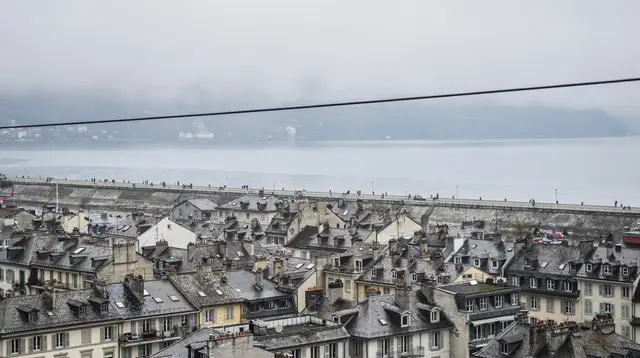
Most guides to Valais hiking jump straight to Zermatt and the Matterhorn, which is fair — it’s the region’s single most photographed mountain. But Crans-Montana sits at the other end of the trade-off: a sunny, gently sloped plateau above the Rhône valley, built up as a golf and wellness resort, with hiking that ranges from flat lakeside strolls to lift-served alpine viewpoints. It is not a high-alpine destination in the way Zermatt or Chamonix are, and it will not put the Matterhorn or Mont Blanc in your photos. What it does offer is an unusually fast, easy trip from Geneva for a genuine change of scenery — vineyards and valley floor giving way to pine forest, alpine lakes and a glacier basin, all within a couple of hours’ drive. For a broader sense of how it stacks up against the rest of the region’s mountain excursions, see this site’s overview of day trips from Geneva.
The plateau itself sits at around 1,500 metres, already high enough for cooler air and long views back down into the Rhône valley. From there, trails fan out in two directions: gentle paths around the resort’s lakes and golf courses that need no fitness at all, and steeper routes climbing toward Bella Lui and, further still, the edges of the Plaine Morte glacier plateau. This guide covers both, plus the practical logistics of getting up from Geneva and back in a day, or staying over for a more relaxed pace.
Getting to Crans-Montana from Geneva
There is no direct train to Crans-Montana itself — the plateau isn’t on the rail network — so the trip combines a train or drive up the Rhône valley with a final climb by road, funicular or cable car.
| Method | Approx. time from Geneva | Notes |
|---|---|---|
| Car via A9 motorway | 2.5-3 hours | Direct to Crans-Montana; roughly 45 min of that is the winding final ascent |
| Train to Sierre + funicular | 2.5-3 hours total | SBB/CFF to Sierre, then the funicular up to Crans-Montana |
| Organised day tour | Varies by itinerary | Transport handled for you; useful if you’d rather not drive the mountain road |
Because the door-to-door time lands around two and a half to three hours, Crans-Montana works as a long but manageable day trip from Geneva — noticeably shorter than the roughly four hours it takes to reach Zermatt, where the added complication of parking in Täsch and finishing the journey by shuttle train adds further time; this site’s piece on the real distance to the Matterhorn from Geneva breaks down why that trip runs so much longer. If a full day of hiking feels tight around six hours of round-trip travel, an overnight on the plateau removes the time pressure entirely and leaves a full day free for trails — see three days between the lake and the mountains for one way to structure that longer stay.
A private transfer is worth considering if you’d rather not drive the mountain approach road yourself, particularly after a full day on foot: a private transfer between Crans-Montana and Geneva Airport covers the door-to-door leg directly.
Bella Lui: the easiest big view on the plateau
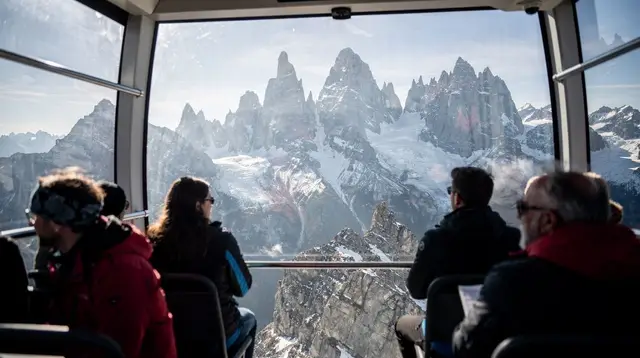
The fastest way to get above the tree line without a serious climb is the cable car up to Bella Lui, one of the plateau’s signature viewpoints. The lift does the bulk of the ascent, so from the top station it’s a short, well-marked walk to the viewpoint itself — a genuine panorama over the Rhône valley, the Bernese Alps on the far side, and the ridgelines that separate Crans-Montana from the rest of Valais.
Because the climb is handled by the cable car, Bella Lui suits visitors who want a real mountain view without committing to a half-day hike, including families with children or anyone short on time. It also works as a starting point for longer routes: hikers who want more distance can continue on foot along ridge trails rather than riding back down immediately. Lift schedules and last-descent times shift with the season, so it’s worth checking current operating hours before heading up, particularly outside the main summer months.
Toward Plaine Morte: a glacier basin, not the Mont Blanc glaciers
Some of the higher routes out of the Crans-Montana lift network continue toward the edges of the Plaine Morte glacier plateau, a broad, relatively flat icefield rather than a dramatic peak. It’s worth being clear about what this is and isn’t: Plaine Morte is a Valais glacier reached from the Crans-Montana side, entirely separate from the Mont Blanc massif glaciers — the Mer de Glace above Chamonix, for instance — which sit across the border in France and are covered elsewhere on this site.
Confusing the two is an easy mistake to make when comparing itineraries, since both involve cable cars, ice and the word “glacier,” but they are different mountain systems roughly a hundred kilometres apart. Within Switzerland itself, Glacier 3000 above Les Diablerets is another lift-served ice field worth knowing about if Plaine Morte’s snow cover turns out to be thin on the day — see the dedicated Glacier 3000 hiking guide for how that compares.
Trails approaching the Plaine Morte basin are firmly in mountain-hiking territory: longer, higher, and more exposed than the plateau-level paths, better suited to hikers with some experience and appropriate footwear. Snow cover on and around the glacier varies significantly by year and by month — a permanent icefield does not mean a guaranteed, unchanging snow blanket on every approach trail, and patches that look solid in June can be gone by August in a warm year. Check current conditions and lift status before planning a route that assumes snow will be there, and be prepared to turn back or choose a lower alternative if conditions don’t match the forecast.
Easier trails: lakes, golf courses and the plateau floor
Not every trail in Crans-Montana demands a lift ticket or a climb. The plateau itself, threaded between its golf courses and small lakes, has a network of flat, well-surfaced paths that need no particular fitness or hiking experience — genuinely suitable for families, casual walkers, or anyone using a rest day between more strenuous outings. These lower routes are also where the resort’s character as a sunny, laid-back plateau comes through most clearly: wide open views across the valley, benches and cafés along the way, and none of the exposure of the higher alpine trails.
This split — easy plateau walking at the bottom, lift-served viewpoints and glacier-adjacent trails higher up — is what makes Crans-Montana workable for mixed groups where not everyone wants the same day. One person can ride Bella Lui and push on toward the ridgelines while another takes a gentle loop around the lakes, and both are back at the same hotel or train by evening.
For a change of pace after a day on foot, the plateau’s wellness side is genuinely part of its identity: a spa afternoon is a realistic way to close out a hiking day here, in a way it typically isn’t in a purely alpine base — see the Crans-Montana spa and thermal guide for what’s available locally.
Crans-Montana versus Zermatt: choosing between them
Both are Valais mountain destinations reachable from Geneva, and both get compared constantly, but they suit different trips.
| Crans-Montana | Zermatt | |
|---|---|---|
| Travel time from Geneva | ~2.5-3 hours | ~4 hours |
| Car access | Drive to the resort | Car left in Täsch, shuttle train in |
| Character | Sunny plateau, golf/wellness resort | High-alpine village, car-free |
| Signature view | Rhône valley, Bernese Alps, Plaine Morte basin | The Matterhorn |
| Best suited to | Families, day trips, easier trails | Serious alpine scenery, longer stays |
Neither is a strict upgrade on the other. If the goal is standing somewhere with the Matterhorn in front of you, only Zermatt delivers that, and no route out of Crans-Montana gets you there — it’s a different valley entirely. If the goal is a sunny, easy-to-reach plateau with a real mountain view for relatively little effort, and time from Geneva is tight, Crans-Montana is the more efficient choice.
Travellers weighing both can also look at it from the Zermatt side directly: a day trip from Geneva to Zermatt covers that longer but iconic alternative, and those who’d rather ride a cable car all the way to the glacier can compare it with the Zermatt day trip with the Glacier Paradise cable car option. Chamonix, on the French side of the border, is a third alpine option worth weighing alongside both — this site’s Chamonix versus Zermatt comparison covers that pairing in more detail, and the Chamonix hiking guide lays out what a day there looks like on foot.
Planning around the seasons
Crans-Montana runs on two distinct seasons, much like the rest of alpine Valais. In winter, the plateau turns into a ski resort, and lift infrastructure shifts toward skiing rather than summer walking trails; anyone visiting between roughly December and April should expect a snow-sports focus rather than open hiking routes on the upper mountain — the Crans-Montana winter sports guide covers that season in full, and a winter weekend from Geneva itinerary shows how it can fit into a short trip. A Swiss Alps skiing and snowboarding day trip is a reasonable way to sample the winter side of the plateau, and for anyone new to the slopes, private ski lessons are available locally.
Summer hiking season runs roughly from June through September, with the exact window depending on snowmelt at altitude in a given year — the higher trails toward Plaine Morte open later than the plateau-level paths. Shoulder-season visitors (late spring, early autumn) get quieter trails and often clearer light for the valley views, but should check lift and trail status in advance, since some upper sections close earlier or open later than the main season.
Slower alternatives on the plateau
Not every visit to Crans-Montana needs to center on a summit push. For those who’d rather stay closer to ground level, a guided nature reset and mindfulness session in Crans-Montana is built around the plateau’s calmer, forested side rather than its viewpoints — a useful counterpoint on a trip that also includes a harder hiking day, or a good option for anyone travelling with a mix of energetic and less energetic companions.
Practical notes before you go
A few points worth confirming before setting out, since conditions on any alpine plateau shift through the season:
- Lift schedules change seasonally. The Bella Lui cable car and other plateau lifts run shorter hours, or close entirely, outside the main summer and winter seasons — check current timetables rather than assuming year-round service.
- Footwear matters more the higher you go. Plateau-level paths around the lakes are fine in ordinary shoes; routes toward Bella Lui or Plaine Morte call for proper hiking boots and layered clothing, since weather can turn quickly at altitude.
- Don’t count on snow for photos outside winter. Plaine Morte is a glacier, not a snowfield that’s guaranteed white every month — check current conditions if a snowy backdrop is part of the plan.
- The Matterhorn isn’t visible from here. If that view is the priority, the trip needs to be to Zermatt, not Crans-Montana — no trail on this plateau reaches a Matterhorn vantage point.
- Weekend traffic on the A9 can add time. Summer weekends and the start/end of ski season see heavier traffic on the Rhône valley motorway; building in extra time avoids a rushed arrival.
Frequently asked questions about hiking in Crans-Montana
How far is Crans-Montana from Geneva?
Roughly two and a half to three hours by car via the A9 motorway through the Rhône valley, or a similar time by train to Sierre followed by the funicular up to the plateau. It is a realistic long day trip from Geneva, though an overnight lets you hike without rushing back.
Can you see the Matterhorn from Crans-Montana?
No. The Matterhorn belongs to the Zermatt skyline, well to the east across the Valais. Crans-Montana’s viewpoints face the Rhône valley, the Bernese Alps and the Plaine Morte glacier basin, not the Matterhorn.
What is the easiest way to get a mountain view without a long hike?
The cable car up to Bella Lui does most of the climbing for you, putting a panoramic viewpoint within a short walk of the top station. It’s the fastest way to get above the plateau if time is limited.
Is snow guaranteed on the trails near Plaine Morte in summer?
No. Plaine Morte is a glacier and permanent snow can linger into early summer in some years, but conditions vary from one season to the next and patches can melt out earlier than expected. Check current trail and lift status before planning a route that depends on snow cover.
Is Crans-Montana better than Zermatt for a day trip from Geneva?
It depends on the goal. Crans-Montana is faster to reach, sunnier on average, and suits families and golf-resort travellers who want an easy plateau walk. Zermatt takes about four hours and requires leaving the car in Täsch, but it delivers the Matterhorn view that Crans-Montana cannot.
Do you need to be an experienced hiker to walk around Crans-Montana?
No. Many of the plateau-level trails around the lakes and golf courses are flat and well-signed, suitable for casual walkers and families. Routes climbing toward Bella Lui or the Plaine Morte area are more demanding and better suited to hikers with some mountain experience.
What else is there to do in Crans-Montana besides hiking?
The plateau is known as a golf and wellness resort, with courses, spas and lake-side walking paths that don’t require a lift ticket. It’s a gentler base than the high-alpine resorts further into Valais.
Alpine and Lakeside Hiking
Verified deep-linked GetYourGuide tours. Book through these links and we earn a small commission at no cost to you.
GetYourGuide does not provide a product photo for this activity — the image shows the meeting point, photographed by us.