3 Days: Lake and Mountains by Public Transport
Geneva sits at a genuine crossroads: the Swiss lakeshore runs east toward Montreux, and the French Alps rise less than two hours away toward Chamonix. This three-day plan links both without ever needing a car — trains and buses cover every leg, but the timings below are realistic, not optimistic, and one of the three days crosses an international border.
Why this itinerary is different from a pure Swiss riviera trip
Plenty of Geneva itineraries stay entirely inside Switzerland, pairing the city with Lausanne and the Lavaux vineyard terraces. This one does that too, on Day 2, but Day 3 leaves Switzerland altogether for Chamonix in France. That single border crossing changes the packing list and the paperwork: bring a valid passport or national ID card. Switzerland is inside the Schengen Area, so there’s no routine passport check at the frontier, but you are still leaving Swiss territory and identification should be on you, not left at the hotel.
Before you go: the transport backbone
Two journeys anchor this trip, and neither should be treated as flexible on the day:
| Route | Mode | Typical time | Notes |
|---|---|---|---|
| Geneva → Montreux | Direct train (SBB/CFF) | About 1 hour | Frequent departures from Genève-Cornavin, roughly every 30 minutes |
| Geneva → Chamonix | Bus, or train + bus/shuttle | Roughly 1-1.5 hours | No single direct train; a change is normal, not a sign something went wrong |
Visitors staying in registered Geneva accommodation get a free Geneva Transport Card, valid on the Unireso network of city buses, trams and regional trains — useful for getting around Geneva itself on Day 1, though it doesn’t cover the Montreux or Chamonix legs. Check current Léman Express and bus schedules the evening before each departure rather than assuming yesterday’s timetable still applies.
Day 1: Geneva old town and the lakefront
Start where the city concentrates its landmarks within easy walking distance, using transit only if your hotel sits further out.
Begin at the Old Town, climbing to St-Pierre Cathedral — the nave is free, but the towers and the archaeological site beneath the building are separate, paid tickets, worth booking if you want the view over the rooftops. A short walk away, the Reformation Wall sits at the edge of the Parc des Bastions. For an oriented first pass through these streets, a guided walk works better than wandering blind — consider the Unusual Audio Tour of Geneva, which threads through the old town at your own pace.
In the afternoon, head down to the lakefront to see the Jet d’eau, Geneva’s 140-metre fountain — it’s free to view but not guaranteed to be running: it’s switched off in strong wind and below about 2°C, and runs shorter hours in winter than in summer. Walk or take a short tram ride toward Bains des Pâquis, the bathing pier that doubles as a public sauna and swimming spot depending on season.
If time and energy allow, cross to International Geneva to see the flag-lined avenue outside the Palais des Nations — note that entering the building itself requires a pre-booked guided tour and valid ID, not a walk-up visit. For a broader city overview with a guide handling the logistics, the Private City Tor of Geneva covers the old town and lakefront highlights in one outing. End the day in Carouge, the artisan quarter with a different, more relaxed atmosphere than the compact old town, good for an early dinner.
For a fuller half-day structure, see the one-day Geneva essentials itinerary — this trip compresses a similar route into an afternoon and evening.
Day 2: Montreux and Château de Chillon
Take the direct train from Genève-Cornavin to Montreux, roughly one hour. Buy or validate your ticket before boarding rather than assuming free Unireso coverage extends this far — it doesn’t.
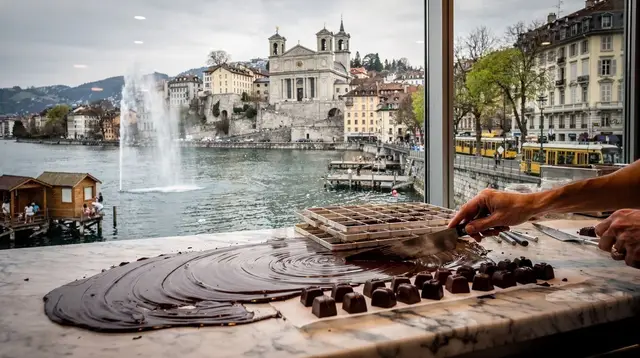
Château de Chillon is near Montreux, not Geneva — plan for it here, not as a Geneva-day add-on. From Montreux station, it’s a short ride (bus or lakeside walk) to the castle, which sits directly on the water and requires a paid ticket. Book a morning slot if the season is busy, since it’s the single most-visited stop on this leg of the trip.
Back in Montreux itself, the lakefront promenade is the town’s main draw — flower gardens, lake views toward the French Alps on a clear day, and the statue of Freddie Mercury near the pier. A compact orientation walk works well here too: the Montreux: 1 Hour Discovery Walk covers the promenade and old quarter in about an hour, leaving the rest of the afternoon free for the castle or the lakefront at your own pace.
If you’d rather have the whole Geneva-to-Montreux leg, including Chillon, arranged as one outing with a driver-guide, the From Geneva to Montreux Tour bundles the transfer and sightseeing together — useful if train connections feel like one thing too many to manage on a trip already built around timed departures.
Travelers with an extra day to spare on this stretch, rather than continuing to Chamonix, could swap in the Lavaux vineyard terraces between Lausanne and Montreux, or extend toward Gruyères via the scenic GoldenPass line — the Montreux: Gruyères Day Trip with GoldenPass Train covers that route for anyone adapting this plan. For more on that stretch of shoreline, see the Montreux day trips guide.
Return to Geneva by evening train, or overnight in Montreux if the pace feels rushed — the three-day Swiss riviera itinerary is a useful reference if you want to stay in this area longer instead of continuing to France.
Day 3: Chamonix and Mont Blanc country
This is the day that crosses into France, so allow real margin rather than a tight connection. Buses and trains to Chamonix run from Geneva with at least one change on most services; budget 1 to 1.5 hours depending on the connection, and build in slack — don’t book a same-morning Aiguille du Midi slot on a tight connection you haven’t padded. If your bus or train is delayed, a booked cable car window can’t simply be moved.
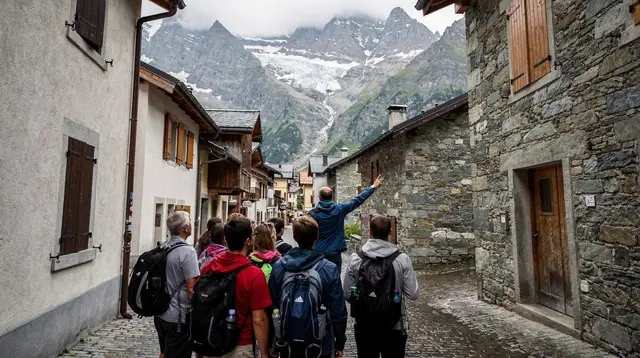
Once in Chamonix, the headline attraction is the Aiguille du Midi cable car, climbing from about 1,035m to 3,842m in two stages. It requires a timed, booked ticket, and it depends on weather — high wind or poor visibility can close or delay it, so check conditions the morning of, and don’t treat a summit view as guaranteed. One clarification worth making plainly: the Matterhorn is not visible from this region — that peak belongs to Zermatt, roughly on the other side of the Alps from Chamonix; what you’ll see here is the Mont Blanc massif itself, a different mountain entirely.
If the Aiguille du Midi is booked out or weather rules it out, the Mer de Glace glacier, reached by the Montenvers rack railway, is a separate outing worth considering — the ice cave dug into the glacier each year is now reached by several hundred steps, a visible marker of how far the ice has retreated in recent decades.
For a slower, guided alternative to the cable cars — especially outside peak cable-car weather — consider the Chamonix: Snowshoeing with Local Cheese Wine Tasting in winter, or the Chamonix: Sunset Hike Fondue in the Alpine Land for an evening outing that doesn’t depend on a cable car ticket at all — useful as a backup plan if the Aiguille du Midi is closed for the day.
Remember that Chamonix is priced in euros, not Swiss francs — have some on hand or a card that handles the currency switch, since this is the one day of the trip where the currency actually changes underfoot. Return buses to Geneva run into the evening, but check the last departure time before you commit to a late glacier viewing or dinner in town — missing the last bus means an unplanned taxi or overnight stay.
For more on structuring this leg on its own, see the Chamonix day trips guide and the Mont Blanc excursions guide.
Planning notes and honest limits
This itinerary works well for travelers comfortable with train and bus timetables, but it has real constraints worth naming rather than glossing over:
- No same-day improvised Chamonix add-on. The Aiguille du Midi and Mer de Glace both sell out in high season, and both are weather-dependent. Book ahead, and have a fallback plan (snowshoeing, a valley walk, or simply the village and its cafés) if the mountain is closed to visitors that day.
- No guaranteed tight connections. Public transport across an international border, even within Schengen, is not the place to plan a 15-minute changeover. Build in margin, especially on the Geneva-Chamonix leg.
- Château de Chillon needs its own slot. It’s easy to underestimate how much time the castle and its grounds take — treat it as a half-morning, not a quick stop on the way to lunch.
Frequently asked questions about this Geneva, Montreux and Chamonix itinerary
Can I do this whole itinerary without renting a car?
Yes — every leg described here (Geneva to Montreux, Geneva to Chamonix, and getting around within each town) runs on scheduled trains and buses. No car is assumed or needed.
How long does the train from Geneva to Montreux actually take?
Direct trains typically take about one hour, with departures roughly every half hour from Genève-Cornavin station. It’s one of the more reliable, frequent legs of this trip.
Is Château de Chillon in Geneva?
No. Château de Chillon sits on the lakeshore near Montreux, roughly an hour’s train ride from Geneva. Plan to visit it as part of your Montreux day, not as a Geneva stop.
Do I need my passport for the Chamonix day?
Yes, carry a valid passport or national ID card. Switzerland is in the Schengen Area, so there’s typically no routine passport check at the French border, but you are still leaving Swiss territory and should have identification on you.
Can I see the Matterhorn from Chamonix?
No. The Matterhorn is near Zermatt, a separate Swiss mountain resort, not visible from the Chamonix and Mont Blanc area covered on this itinerary’s third day.
What if the Aiguille du Midi is closed for weather the day I visit?
Have a backup plan. The Mer de Glace glacier railway is a separate ticketed outing, and guided alpine walks or snowshoe trips don’t depend on the cable car running at all. Don’t book a single irreplaceable slot as your only plan for the day.
Is the Geneva Transport Card useful on this trip?
It covers Unireso buses, trams and regional trains within the Geneva area, which helps on Day 1, but it doesn’t extend to the Montreux or Chamonix legs — those need separate tickets.
How much buffer should I leave for the Geneva-Chamonix connection?
More than feels necessary. The trip typically involves a change of bus or train, runs 1 to 1.5 hours depending on the exact connection, and crosses into another country’s road and transit network — treat any booked activity in Chamonix as needing at least an hour of arrival buffer before its start time.
tours.3 days
Verified deep-linked GetYourGuide tours. Book through these links and we earn a small commission at no cost to you.
GetYourGuide does not provide a product photo for this activity — the image shows the meeting point, photographed by us.