Chamonix: Your Base for Mont Blanc from Geneva
How far is Chamonix from Geneva, and what should I expect?
Chamonix is roughly 1 hour to 1 hour 15 minutes from Geneva by car or shuttle, across the French border into Haute-Savoie. It's a genuine alpine town in the shadow of Mont Blanc, priced in euros, with its own hotels, shops and mountain guides' offices — not a Geneva neighbourhood.
Why Chamonix Is the Obvious Base for Mont Blanc
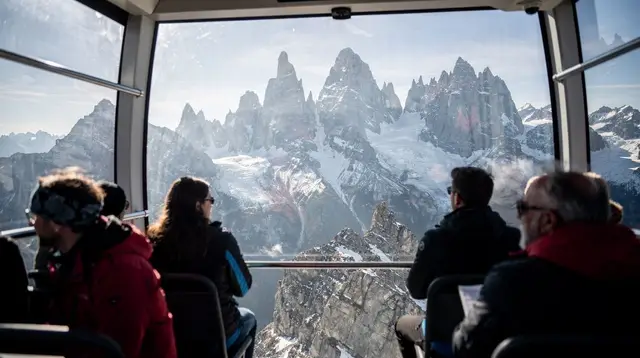
Of all the day trips within reach of Geneva, Chamonix is the one that sits most firmly on the other side of a real distinction: it isn’t a Swiss town near the border, it’s a French alpine resort with its own currency, its own mountain culture, and its own centuries-old relationship with a single mountain. Mont Blanc, at 4,805 metres, is the highest summit in the Alps, and Chamonix has been the town at its foot since the first British and Genevan travellers arrived in the 18th century to look at the glaciers. Everything about the valley — the guides’ offices, the mountaineering shops, the cable cars threading up into the rock — exists because of that one fact.
For a visitor based in Geneva, the practical question is simple: how do you use Chamonix as a base, and what should you actually expect from a day or two there? This page covers the town and valley itself — where to stay, what the drive involves, how the border and the currency work, and how Chamonix compares to a day spent on Mont Salève or elsewhere in the region. The two headline attractions reached from the valley floor, the Aiguille du Midi cable car and the Mer de Glace glacier railway, each have their own dedicated pages with the ticketing and timing detail — this one is about the base camp, not the specific ride.
Geneva to Chamonix: The Practical Crossing
Chamonix sits about 1 hour to 1 hour 15 minutes from central Geneva by car, via the A40 motorway through the Arve valley. It’s a comfortable half-day-trip distance, and it’s also short enough that many visitors treat it as a base for two or three nights rather than a single rushed outing — the drive itself is scenic, following the river up toward the massif, with the peaks gradually closing in around the road.
The crossing from Switzerland into France along this route is a Schengen border, which in practice usually means no routine passport control at the moment of crossing. That is not the same as no border at all. Bring a valid passport or national identity card regardless, since spot checks by French or Swiss authorities do happen, and customs rules on goods carried across still apply even without a stamp in a passport — Switzerland is inside Schengen but outside the EU, so the border is real even when it’s invisible on an ordinary drive.
| Option | Approx. journey time | Notes |
|---|---|---|
| Self-drive | 1h–1h15 | A40 motorway via the Arve valley; parking in Chamonix can fill in peak season |
| Private transfer / day trip | 1h–1h15 | Door-to-door, no parking to manage, often bundled with a guided element |
| Public transport (train/bus combination) | Longer, with a connection | Workable but less direct than the road route |
Anyone weighing this trip against the airport end of the journey — arriving into Geneva and heading straight for the mountains — will find the practicalities laid out on getting to Chamonix from Geneva airport.
What Chamonix Actually Is: Town, Valley, Base Camp
Chamonix-Mont-Blanc is a real town of around 9,000 permanent residents, swelling many times over in ski season and summer, strung along the valley floor beneath the massif. It has the feel of a working alpine settlement that happens to also be one of the most famous mountaineering towns in the world — mountain guides’ offices sit alongside outdoor gear shops, patisseries, and a cluster of hotels ranging from simple guesthouses to high-end alpine lodges.
The town itself rewards an unhurried walk: a compact centre along the Arve river, a cable car station right in the middle of town for the Aiguille du Midi, and views that shift constantly as cloud moves through the valley. Chamonix is not primarily a museum-and-monument destination the way Geneva’s Old Town or Annecy’s canals are — it’s a place organised around access to the mountains, and its appeal is largely about atmosphere, altitude, and what’s possible from here rather than a checklist of sights within the town.
Because Chamonix functions as a base camp, plan a visit around what you intend to do from it, whether that’s a cable car ride, a glacier railway, a hike, or simply the experience of a valley closed in by 4,000-metre peaks. A walking tour of the town centre is a reasonable way to get oriented before deciding on anything more ambitious.
Seeing Mont Blanc: What’s Realistic, and What Isn’t
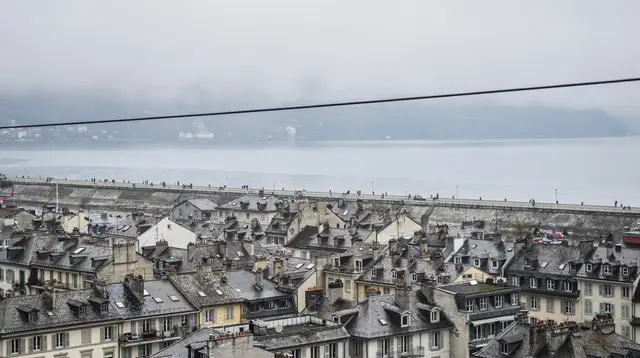
It’s worth being direct about a common assumption: Mont Blanc is not visible from Geneva. The summit is roughly 80 kilometres from the city, well outside the everyday skyline that visitors see from the lakefront or the Old Town — what’s often pointed out as “the mountain” from central Geneva is usually the much closer Mont Salève or the Jura range, not Mont Blanc itself. The idea that you can glimpse the roof of the Alps from a Geneva rooftop terrace is a mistaken and this guide won’t repeat it.
Even once you’re in the Chamonix valley, a clear view of the summit is not guaranteed. Mont Blanc generates its own weather, and cloud frequently sits on or around the peak, particularly in the afternoon or during unsettled spells — a valid concern for anyone timing a trip around photography or a single big view. Mornings tend to offer better odds than afternoons, and no season is entirely immune to cloud. Anyone weighing Chamonix against a same-day Geneva view should read why Mont Blanc is in France, not Switzerland for the fuller picture of how the mountain relates to the region, and treat any promise of a “guaranteed view” — from a tour operator or otherwise — with appropriate skepticism.
A private day trip from Geneva that builds in flexibility for weather and timing is one practical way to manage this uncertainty:
a private day trip from Geneva to Chamonix and the Mont Blanc valley, which keeps the itinerary adaptable rather than locking in a single vantage point.
Currency, Prices, and the Swiss-French Contrast
Crossing from Geneva into Chamonix is also a crossing from Swiss francs into euros. Switzerland, including Geneva, prices everything in CHF; France, including Chamonix, prices in EUR. The two aren’t interchangeable at face value, and cards and cash both need to switch over — plan to pay in euros in Chamonix rather than assuming Swiss francs will simply be accepted at a fair rate.
Broadly, Chamonix is less expensive than Geneva, which is consistently ranked among the most expensive cities in the world. That said, Chamonix is itself a well-known international resort, and prices in the town centre — a coffee, a mountain restaurant lunch, a hotel room in peak ski or summer weeks — can climb close to what’s normal in a major resort anywhere in the Alps. The contrast is real but shouldn’t be overstated as “cheap.” For a direct comparison of costs across the region, is Geneva expensive? the real prices sets out the Swiss side of that equation.
| Geneva (Switzerland) | Chamonix (France) | |
|---|---|---|
| Currency | Swiss franc (CHF) | Euro (EUR) |
| General price level | Among the world’s most expensive cities | Generally lower, but still a major resort town |
| Tipping | Not expected; service included by law | More customary than in Switzerland, though not obligatory |
Where to Base Yourself: Chamonix Town vs. the Valley Villages
Chamonix town is the natural base for most visitors, with the widest choice of hotels, restaurants and direct access to the main cable car station. But the valley includes several smaller villages worth knowing about if Chamonix itself is fully booked or feels too central: Argentière, further up the valley toward the Swiss border, has a quieter, more local atmosphere and its own lift access into the mountains; Les Houches, at the lower end of the valley, tends to be calmer and slightly better value.
Anyone planning more than a single day should also weigh Chamonix against nearby alternatives with a different character. Megève, a short distance away, offers a more polished, chalet-village atmosphere with less of Chamonix’s mountaineering edge, and appears on its own Mont Blanc excursions page. Morzine, further into the Portes du Soleil area, is a genuinely different valley with its own lift network, better suited to a separate trip than a Mont Blanc day out. For a broader sense of how a Chamonix stay compares to Switzerland’s other big mountain names, see Chamonix vs. Zermatt from Geneva.
Planning the Visit: Day Trip or Overnight
A single day from Geneva is enough to get a real feel for Chamonix and to fit in one major activity — a cable car ride, a valley walk, or a guided outing — but it leaves little room for spontaneity if the weather doesn’t cooperate or a queue runs long. An overnight or two-night stay allows a second attempt at a clear-weather view, and gives more room to explore the town itself rather than treating it as a single-stop excursion.
For visitors set on a single day, one day: Mont Blanc from Geneva lays out a realistic pace. For a winter visit built around snow rather than summer hiking, a winter weekend from Geneva covers the seasonal considerations, and those wanting to combine Chamonix with more active days in the wider Mont Blanc and Valais region can look at four days hiking Mont Blanc and Valais.
A guided outing is one way to make efficient use of limited time, particularly for visitors unfamiliar with the valley’s layout: a guided sunset hike with fondue in the Chamonix valley combines a walk with a classic alpine meal, while a more active winter option is available through a guided snowshoeing outing with local cheese and wine tasting.
Getting Onto the Ice: A Note on the Glacier
One thing worth knowing before choosing between the valley’s two headline excursions: the Mer de Glace, France’s largest glacier, has retreated so significantly in recent decades that reaching the ice cave dug into it each year now requires descending several hundred steps — a visible, yearly reminder of how much the glacier has thinned. This is covered in detail on the dedicated Mer de Glace page, but it’s relevant to trip planning from Chamonix, since it affects mobility requirements and timing. A guided option that builds this into a full day from Geneva is available through a guided day tour from Geneva to the Chamonix ice cave and Mont Blanc valley.
Getting Around Once You’re There
Chamonix town itself is walkable, but the valley is long, and reaching Argentière, Les Houches, or the various cable car stations without a car means relying on the local bus network or a taxi. Visitors without their own transport, or those who’d rather not manage parking during a busy season, often find a transfer or organised tour simplifies the day considerably — details on getting around the wider area are covered in Chamonix transport, while broader logistics for a Chamonix trip, including seasonal timing, are set out in Chamonix planning.
For those who’d rather have the whole day handled, including transport, a private guided option removes the need to navigate parking or bus schedules:
a private Mont Blanc day trip based in Chamonix.
When to Go
Chamonix operates on two very different calendars: a winter season built around skiing and snow sports, and a summer season built around hiking, cable cars, and mountaineering. Shoulder seasons — late spring and mid-autumn — can be quieter and cheaper, but some lifts and attractions reduce hours or close briefly for maintenance, so it’s worth checking specific opening schedules rather than assuming everything runs year-round. Whichever season, the valley’s own microclimate means checking a Chamonix-specific forecast rather than relying on conditions read off in Geneva, which sits at a much lower altitude and often has entirely different weather.
Frequently Asked Questions About Visiting Chamonix from Geneva
Is Chamonix in Switzerland?
No. Chamonix is in France, in the Haute-Savoie department, even though it sits close to Geneva and is closely associated with the region. Crossing from Geneva to Chamonix means leaving Switzerland.
Can I see Mont Blanc from Geneva?
Not reliably. Mont Blanc is roughly 80 km from Geneva and is not part of the city’s everyday skyline. Seeing it clearly requires travelling toward Chamonix, or gaining altitude on a clear day, and even then cloud cover often hides the summit.
Do I need my passport to go from Geneva to Chamonix?
Yes, carry a valid passport or national ID card. Switzerland and France are both in the Schengen Area, so routine passport checks are rare, but spot checks and customs controls on goods do happen, and identification is required if stopped.
How long does it take to get from Geneva to Chamonix?
By car or private transfer, about 1 hour to 1 hour 15 minutes via the Mont Blanc valley road, depending on traffic and the border crossing at the time of travel.
Is Chamonix expensive, and in what currency?
Chamonix is priced in euros, unlike Geneva, which uses Swiss francs. Prices in Chamonix are generally lower than in Geneva, though it is still a well-known international resort town with prices to match its popularity, especially in peak winter and summer weeks.
What’s the difference between visiting Chamonix and visiting the Aiguille du Midi or the Mer de Glace?
Chamonix is the town and valley itself — where you’d stay, eat and shop. The Aiguille du Midi cable car and the Mer de Glace glacier railway are specific attractions reached from Chamonix, each covered in more detail on their own pages.
Is a clear view of Mont Blanc guaranteed on a day trip?
No. Mont Blanc is often in cloud, particularly in the afternoon or in unsettled weather, and there’s no way to guarantee a clear summit view on any given day, even in summer.
Mont Blanc Excursions
Verified deep-linked GetYourGuide tours. Book through these links and we earn a small commission at no cost to you.
GetYourGuide does not provide a product photo for this activity — the image shows the meeting point, photographed by us.