Getting from Geneva to Chamonix: Car, Bus, or Train
What's the best way to get from Geneva to Chamonix?
Driving through the Mont Blanc Tunnel or a direct bus both take roughly 1 to 1h15 outside traffic and are the most practical options. The train involves a change and typically takes noticeably longer, so it suits travellers without a car who aren't in a hurry.
Three ways to reach Chamonix from Geneva
Chamonix sits about an hour’s drive south of Geneva, across the border in France, at the foot of Mont Blanc. It’s one of the most popular excursions from Geneva, but travellers routinely overestimate the trip as more complicated than it is — and just as often underestimate the practical details that make one option clearly better than another for their situation. This guide covers only the journey itself: driving, the direct bus, and the train, with realistic timings, what each actually costs, and what changes once you cross into France. For what to do once you’re there, see the separate Chamonix planning guide.
There is no dramatically “best” option here — the right choice depends mostly on whether you have a car, how many people are travelling, and whether you want to stop along the way.
By car: the Mont Blanc Tunnel or the free route via Cluses
Driving is the most flexible option and, for two or more people splitting fuel and tolls, often the most cost-effective. There are two realistic routes.
Via the Mont Blanc Tunnel. This is the more direct route, cutting straight through the mountain rather than around it. Outside traffic, the drive from central Geneva to Chamonix takes roughly 1 hour to 1 hour 15 minutes, including the tunnel crossing itself, which takes about 20 minutes. The tunnel carries a toll, charged per vehicle once you’re on the French side — a one-way passenger car crossing runs to several tens of euros, with return tickets priced lower than two one-way fares if you’re coming back the same way. Tolls are payable by card at the tunnel booth.
Via Cluses. This free alternative avoids the tunnel toll entirely, following valley roads up through Cluses and Sallanches before climbing into the Chamonix valley. It’s a similar overall driving time outside traffic — often within 15 minutes of the tunnel route — but it’s a longer, more winding road with more villages and traffic lights along the way, and it can be noticeably slower in poor weather or heavy snow.
Both routes converge on the same practical point: traffic is the real variable, not the route. On winter Saturdays during ski season, and on July and August changeover days, the approach to Chamonix and the tunnel queue can add well over an hour to either route. Travelling mid-week, or outside the Saturday changeover window common to ski resorts, avoids most of this.
Car rental in Geneva is straightforward, with agencies at Geneva city locations and at the airport. Winter driving in the Alps requires proper preparation — snow tyres or chains are frequently mandatory by French law in the Chamonix valley during winter, and rental companies fitting winter tyres as standard for the season is common practice worth confirming when booking.
By bus: direct departures from Geneva
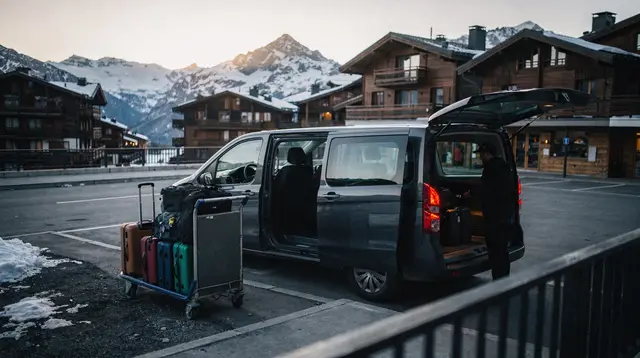
Several direct bus services run daily between Geneva and Chamonix, with pickup points that typically include Geneva Airport (GVA) as well as central Geneva. This is the most straightforward car-free option: no changes, a journey time broadly comparable to driving once you outside-traffic, and drop-off directly in Chamonix town or at connecting points further along the valley toward Megève or Morzine on some routes.
Buses are particularly practical for travellers arriving with ski equipment or heavy luggage, since most operators handle sports bags as standard, unlike some train connections where platform changes with bulky gear can be awkward. Advance booking is recommended in winter, when ski-season demand fills departures, and on summer weekends.
For a day trip without renting a car, a direct bus paired with a guided day excursion once in Chamonix is a common combination — worth booking ahead in high season, since seats on the more popular departure times sell out.
By train: possible, but not direct
Rail travel between Geneva and Chamonix is workable but involves at least one change, most often through Annemasse or a connection toward Saint-Gervais-les-Bains-Le Fayet, from where a rack railway continues up into the Chamonix valley. The Léman Express, the cross-border rail network linking Geneva to French towns, gets you started toward Annemasse, but reaching Chamonix itself still requires transferring to a further regional or mountain line.
The honest comparison: total door-to-door time by train is typically noticeably longer than either driving or the direct bus, once the change and connection waiting time are factored in. Train travel makes the most sense for travellers who are already comfortable with a longer journey, who want to break the trip with a stop en route, or who are combining Chamonix with other stops in the Haute-Savoie or Mont Blanc region rather than doing a single round trip.
Route comparison at a glance
| Option | Typical duration (outside traffic) | Direct? | Currency for tickets/tolls | Best for |
|---|---|---|---|---|
| Car via Mont Blanc Tunnel | ~1h–1h15 | Yes | Euros (toll) | Flexibility, groups, luggage |
| Car via Cluses (free route) | ~1h15–1h30 | Yes | None (no toll) | Avoiding the toll, scenic drive |
| Direct bus | ~1h–1h15 | Yes | Euros | Car-free travellers, day trips |
| Train (with change) | Longer, varies by connection | No | Euros | Travellers combining other stops |
These are rough, traffic-free planning figures, not guarantees — always check live conditions before a winter weekend departure, especially for the tunnel and the roads feeding into it.
The border crossing itself: what actually happens
Geneva and Chamonix are both inside the Schengen Area, so there is normally no routine passport check at the frontier, whether you’re driving, on a bus, or on a train. In practice, most crossings are uneventful and unremarked.
That doesn’t mean the border stops mattering. Switzerland is in Schengen but is not a member of the European Union, and customs controls on goods still apply even without passport checks — see our explainer on Switzerland’s Schengen-not-EU status for the fuller picture. Spot checks by French or Swiss customs and border officers do happen on this route, particularly around goods declarations, and travellers should always carry a valid passport or national ID card when crossing, even when no check is expected. Don’t plan around the assumption of a guaranteed, check-free crossing every time — that’s not something any operator or route can promise.
Once you’re on the French side, the currency changes too: everything from the tunnel toll to a coffee in Chamonix is priced in euros, not the Swiss francs used in Geneva. It’s worth carrying or being ready to pay in euros rather than assuming Swiss francs will be readily accepted at the standard exchange rate — see paying in francs, not euros for how this plays out in the other direction, on the Geneva side.
Booking transport and day trips together
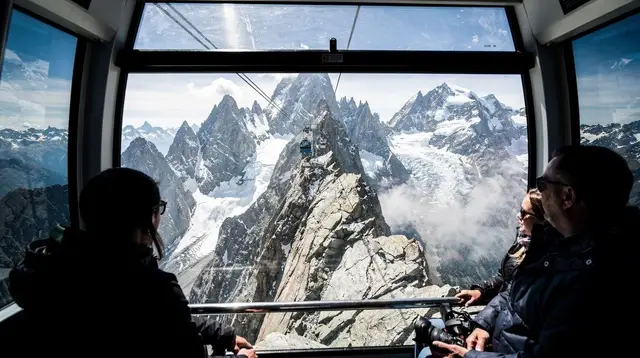
For travellers without a car, an organised day trip that includes transport is often the simplest route to take, since the transfer and the day’s itinerary are handled together. A private day trip to Chamonix and Mont Blanc departing from Geneva bundles the journey with cable car access and a planned itinerary, which removes the need to coordinate bus schedules or driving logistics separately.
Travellers heading toward the wider Mont Blanc region rather than Chamonix alone might instead consider an excursion to Chamonix departing from Megève, useful if your base is already in that direction rather than in Geneva itself. Once in Chamonix, pairing the transport with a planned activity — such as a guided food walking tour with a local chef — makes good use of a day that otherwise risks being consumed by logistics. For those splitting time between Chamonix and neighbouring Megève, a private guided tour of Megève is a straightforward add-on that uses the same general transport corridor out of Geneva.
Planning the return trip
The same three options work in reverse, and the same traffic patterns apply — Sunday afternoons during ski season and the end of summer holiday weeks are the periods most likely to see slow tunnel queues and busy roads back toward Geneva. If you’re catching a flight out of Geneva Airport the same day, building in extra buffer time beyond the standard 1-to-1h15 driving estimate is sensible, particularly in winter.
Bus schedules typically run at similar frequency in both directions, so a same-day return by bus is workable for a straightforward day trip, provided you book the return leg in advance during busy periods rather than assuming a walk-up seat will be available.
Comparing Chamonix to other alpine day trips from Geneva
Chamonix isn’t the only mountain excursion from Geneva, and the transport picture differs by destination. Zermatt, for instance, is considerably further and involves a car-free final stretch via Täsch, making it a longer and more train-dependent trip overall — see Chamonix versus Zermatt from Geneva for a direct comparison. Closer excursions like Mont Salève, reached by a cable car that also starts on the French side of the border, involve a much shorter crossing and no toll at all, making it a viable half-day alternative when a full Chamonix trip doesn’t fit the schedule. For a broader look at how Chamonix fits among Geneva’s day-trip options generally, the Geneva day trips guide and the dedicated Chamonix day trips guide both cover onward planning once you’ve arrived.
Frequently asked questions about getting to Chamonix from Geneva
How long does it take to drive from Geneva to Chamonix?
Around 1 hour to 1 hour 15 minutes outside peak traffic, whether you go via the Mont Blanc Tunnel or the free route through Cluses. Ski-season weekends and summer holiday changeover days can add significant time at both the tunnel and on the approach roads.
Is there a direct bus from Geneva to Chamonix?
Yes. Several daily departures run directly between Geneva (including Geneva Airport) and Chamonix, with a journey time comparable to driving. Buses are a practical option for travellers without a car, especially with ski or hiking luggage.
Can I take the train from Geneva to Chamonix?
Yes, but not directly. Train travel requires at least one change, commonly via Annemasse, Saint-Gervais-les-Bains-Le Fayet, or a French regional connection, and the total journey typically takes longer than driving or the direct bus.
Do I need my passport to cross from Geneva into France for Chamonix?
Yes. Switzerland and France are both in the Schengen Area, so there is usually no routine passport check, but you must carry a valid passport or national ID card, since spot checks by French or Swiss customs and border officers do happen on this route.
Is the Mont Blanc Tunnel toll expensive?
There is a toll to use the Mont Blanc Tunnel, charged per vehicle in euros once you’re on the French side. The free alternative via Cluses avoids the toll but is a longer, more winding road, particularly in winter conditions.
Are prices in Chamonix in Swiss francs or euros?
Euros. Chamonix is in France, so once you cross the border, transport tickets, tolls, meals, and activities are priced in euros, not the Swiss francs used in Geneva.
Is it faster to fly into Geneva or a French airport for Chamonix?
Geneva Airport (GVA) is the standard gateway for Chamonix, roughly an hour away by road, and has more international connections than smaller regional French airports. It’s the airport used by nearly all direct Geneva-Chamonix buses and transfer services.
Can I do a day trip to Chamonix from Geneva without a car?
Yes. A direct bus or an organised day tour both work well for a car-free day trip, since the journey each way is comparable to driving. The train is usable too, but its change and longer overall time make it a less efficient choice for a single day out.
Getting Around Geneva
Verified deep-linked GetYourGuide tours. Book through these links and we earn a small commission at no cost to you.
GetYourGuide does not provide a product photo for this activity — the image shows the meeting point, photographed by us.