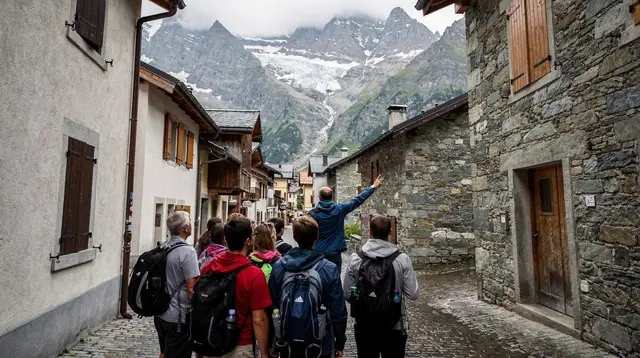
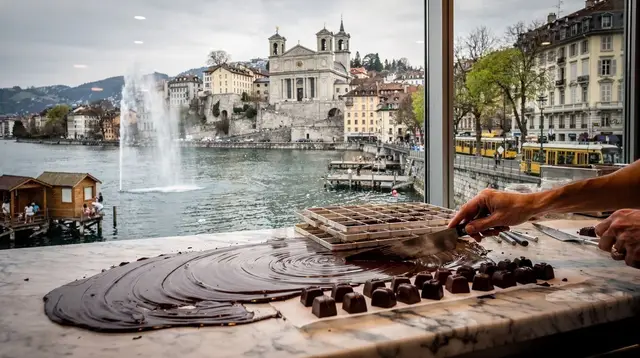
Megève sits about an hour and a quarter by road from Geneva, in the French Haute-Savoie, and it has built its reputation on something different from its more famous Alpine neighbours: not a glacier, not a cable car to a 3,800-metre summit, but a genuinely handsome old village turned into one of France’s most polished ski resorts. Wooden chalets, a cobbled centre, upscale boutiques and a dense cluster of good restaurants make it a pleasant half-day or overnight trip — but it is worth being clear-eyed about what it is and isn’t before driving out from Geneva.
What Megève actually offers
Megève was developed in the 1910s and 1920s as a fashionable alternative to St-Moritz, and that origin still shows. The old village core is compact and walkable, built around a church and a scattering of small squares, with narrow streets lined by fashion boutiques, jewellers, ski shops and patisseries rather than the outdoor-gear and hiking-focused storefronts common elsewhere in the Alps. In winter, horse-drawn sleighs still circulate through the centre, and the overall feel leans toward a country-club version of an Alpine village: manicured, expensive, and unmistakably geared toward a well-heeled clientele.
This is the honest way to frame Megève against its neighbours in the Chamonix and Mont Blanc area: it is a tier-two stop, not a must-see landmark. If your itinerary has room for exactly one big mountain excursion from Geneva, Chamonix and the Aiguille du Midi deliver something Megève cannot — direct cable-car access into high-glacier terrain. Megève’s strength lies elsewhere: village atmosphere, shopping, and a concentration of good tables, including several Michelin-starred kitchens, in a small area.
The seasonality problem, stated plainly
Megève runs on a genuinely split calendar, and it matters for planning. In winter (roughly December to March), the resort is at its best: around 445 km of interconnected pistes across the wider Evasion Mont-Blanc ski area, a lively village with shops and restaurants open late, and the horse-sleigh, ice-rink, spa side of the experience all running at once. This is when the drive from Geneva makes sense on its own terms.
Outside the ski season, the picture changes substantially. The lifts that carry most visitors up into the surrounding hills close for large stretches of the year, hiking and mountain-biking trails open but draw a smaller crowd than the resort’s winter numbers, and much of what makes Megève feel special — the buzz of a working ski village — simply isn’t there. A summer visit can still be pleasant as a stop for lunch, a wander through the old town, or a cycling excursion, but it does not carry the same weight as a dedicated day trip, and travellers expecting a miniature version of a high-mountain destination like Chamonix will be disappointed. Outside of specific summer events (markets, festivals, the occasional cycling race), Megève in July or August is a quiet, pretty village — not an essential stop.
Megève versus Chamonix: a real distinction, not a nuance
It’s worth being direct about the difference between the two, since they’re often mentioned in the same breath as Mont Blanc-area excursions from Geneva. Megève has no direct access to the major glaciated sites of the Mont Blanc massif — no equivalent of the Aiguille du Midi cable car or the Mer de Glace rack railway starts here. Getting from Megève to those sites means a further drive over to Chamonix itself, roughly 30-40 minutes away by road. If glacier scenery, high-altitude cable cars, or Mont Blanc close-up are the goal, Chamonix is the destination to book, not Megève — several tour operators run a dedicated day trip from Megève over to Chamonix for exactly this reason, treating Megève as a base rather than the main event.
Getting there from Geneva
There is no direct train to Megève; the practical way to visit is by car or organised tour. The drive from central Geneva takes about 1 hour 15 minutes via the A40 motorway through French Haute-Savoie, crossing the Franco-Swiss border along the way — remember that Switzerland is in the Schengen area but outside the EU, so it’s worth having ID ready and being aware that customs rules on goods still apply even without a passport check. Public transport connections exist via regional trains to Sallanches and a connecting bus, but this adds well over an hour compared with driving, so most visitors either rent a car or join an organised excursion.
For a first visit, a private guided tour of Megève removes the need to navigate parking and unfamiliar mountain roads, and a local guide can frame the village’s history and point out which restaurants and shops are worth the detour.
| From Geneva | Approx. travel time | Notes |
|---|---|---|
| By car (A40) | ~1h15 | Direct route, tolls apply, border crossing |
| By train + bus | ~2h+ | Train to Sallanches, then connecting bus |
| Organised day tour | ~1h15 each way | No driving or parking to manage |
What to do in Megève
Wander the old village. The historic centre, built around the Église St-Jean-Baptiste, rewards an unhurried walk — narrow lanes, a lively daily market (especially Friday mornings), and window shopping past boutiques that range from ski outfitters to high fashion.
Ride the Mont d’Arbois cable car. For a taste of the surrounding scenery without committing to a full hiking day, the gondola up to Mont d’Arbois gives panoramic views back toward the Mont Blanc range in the distance — a genuine mountain outlook, even if it isn’t the close-up glacier access Chamonix offers. Those who prefer pedal power over gondolas can book a Mont Blanc panorama e-bike tour that takes in similar viewpoints at a slower pace.
Eat well. Megève’s dining scene is disproportionate to its size, with several Michelin-starred restaurants alongside traditional Savoyard tables serving fondue, raclette and tartiflette. A wine, cheese and charcuterie tasting is a low-key way to sample the region’s food culture without booking a formal multi-course dinner.
Ski or hike, depending on season. In winter, the Evasion Mont-Blanc lift network connects Megève to neighbouring resorts including Saint-Gervais and Combloux, giving access to a genuinely large ski area for an intermediate-to-advanced skier. In summer, marked hiking and mountain-biking trails fan out from the village, and rental shops offer everything from city bikes to premium full-suspension e-MTBs for tackling the surrounding hills.
Cycle a mountain pass. Cyclists drawn to the region’s climbs can join a guided road-bike tour up a nearby mountain pass from Megève, a popular warm-up ride before tackling bigger Alpine cols elsewhere.
Megève’s architecture and why it looks the way it does
Unlike many Alpine resorts built quickly to serve postwar ski tourism, Megève grew out of an existing farming village, and its layout reflects that. The Rothschild family, looking in the 1910s for a French alternative to Switzerland’s St-Moritz after the First World War made travel there impractical, chose Megève precisely because it already had a working village centre rather than open pasture. That decision is why the resort still reads as a real town rather than a purpose-built ski station: the church, the market square and the tangle of narrow streets predate the ski lifts by centuries, and the chalets that ring the centre were built to blend into that older fabric rather than replace it. It’s a useful point of comparison with some of the newer, purpose-built stations elsewhere in the French Alps, where the resort and the village are effectively the same construction project.
That inherited street plan is also why Megève rewards walking more than driving. The centre is largely pedestrian, car access is restricted around the main square, and most of what a visitor comes for — the boutiques, the patisseries, the restaurants — sits within a few hundred metres of the church. Families or groups who want to cover more ground without walking can look at renting bikes instead: alongside the e-MTB options already mentioned, rental outlets in the village offer a dedicated children’s e-bike rental for families cycling together, and a semi-rigid electric mountain bike rental for visitors who want more trail capability than a city e-bike offers without the full-suspension option’s higher price.
Where to stay and practical notes on parking
Because Megève’s old centre is largely closed to through traffic, accommodation booked inside the pedestrian core usually means leaving a car in one of the paid car parks ringing the village and walking in with luggage — worth knowing before arrival, since it differs from the drive-right-up experience at some other French ski towns. Chalet-style hotels and apartments dominate the lodging market, priced, as noted above, closer to Geneva than to more modest Haute-Savoie towns. Winter weekends and the Christmas-New Year period book out furthest in advance and carry the highest rates; a weekday visit, even in season, tends to be noticeably calmer and less expensive.
Megève’s compact size also means it’s realistic to base a stay there and treat both Chamonix and the closer French shore towns as day trips, rather than the reverse. For visitors weighing that option, several operators run guided excursions in the other direction as well — a private Chamonix and Mont Blanc experience departing from Geneva is one way to see the glacier terrain Megève lacks, on a day that starts and ends outside Megève itself, useful for travellers whose base is Geneva rather than the village.
Pairing Megève with nearby stops
Because Megève doesn’t quite justify a dedicated full-day trip from Geneva on its own outside winter, it works well combined with other Haute-Savoie stops. A short hop takes in nearby Morzine, another French ski town with a similar split winter/summer profile — a quick 60-minute express walk with a local in Morzine is a compact way to compare the two villages on the same trip. Travellers heading further afield toward Annecy and Lake Annecy can also route through Megève en route, turning a single-destination day into a broader loop through Haute-Savoie.
Where Megève fits on a Geneva itinerary
For most visitors with limited time in the Geneva region, Megève is a good fit for a winter ski trip, a half-day scenic detour paired with another stop, or a splurge dinner destination rather than the centrepiece of a Mont Blanc-area day. Those planning a single big excursion into the mountains should look first at Chamonix, Mont Blanc itself, or the Aiguille du Midi — all of which offer direct, bookable access to high-glacier terrain that Megève simply does not have. A well-planned Mont Blanc excursion from Geneva or a broader one-day Mont Blanc trip from Geneva will typically prioritise those sites; Megève is the detour to add on a second visit, or in winter when its own attractions — the pistes — are actually open.
Practical planning notes
Accommodation and dining in Megève sit at prices closer to Geneva than to more budget-friendly Haute-Savoie towns, reflecting its positioning as a luxury resort — expect this to shape a day-trip or overnight budget accordingly. Since France uses the euro while Geneva uses Swiss francs, it’s worth budgeting mentally in two currencies if combining both in one trip; see the guide to why the region uses two different currencies for the practical implications. Winter visitors should also check snow conditions before travelling, since a low-snow early or late season can affect which lifts and pistes are actually running, even during the official ski season.
Frequently asked questions about visiting Megève from Geneva
How far is Megève from Geneva?
Megève is about 1 hour 15 minutes from central Geneva by car via the A40 motorway, a distance of roughly 75 km. There is no direct train; the rail-and-bus alternative typically takes over two hours.
Is Megève worth a day trip from Geneva?
In winter, yes — the ski area, village atmosphere and dining scene are all running and make for a satisfying trip. Outside the ski season, Megève is a pleasant but secondary stop, better paired with another destination like Chamonix or Annecy than visited alone.
Can I see Mont Blanc’s glaciers from Megève?
Megève has scenic mountain viewpoints, including from the Mont d’Arbois cable car, but it has no direct access to the major glaciated sites of the Mont Blanc massif. For close-up glacier access, visit Chamonix and take the Aiguille du Midi cable car or the Mer de Glace train instead.
Is Megève open and interesting in summer?
Megève stays open year-round, but its main draw — the ski slopes — is closed outside winter. Summer visitors can still enjoy the village, hiking, mountain biking and dining, though the resort is noticeably quieter and less essential without snow.
What’s the difference between Megève and Chamonix?
Chamonix sits directly beneath Mont Blanc with cable-car access to major glacier sites and high-altitude viewpoints. Megève is a smaller, more village-focused resort about 30-40 minutes’ drive away, known for shopping, dining and a polished ski scene, without the same natural landmarks.
Do I need a car to visit Megève from Geneva?
A car or an organised tour is the practical option, since there is no direct train. Public transport exists via a train to Sallanches plus a connecting bus, but adds well over an hour to the journey compared with driving.
Is Megève expensive?
Yes — Megève is one of the more upscale resorts in the French Alps, with accommodation, dining and shopping prices to match. Budget accordingly, particularly for winter stays during peak ski season.
Does Megève work well combined with other destinations?
Yes. Megève pairs naturally with a stop in Morzine for a comparison of French ski villages, or can be routed alongside a trip toward Annecy and Lake Annecy for a fuller day in Haute-Savoie.