Mont Blanc from Geneva: Your Guide to the Excursion Options
Can you visit Mont Blanc as a day trip from Geneva?
Yes, but you visit the Mont Blanc massif, not the 4,805m summit itself, which requires guided mountaineering. Most visitors base themselves in Chamonix, about 1h-1h15 by road from Geneva, and choose between the Aiguille du Midi cable car, the Mer de Glace glacier, or simply the valley scenery and town.
What “visiting Mont Blanc” actually means
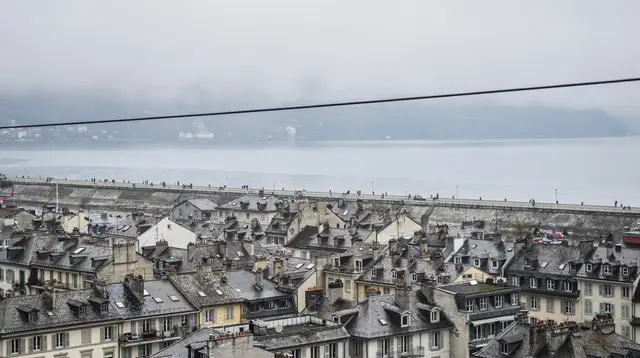
Mont Blanc is the name people reach for when planning a mountain day from Geneva, but it covers more ground - literally - than the phrase suggests. The Mont Blanc massif is a cluster of glaciated peaks straddling the border between France and Italy, its main summit reaching 4,805 metres, the highest point in the Alps and in Western Europe. The mountain itself is not in Switzerland, and it is not visible from Geneva - the city’s outlook is dominated by the lake, Mont Salève and the Jura hills, not the high Alps.
What is genuinely close to Geneva is the valley beneath the massif: Chamonix, the historic mountaineering town that has served as the gateway to Mont Blanc since the first ascent in 1786. This guide is an orientation page for anyone still deciding between the specific excursions - it compares the Aiguille du Midi, the Mer de Glace, and simply spending a day in the Chamonix valley - without walking through the booking details of any single one. For those, see the dedicated pages linked throughout.
Where Mont Blanc actually is, relative to Geneva
Geneva sits in Switzerland, at the western tip of Lake Geneva. Mont Blanc rises roughly 80km to the southeast, across the border in France’s Haute-Savoie region, with its far side touching Italy’s Aosta Valley. Getting there from Geneva means a genuine international border crossing - Switzerland is in the Schengen Area, so there are typically no routine passport checks, but bring a passport or national ID card regardless, since Swiss and French customs authority still applies.
By car or organised transfer, Chamonix is about 1 hour to 1 hour 15 minutes from central Geneva, depending on traffic and border queues at Cluses or via the Mont Blanc Tunnel approach roads. That makes it one of the most accessible major mountain excursions from the city - closer than Zermatt or Verbier, and comparable in travel time to Annecy or Lake Annecy.
A private transfer removes the guesswork around parking and border traffic; travellers who want the drive handled for them can look at a private day trip from Geneva to Chamonix and Mont Blanc, which builds the return journey around a chosen mountain activity.
The summit itself: what’s realistic and what isn’t
It bears stating plainly, because the marketing language around “Mont Blanc excursions” can blur it: you cannot see the 4,805m summit from Geneva, and you cannot reach the summit without a guided mountaineering expedition. The ascent is a multi-day technical climb across glaciers and exposed ridgelines, undertaken with a certified high-mountain guide, proper acclimatisation, and specific weather and snow conditions - it is mountaineering, not a tourist activity, and it is well outside the scope of any cable car ticket or organised day tour.
What day-trippers from Geneva actually do is visit the massif’s accessible edges - viewpoints, cable cars and glacier excursions that put you close to Mont Blanc’s flanks and give sweeping views of the wider range, without any technical climbing involved. That distinction matters when comparing options, because each of the excursions below gets you near Mont Blanc in a different way, and none of them puts you on its summit.
Comparing the three classic approaches
| Option | What it is | Altitude reached | Booking needed |
|---|---|---|---|
| Aiguille du Midi | Cable car from Chamonix, two stages | 3,842m | Timed ticket, book ahead in high season |
| Mer de Glace | Rack railway to France’s largest glacier, ice cave | ~1,913m (Montenvers) | Timed ticket, book ahead in high season |
| Chamonix town & valley | Walking the valley town, viewpoints, cafés | ~1,035m | None for the town itself |
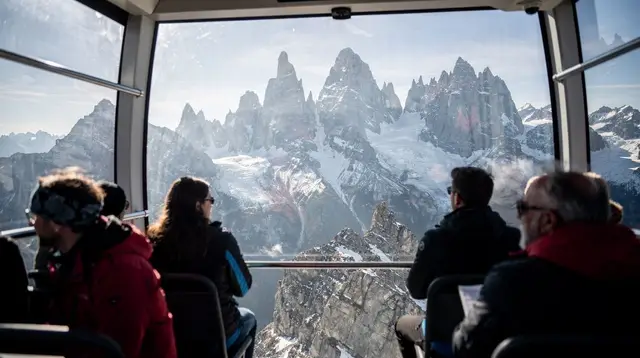
The Aiguille du Midi is the highest and most dramatic of the three, one of the highest-altitude cable cars in the world, climbing in two stages via Plan de l’Aiguille. It delivers the closest panoramic views of the Mont Blanc summit available to non-mountaineers, weather permitting - though even from here, you are looking at the summit, not standing on it.
The Mer de Glace is a different kind of excursion: reached by the separate Montenvers rack railway, it’s a chance to walk onto (and, via a staircase, into) France’s largest glacier. The ice cave is re-dug each year, and the staircase down to it has grown to several hundred steps as the glacier has thinned - a visible, sobering marker of how much ice has retreated in recent decades. It’s a compelling excursion in its own right, distinct from the Aiguille du Midi and not a substitute for it.
Travellers who want to see both in one push should know that combining the two fully in a single day, on top of the drive from Geneva, is ambitious - most visitors either prioritise one, or plan a longer day starting early. A guided option built specifically around the ice cave and glacier side is the guided day tour from Geneva to the Chamonix Mont Blanc ice cave, which handles transport and timing for that specific combination.
For a fully private, flexible version of the classic excursion - useful for families or anyone wanting to set their own pace between Chamonix, the cable car area and viewpoints - there’s also the private day trip to Chamonix and Mont Blanc.
Just the valley: Chamonix without the altitude
Not every visitor wants a cable car or a glacier hike, and that’s a legitimate way to experience the area. Chamonix itself is a historic mountaineering town worth a wander regardless of what else you book: narrow streets, mountain-guide heritage going back over two centuries, cafés with views straight up at the massif, and a statue of Horace-Bénédict de Saussure, who financed the first ascent in 1786. Even without buying a single lift ticket, a few hours in the valley gives a real sense of scale that no photograph from Geneva can.
This is also the practical fallback on a poor-weather day, since both the Aiguille du Midi and Mer de Glace depend heavily on visibility and wind conditions at altitude - cable cars and rack railways can run with cloud sitting on the summits, delivering little beyond white-out views, while the valley town remains worthwhile regardless.
Which option suits which traveller
There’s no single “best” way to visit Mont Blanc from Geneva - the right choice depends on fitness, weather tolerance, budget and how much altitude appeals versus unsettles. A rough way to sort the options:
- Want the highest, most dramatic views and don’t mind cable cars? The Aiguille du Midi is the obvious pick - it’s the highest point reachable without mountaineering, and the closest look at the summit available to non-climbers.
- More drawn to ice and glaciology than altitude? The Mer de Glace suits better - it’s lower, involves a train rather than a cable car, and the staircase down to the ice cave puts you in direct contact with the glacier rather than just viewing it from a platform.
- Travelling with young children, older relatives, or anyone uneasy with altitude or exposed platforms? The Chamonix valley itself, without either lift, is the most forgiving option, and still delivers the mountain-town atmosphere and views up at the massif from café level.
- Want to cover the most ground with the least logistics? A guided or private day trip that bundles transport, timed tickets and a fixed itinerary removes the planning overhead of self-driving, parking in Chamonix, and queuing for tickets separately.
- After a slower, more scenic day than a lift queue allows? Consider the Megève e-bike option below, or simply the valley wander - both trade altitude for pace.
None of these is objectively better; they answer different questions about what a day near Mont Blanc should feel like.
Self-drive, guided tour, or public transport
Geneva to Chamonix breaks down into three practical approaches, each with trade-offs worth weighing before booking.
Self-driving gives the most flexibility - stop where you like, linger at a viewpoint, extend the day - but it also means navigating Chamonix’s summer parking pressure, handling the border crossing yourself, and driving after what can be a long day at altitude. It suits travellers already comfortable driving in France and Switzerland who want full control of the schedule.
A guided or private tour, such as the private excursion to Chamonix and Mont Blanc from Geneva, removes the parking search, the ticket queues and the border-crossing logistics in one booking, typically with a driver or guide who knows which lift lines are moving fastest that day. It costs more than doing it independently but buys back a meaningful amount of the day itself, especially valuable given how weather-dependent the Aiguille du Midi and Mer de Glace both are.
Public transport - train or bus via Chamonix transport options - is the budget route and removes the driving and parking concerns entirely, though it adds connection times and less flexibility than either of the other two. It’s a reasonable fit for travellers who are comfortable navigating timetables and don’t mind a longer overall travel day.
Whichever approach is chosen, the Chamonix airport transfers guide and Chamonix planning guide go deeper into the specifics of getting to and around the valley, beyond the scope of this orientation page.
A wider-angle alternative: Megève
For travellers who’d rather see Mont Blanc’s silhouette from a gentler, lower-key base than Chamonix’s cable car crowds, Megève offers a different vantage point on the same massif - a genteel ski-resort town with panoramic views rather than high-altitude infrastructure. An e-bike route through the area is one way to take in those views at a relaxed pace: the Megève e-bike tour with panoramic Mont Blanc views covers rolling terrain rather than glacier or cable-car altitude, making it a good fit for travellers who want scenery without exposure to weather-dependent high-mountain lifts.
Planning the logistics
A few practical points worth settling before booking anything:
- Identity documents. Bring a passport or national ID card for the France crossing, even without expected checks.
- Currency switches. Chamonix and the wider Haute-Savoie region price in euros, unlike Geneva’s Swiss francs - budget for a currency switch mid-trip.
- Weather governs the view. Both the Aiguille du Midi and Mer de Glace can be socked in by cloud even on a fine Geneva day, since mountain weather systems differ from the lake basin’s. Check conditions the morning of, where possible, and treat clear-summit views as a bonus, not a guarantee.
- Booking windows. High-season tickets for the Aiguille du Midi and the Montenvers railway to the Mer de Glace sell out; book timed slots in advance for July-August and winter school holidays.
- Realistic pacing. Between the drive, border crossing, lift queues and return journey, one excursion (cable car or glacier or valley wander) per day from Geneva is the realistic default - not all three.
For travellers weighing whether this fits into a broader itinerary, the Geneva day trips guide and Chamonix day trips guide set Mont Blanc excursions alongside the region’s other options, including Annecy and the Lavaux vineyard terraces.
Mont Blanc excursions: frequently asked questions
Can you see Mont Blanc from Geneva?
No. The Mont Blanc summit is not visible from Geneva itself; the city looks out over the lake and, closer at hand, Mont Salève and the Jura. You need to travel toward Chamonix, or gain altitude on a clear day, to see the massif properly.
Is Mont Blanc in France or Switzerland?
The Mont Blanc massif straddles the France-Italy border, with the main summit on the French side near Chamonix. It is not in Switzerland, even though it’s a classic day-trip destination from Geneva.
How far is Mont Blanc from Geneva?
Chamonix, the main gateway town for the massif, is roughly 1 hour to 1 hour 15 minutes from Geneva by car or organised transfer, crossing the border into France along the way.
Can you climb Mont Blanc as a tourist?
No. Reaching the 4,805m summit is a genuine mountaineering ascent requiring a certified mountain guide, technical glacier travel, acclimatisation and suitable conditions - it is not accessible as a standard tourist excursion, cable car ride, or day activity.
What’s the difference between Aiguille du Midi and Mer de Glace?
The Aiguille du Midi is a cable car climbing to 3,842m for panoramic mountain views, including toward the Mont Blanc summit. The Mer de Glace is France’s largest glacier, reached by a separate rack railway from Chamonix, with an ice cave dug into it each year. They are two different excursions, often chosen between rather than both done in one day.
Do you need a passport to visit Mont Blanc from Geneva?
Yes, bring a passport or national ID card. Chamonix and the Mont Blanc massif are in France, so the trip involves crossing the Swiss-French border, even though there are typically no routine passport checks under Schengen.
Is Chamonix or Zermatt better for seeing a famous Alpine peak from Geneva?
Chamonix is closer to Geneva (about 1-1.25 hours) and sits beneath Mont Blanc, Western Europe’s highest peak. Zermatt, beneath the Matterhorn, is considerably farther and usually a longer day or overnight trip. Both are car-free or car-limited mountain towns with cable car access to high viewpoints.
Mont Blanc Excursions
Verified deep-linked GetYourGuide tours. Book through these links and we earn a small commission at no cost to you.
GetYourGuide does not provide a product photo for this activity — the image shows the meeting point, photographed by us.