Mer de Glace: The Glacier Excursion from Chamonix
How do you visit the Mer de Glace from Geneva?
Drive or transfer roughly 1h15 from Geneva to Chamonix, then ride the Montenvers rack railway up to the glacier viewpoint. From the station, a staircase of several hundred steps — the exact count changes as the glacier keeps retreating — leads down to the ice cave. Tickets are priced in euros and are separate from the Aiguille du Midi cable car.
What the Mer de Glace actually is
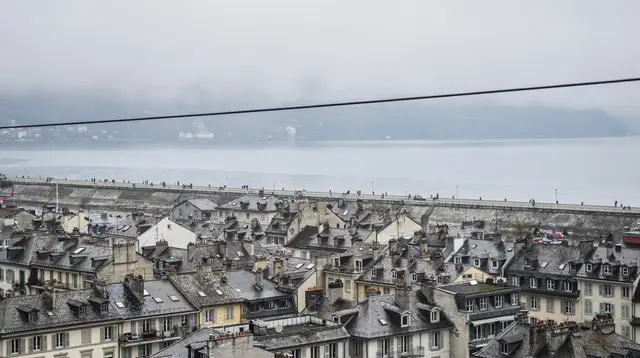
The Mer de Glace (“Sea of Ice”) is France’s largest glacier, filling the valley that runs down from the Mont Blanc massif toward Chamonix. It is reached not by cable car but by the Montenvers rack railway, a small cogwheel train that climbs out of central Chamonix to the Montenvers station, directly above the ice. From there, a marked path and a long staircase lead down to a viewing platform and an ice cave carved into the glacier itself. It is a different kind of Mont Blanc excursion from a cable car ascent: instead of climbing toward a summit panorama, you descend toward the ice, at valley level, on foot.
This page covers the Mer de Glace on its own terms. For the high-altitude cable car experience nearby, see the separate Aiguille du Midi guide — the two are genuinely different outings, with different tickets, different effort levels, and different things to see.
The glacier is retreating, and that changes the visit
The single most important thing to understand before booking is that the Mer de Glace has been retreating for decades, and it continues to do so. The glacier’s surface has dropped significantly since the Montenvers station was built, and the gap between the station and the current ice level keeps growing.
In practical terms, this means the staircase down to the ice cave gets longer, not shorter, over time. It currently runs to several hundred steps, but that is a description of roughly where things stand now, not a fixed number you can plan a mobility-limited visit around. Operators add sections to the staircase as the glacier drops further, so a count you read in an older trip report or a well-meaning travel guide may already be out of date. Come prepared for a genuine staircase descent and climb, not a short stroll to a viewpoint, and do not expect this figure to hold steady year after year.
The retreat also means the ice cave itself is not a permanent structure. It is dug fresh into the glacier each year, so its shape, size and exact access point change from one season to the next. Photos from a previous visit, or from a website that has not been updated, show a cave that no longer exists in that form.
Getting there from Geneva
From central Geneva, the drive to Chamonix takes roughly 1h15, crossing from Switzerland into France in the process — a reminder that although Switzerland sits inside the Schengen Area, it is not part of the European Union, so it is worth carrying identification even where passport checks are rare. Public transport options and organised transfers also run this route; see the Geneva day trips guide for a broader comparison of how visitors typically reach the Mont Blanc area, and the Chamonix transport guide for how to get around once you’ve arrived. Travellers flying in rather than starting from central Geneva should also check getting to Chamonix from Geneva Airport, since the logistics from the airport differ slightly from a city-centre departure.
Once in Chamonix, the Montenvers rack railway departs from its own station near the town centre and climbs to the Montenvers stop in about 20 minutes, with views over the valley on the way up. From Montenvers, it’s a walk to the staircase, then the staircase itself down to the glacier viewpoint and ice cave, before retracing the same route back up. Travellers who would rather not manage the drive, the train ticket and the timing themselves have several guided options: a Chamonix and Mont Blanc day tour from Geneva and a semi-private tour to Chamonix and Mont Blanc from Geneva both build the round trip, the rack railway and the glacier visit into a single organised day, which removes most of the planning around timed tickets and connections. For general orientation before you decide how to structure the day, the Chamonix planning guide covers the practical basics of the valley.
Some visitors combine the Mer de Glace with the Aiguille du Midi cable car on the same day, since both depart from Chamonix — but be aware this makes for a long, tiring day covering two separate attractions with two separate queues, not a single combined circuit.
When to go
The Mer de Glace excursion runs across the seasons, but conditions on the staircase and at the viewpoint change with them. In summer, the staircase is generally clear underfoot but can be busy, especially in July and August when timed-entry ticketing is most likely to be in effect. In winter and shoulder season, the same steps can be icy, snow-covered or affected by wind, which makes the descent and the climb back up noticeably harder and slower than a dry-weather visit. Because the ice cave and the exact staircase length are rebuilt each year, conditions described in an older trip report — including this one, over time — should be treated as a general guide rather than the current state of the route. Checking conditions close to your visit date, rather than relying solely on photos from a previous season, is worth the extra few minutes.
Tickets: separate from the Aiguille du Midi, priced in euros
This is worth stating plainly because it trips up a lot of visitors: the Montenvers/Mer de Glace ticket and the Aiguille du Midi cable car ticket are not the same product and are not automatically combinable. They are operated as distinct lifts with distinct pricing, and buying one does not include or discount the other. If your plan is to see both, budget for two tickets and two time slots.
All on-site pricing in Chamonix, including the Mer de Glace, is in euros — a contrast with Geneva itself, where everything is priced in Swiss francs. Chamonix sits in France’s Haute-Savoie region, and prices there tend to run noticeably lower than in Geneva across the board, from lift tickets to a coffee at the station café.
In high season, tickets for the Montenvers train are commonly timed or capped to manage crowding, so booking ahead is worth doing rather than assuming walk-up availability, particularly in July and August.
a half-day guided visit to the Mer de Glace departing directly from Chamonix handles the rack railway ticket and the walk down to the ice cave as part of a structured itinerary, which is a straightforward way to do the trip without juggling timed-entry logistics yourself.
Who this excursion suits, and who it doesn’t
The walk down to the ice cave is real exercise: a long staircase, sometimes exposed to alpine wind, occasionally slippery with meltwater, frost or leftover snow depending on the season, followed by the climb back up at altitude. It is not step-free, and there is no guaranteed easy alternative route for visitors who cannot manage stairs. If mobility is a concern, the Montenvers station itself still offers valley and glacier views without the descent, but the ice cave specifically requires the staircase.
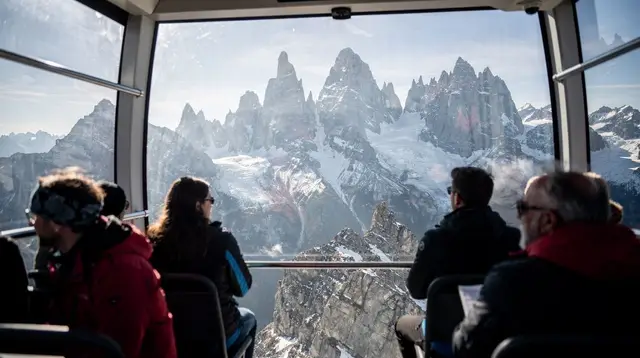
For travellers who want mountain scenery without this kind of physical effort, the Aiguille du Midi cable car (covered in the dedicated guide) delivers a comparable sense of scale from a viewing platform reached entirely by lift — a genuinely different trade-off between altitude, view and physical exertion.
For travellers who specifically want to stand close to glacial ice rather than look down at a mountain panorama, the Mer de Glace is the more direct choice of the two.
What to bring
Because the visit is largely outdoors and involves a genuine staircase descent, dress for the mountain rather than for a museum visit. Sturdy, closed shoes with grip matter more here than at most Chamonix attractions, since the steps can be wet, icy or simply uneven depending on the season. A layer for wind is worth carrying even on a warm day, since the Montenvers station and the staircase sit exposed to alpine weather that can shift quickly. Anyone planning to linger at the ice cave or take photos should also budget extra time for the climb back up, which takes longer than the descent for most visitors.
Combining Chamonix with the rest of the Mont Blanc area
Chamonix is a hub for several distinct excursions beyond the Mer de Glace, and it’s easy to underestimate how much a single day can hold. Options nearby include Megève for a gentler alpine village atmosphere, and broader Chamonix day trip options and Chamonix hikes for travellers staying longer in the valley.
a Chamonix highlight tour covering both the Aiguille du Midi and the Mer de Glace in one organised day is worth considering if you want both experiences without planning two separate outings yourself — just expect a long day, since each site alone takes several hours once travel and queueing are factored in.
Visitors travelling from Geneva who want the full Mont Blanc picture in a single guided outing can also look at a full-day tour from Geneva that combines Chamonix, the Aiguille du Midi and the Mer de Glace, which removes the need to arrange the drive, the train and both lift tickets independently.
For a private alternative with more flexibility on pacing, a private day trip from Geneva to Chamonix and the Mont Blanc area lets a small group set its own schedule around the Montenvers train and staircase.
Travellers looking for something more active than sightseeing sometimes book an introductory ice climbing session on the Mer de Glace itself — a guided way to step onto the glacier rather than simply view it from the platform, suited to visitors comfortable with a physically demanding outdoor activity.
Planning the rest of the day
Because the round trip from Geneva already involves driving, the rack railway and the staircase, most visitors treat the Mer de Glace as the centrepiece of a full day rather than one stop among several. If you’re building a broader itinerary, the one-day Mont Blanc from Geneva itinerary lays out a realistic single-day structure, while the four-day hiking Mont Blanc and Valais itinerary is a better fit for travellers who want to spend more time in the Chamonix valley without rushing.
It’s also worth clearing up two common points of confusion before you go: Mont Blanc sits in France, not Switzerland, even though it is closely associated with the Geneva region and visible from Geneva on a clear day — and the practical logistics of getting to Chamonix from Geneva Airport are worth checking if you’re arriving by air rather than already based in Geneva.
Quick comparison: Mer de Glace vs Aiguille du Midi
| Mer de Glace | Aiguille du Midi | |
|---|---|---|
| Access | Montenvers rack railway, then a staircase down | Two-stage cable car |
| Altitude focus | Valley floor, glacier level | Up to about 3,842m |
| Physical effort | Several hundred steps down and back up | Minimal walking, altitude adjustment |
| What you see | Glacier ice, ice cave | Panoramic mountain views |
| Ticket | Separate, not combinable with the Aiguille du Midi | Separate, not combinable with the Mer de Glace |
| Changes yearly | Yes — ice cave and staircase length | No — fixed infrastructure |
Mer de Glace: frequently asked questions
Is the Mer de Glace the same ticket as the Aiguille du Midi?
No. The Montenvers train to the Mer de Glace and the Aiguille du Midi cable car are two separate lifts in Chamonix with two separate, non-combinable tickets. Some guided tours bundle both into a single day, but the lift operators sell them independently.
How many steps are there down to the ice cave?
It changes from year to year. As the glacier thins and retreats, the staircase from the Montenvers station down to the current ice level has to be extended, so it now runs to several hundred steps. Treat any specific number you read as an estimate for that season, not a fixed fact.
Is the walk down to the glacier physically demanding?
Yes, more than it looks in photos. It is a long staircase, often exposed to wind and sometimes slippery with meltwater or frost, followed by the same climb back up. It is not step-free and is not an easy or guaranteed-accessible route for visitors with limited mobility.
How long does the full trip from Geneva take?
Budget roughly 1h15 each way on the road between Geneva and Chamonix, plus the Montenvers rack railway (about 20 minutes each way), time at the glacier viewpoint and ice cave, and the staircase. A round trip comfortably fills the best part of a day.
What currency are Mer de Glace tickets priced in?
Euros. Chamonix and the Mer de Glace sit in France, so tickets, food and anything else purchased on site are priced in euros, unlike Geneva itself, which uses Swiss francs.
Is the Mer de Glace excursion the same as the Aiguille du Midi excursion?
No. The Aiguille du Midi is a high-altitude cable car climbing to nearly 3,842m for panoramic mountain views. The Mer de Glace is a valley-floor glacier visit reached by rack railway and a staircase, with a different kind of physical effort and a different kind of view — ice up close rather than a summit panorama.
Does the ice cave look the same every year?
No. The ice cave is dug fresh into the glacier each year, and its exact shape, size and access point change with the ice. The glacier’s visible retreat also means the walk to reach it tends to get longer over time, not shorter.
Mont Blanc Excursions
Verified deep-linked GetYourGuide tours. Book through these links and we earn a small commission at no cost to you.
GetYourGuide does not provide a product photo for this activity — the image shows the meeting point, photographed by us.