Four Days: Mont Blanc to Zermatt Without a Car
Can you really go from Chamonix to Zermatt in 4 days without a car?
Yes. Trains link the two valleys via a change usually at Martigny, roughly three to four hours of travel. The trade-off is real effort at altitude: the Aiguille du Midi sits at 3,842m with timed tickets, the Mer de Glace now requires several hundred steps down from Montenvers station, and Zermatt itself is car-free, reached by shuttle train from Täsch.
Two of the Alps’ defining massifs, four days, zero rental cars. This itinerary is the only one on this site that links Mont Blanc country in France to the Matterhorn’s home in Valais entirely by rail and cable car - no personal vehicle at any point, from the Chamonix valley floor to the car-free streets of Zermatt. It is also, honestly, demanding: high altitude, a long staircase, and a genuine cross-border train transfer in the middle. Read this before booking anything.
What this route actually asks of you
Before the day-by-day plan, the two things that trip people up most.
First, the Aiguille du Midi climbs to 3,842m in two cable-car stages. That is enough altitude to leave many visitors short of breath even standing still, and the summit platform is exposed to wind and cold regardless of the weather down in Chamonix. Tickets are timed-entry and should be booked in advance - this is not a walk-up attraction in July or August.
Second, the Mer de Glace is retreating. The glacier has thinned so much that the staircase down from Montenvers station to the current ice level now runs to several hundred steps, and that number grows most years as the ice keeps losing thickness. Coming back up those same steps, after a day that already included the Aiguille du Midi or a hike, is real physical effort - factor it into your legs, not just your itinerary.
Neither attraction guarantees a view. Cloud sits on Mont Blanc often enough that a clear summit day should be treated as a bonus, not a promise.
Day 1: Geneva to Chamonix, first views of the massif
Leave Geneva by train or shared shuttle for Chamonix, a journey of roughly an hour. This crosses from Switzerland into France, so keep ID handy even though there is no routine passport check. Chamonix runs on euros, a useful reset after Geneva’s Swiss francs.
Spend the afternoon getting oriented: walk the town center, look up at the Mont Blanc massif from the valley floor, and confirm your timed tickets for tomorrow’s Aiguille du Midi ascent if you have not already booked them. For travelers who would rather have the logistics handled, a guided day trip such as a private Mont Blanc day trip from Chamonix bundles transport and cable-car access into one booking.
Overnight in Chamonix. Rooms fill up in summer and winter alike, so book ahead rather than arriving speculatively.
Day 2: Aiguille du Midi and Mer de Glace
This is the massif day, and it is long. Start early: the Aiguille du Midi cable car climbs from about 1,035m to 3,842m in two stages, with a stop at Plan de l’Aiguille around 2,317m. Dress warmer than the Chamonix valley suggests - temperatures at the top can sit well below freezing even on a mild summer day, and the altitude itself can cause lightheadedness.
If your ticket includes it, the glass-floored Step into the Void platform and the walk between the two summit terraces are worth the extra time, weather permitting. Cloud can close in with little warning at this altitude, so treat any clear view of Mont Blanc as the exception, not the plan.
Back in the valley by early-to-mid afternoon, take the Montenvers rack railway up to the Mer de Glace. This is a separate excursion from the Aiguille du Midi, with its own ticket and its own timetable - do not assume one pass covers both. From Montenvers station, the descent to the ice cave now runs several hundred steps down, and the same number back up; it is the most physically demanding stretch of this itinerary’s second day, arriving as it does after a full morning at altitude. Travelers who prefer a single guided package covering both sites can look at a combined Chamonix, Aiguille du Midi and Mer de Glace day tour, or, based in Chamonix itself, a guided Mer de Glace excursion from Chamonix.
Second night in Chamonix. Legs will know they worked.
Day 3: Chamonix to Zermatt by train
A travel day, but not a passive one. The journey from Chamonix to Zermatt runs roughly three to four hours, typically via a change at Martigny, crossing from Haute-Savoie in France into Valais in Switzerland. Build in slack for connections rather than booking the tightest possible transfer - alpine branch lines run on their own schedule, and a missed connection can cost an hour or more.
This crossing also means switching currency back to Swiss francs and, in Zermatt, adjusting to notably higher prices than in Chamonix - Valais resort pricing sits closer to Geneva’s than to Haute-Savoie’s.
One detail worth planning around before you board: Zermatt itself is car-free. That has no bearing on a rail arrival, but it is the reason every vehicle-based transfer option stops at Täsch, several kilometres below - if anyone in your group is tempted to rent a car for this leg instead of training in, it will not reach the village. Arriving by train sidesteps the issue entirely and drops you inside Zermatt itself.
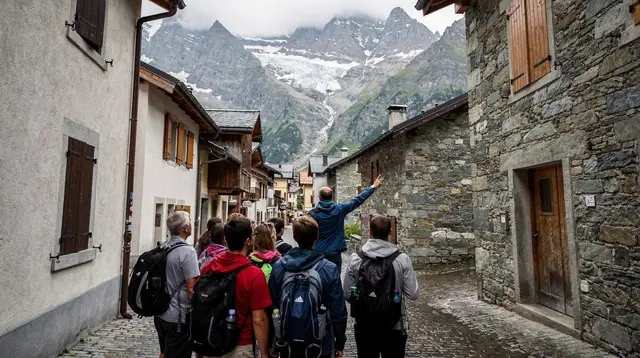
Settle into Zermatt in the afternoon. The village is worth an unhurried first walk before tomorrow’s harder day: car-free streets, close views of the Matterhorn when cloud allows, and a noticeably different architectural character from Chamonix’s French-Alpine build.
Day 4: Zermatt and the Matterhorn, on foot
Full day in and around Zermatt. Trails here range from valley walks with Matterhorn views to higher routes reached by cable car or the Gornergrat rack railway - choose according to yesterday’s legs and today’s weather. As with the Aiguille du Midi, a clear, unclouded Matterhorn is a genuine possibility here, not a given; mountain weather in Valais can turn as fast as it does above Chamonix.
Worth saying plainly: the Matterhorn is not visible from Geneva or Chamonix. It stands well east, in Valais, and this itinerary’s whole second half exists specifically to reach it - it is not a bonus view you could have picked up earlier in the trip.
For a broader introduction to the village and its trail network before committing to a specific route, or if this is a first visit to the area on a different trip, the guided Zermatt day trip from Geneva covers much of the same ground in a single guided outing, useful context even if you are doing this longer, independent version.
Return transport from Zermatt back toward Geneva or onward depends on your onward plans; the same Täsch-to-Zermatt shuttle train applies in reverse for anyone continuing by road beyond this point.
Practical notes before you book
| Chamonix side | Zermatt side | |
|---|---|---|
| Currency | Euro | Swiss franc |
| Country | France | Switzerland |
| Car access | Normal road access | Car-free; park in Täsch |
| Key ticket | Aiguille du Midi, timed entry | Gornergrat / lift passes |
| Altitude challenge | 3,842m summit | High trails, variable |
Two through-lines matter more than any single stop. One: this trip runs on timetables, not spontaneity - the Aiguille du Midi and Mer de Glace need advance tickets, and the Chamonix-Zermatt train needs a realistic connection window. Two: it is physically real, between the altitude at the Aiguille du Midi, the Mer de Glace staircase, and a full trail day in Zermatt - fitter travelers will simply enjoy it more than those hoping for a gentle sightseeing pace.
For background on why these two massifs are often confused, see why the Matterhorn sits much farther from Geneva than people assume and why Mont Blanc belongs to France, not Switzerland. If you are still deciding between a Chamonix-only or Zermatt-only trip instead of combining both, this comparison of Chamonix versus Zermatt from Geneva lays out the trade-offs. For lighter versions of either half on their own, see Chamonix day hikes, Zermatt day hikes, the Mer de Glace glacier visit in detail, the Aiguille du Midi glacier experience, Zermatt’s glacier and snow options, and getting around with Chamonix transport basics.
Frequently asked questions about the Mont Blanc to Zermatt route
Do you need a car for this itinerary?
No. The whole route runs on trains, cable cars and rack railways: Geneva to Chamonix by bus or train, Chamonix to Zermatt by rail with a change usually at Martigny, and Zermatt itself is car-free, reached from Täsch by shuttle train.
Is the Matterhorn visible from Chamonix or Geneva?
No. The Matterhorn stands in Valais, on the Swiss-Italian border, and is not visible from Chamonix or Geneva. Mont Blanc, visible from parts of Geneva and dominating Chamonix, is a separate massif roughly 45km away, and it is the Alps’ highest summit, not the Matterhorn.
Do you need to book the Aiguille du Midi and Mer de Glace in advance?
Yes, strongly recommended. Both run timed-entry tickets in high season, and the Aiguille du Midi can sell out days ahead in summer. Booking online before the trip removes the biggest risk to this itinerary’s tight schedule.
How many steps does the Mer de Glace ice cave require now?
Several hundred steps down from Montenvers station to the current glacier level, and the same number back up. The glacier has thinned and retreated for years, so the staircase has grown longer each season - it is not a short, flat walk.
Can you drive into Zermatt?
No. Zermatt is a car-free village. Visitors leave their car in Täsch and continue the last stretch by a shuttle train into the village; there is no ordinary vehicle access into Zermatt itself.
How long is the train journey from Chamonix to Zermatt?
Roughly three to four hours depending on connections, typically involving a change at Martigny. It crosses from Haute-Savoie in France into Valais in Switzerland, so carry ID and be ready for a currency change from euros to Swiss francs.
Is this itinerary suitable for a first alpine trip?
Not really. It combines high altitude at the Aiguille du Midi, a steep staircase at the Mer de Glace, and a full mountain trail day around Zermatt across four fairly packed days. It suits travelers with some hiking fitness and tolerance for altitude, not a first easy alpine outing.
tours.4 days
Verified deep-linked GetYourGuide tours. Book through these links and we earn a small commission at no cost to you.
GetYourGuide does not provide a product photo for this activity — the image shows the meeting point, photographed by us.