Zermatt Glacier Paradise: Skiing and Ice Caves Near the Matterhorn
What is Matterhorn Glacier Paradise and how do you reach it from Geneva?
It is the cable car station above Zermatt, at roughly 3,883m, reached in stages via a series of lifts that also give access to a glacier ice cave and, in season, glacier skiing. Geneva to Zermatt is about four hours by train, with a mandatory switch to a shuttle at Täsch since Zermatt itself is car-free — this is a full-day undertaking, not a quick side trip.
Getting Onto the Glacier Above Zermatt
Zermatt’s name is inseparable from one mountain, but the experience most visitors come for isn’t a hike to the Matterhorn’s base — it’s a cable car ride onto the glacier itself. Matterhorn Glacier Paradise is the string of lift stations that carries passengers from the village floor up to roughly 3,883 metres, making it one of the highest-altitude cable car stations in Europe. From the top, an ice cave carved into the glacier and, in season, marked glacier ski runs are the payoff — but getting there, and understanding what’s realistic in a single visit, takes some planning, especially from Geneva.
This guide focuses narrowly on that lift-and-glacier experience: what the ascent involves, what you’ll actually find at altitude, how the journey from Geneva works in practice, and where the marketing gets ahead of the facts. For trail walking around Zermatt at lower elevations, see the separate Zermatt hiking guide — this page is about the cable car route into the glacier zone, not signed footpaths.
The Route to the Top
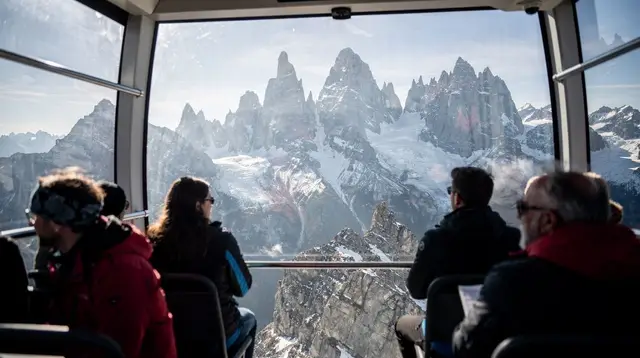
The ascent from the village to Glacier Paradise happens in stages, not one continuous cabin. Zermatt sits at around 1,620 metres; the lift system climbs through intermediate stations before reaching the summit terminal near 3,883 metres. Along the way, cabins pass above the tree line and onto genuinely glaciated terrain — this isn’t a scenic overlook bolted onto a ski resort, it’s a working glacier environment with crevasses, seasonal snow cover, and a mountain-safety infrastructure to match.
At the top, an observation platform gives sweeping views across more than a dozen peaks above 4,000 metres, including the Matterhorn’s northern face from an angle most visitors never otherwise see. An ice cave, cut into the glacier itself, is one of the signature stops — a walk-through tunnel lit from within the ice, refreshed periodically as the glacier moves and the previous cave is no longer stable. Conditions and exact opening dates vary by season, so treat the ice cave as a highlight to check for rather than a fixed year-round guarantee.
Because the altitude gain is substantial and rapid, some visitors feel the effects of thin air at the top — mild breathlessness or a light headache is common and usually passes quickly. It’s worth pacing yourself at the summit station rather than rushing between viewpoints.
Skiing on the Glacier
Zermatt promotes its glacier ski area as one of the few places in the Alps offering skiing across most of the calendar year, and the terrain above Glacier Paradise does hold snow far longer than lower resorts. That said, “summer skiing” is not a fixed guarantee — actual operating days depend on the glacier’s current condition, snowfall, and maintenance closures, and the mix of open runs shifts through the year. Anyone building a trip specifically around glacier skiing on a set date should check the resort’s live snow and lift report before travelling, not rely on general claims about year-round skiing.
For visitors who want structured time on snow rather than just the cable car experience, options at this altitude range from full downhill sessions to guided instruction:
a guided skiing and snowboarding session across the Swiss Alps terrain suits those who already ski and want a supported day on the mountain, while private ski lessons with an instructor are a better fit for beginners or anyone wanting one-on-one coaching before tackling glacier runs. Both are separate bookings from the cable car ticket itself, and neither substitutes for checking current conditions.
Beyond downhill skiing, the surrounding area supports broader winter sports around Zermatt, and travellers piecing together lift access across several days may find a multi-day Zermatt passes and tickets option more economical than single ascents.
Choosing How You Get There
Not everyone starts from the same point on the lake, and the cable car ride itself can be booked in more than one way. Travellers already in the region have a few practical options beyond simply buying a ticket on arrival in Zermatt:
a Geneva day trip to Zermatt with the Glacier Paradise cable car built into the itinerary bundles the train logistics and the lift ascent into one booking, which removes some of the planning overhead described above. For visitors based on the Swiss Riviera rather than in Geneva itself, a day tour to Zermatt and Matterhorn Glacier Paradise departing from Montreux is a shorter run than starting from Geneva, since Montreux already sits further up the lake toward the Valais.
Those combining Zermatt with a wider swing through the Alps might also consider a multi-day tour from Geneva that pairs Glacier 3000 with Chamonix and Mont Blanc — a different itinerary from a Zermatt-focused trip, but useful context if the goal is to see several high-altitude Alpine viewpoints rather than commit a full day to Zermatt alone. It is worth being clear that Glacier 3000, above Montreux, and Matterhorn Glacier Paradise, above Zermatt, are two separate lift systems in two different parts of the region — a tour built around one does not include the other.
The Matterhorn: What It Is and Isn’t
The Matterhorn’s pyramid silhouette is one of the most photographed mountains on Earth, and Glacier Paradise puts you closer to it than almost anywhere else accessible by lift. Two points are worth clearing up before you go, because both trip up first-time visitors.
First, at 4,478 metres, the Matterhorn is not the highest peak in the Alps. That distinction belongs to Mont Blanc, across the region in France at 4,808 metres, visible from the Chamonix valley rather than from Zermatt. The two mountains anchor very different corners of the Alps and are not interchangeable stops on the same day — see Chamonix versus Zermatt from Geneva if you’re deciding between them, and why Mont Blanc is in France, not Switzerland for the broader geography.
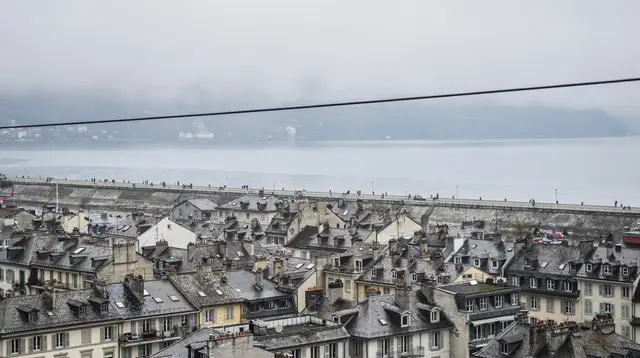
Second, despite Zermatt’s reputation, the Matterhorn is not visible from Geneva. The two places sit well over 200km apart at opposite ends of French-speaking Switzerland, and no viewpoint in or around the city offers a sightline to it — see how far the Matterhorn really is from Geneva for the actual distances involved. If a photo or itinerary implies otherwise, it isn’t accurate.
Getting There from Geneva
Zermatt is reachable from Geneva by train, and the journey is straightforward but long: budget roughly four hours each way, typically involving a change or two along the Rhône valley route through the Valais. The final approach is fixed and non-negotiable — Zermatt is a car-free village, and all vehicles, including rental cars and taxis, stop at Täsch, a few kilometres below. From there, a dedicated shuttle train runs the short remaining distance into Zermatt itself, departing frequently enough that the connection rarely adds significant delay, but it is a mandatory step, not an option to skip.
Given the four-hour train ride each way plus time queuing for lifts and moving around at altitude, a same-day round trip from Geneva is possible but demanding — it leaves little room for delays, weather changes, or simply enjoying the summit without rushing back to a train. Many visitors instead build Zermatt into a longer loop through the Valais or combine it with an overnight stay, which also opens up an early-morning ascent before the cable cars get busy. For guided logistics handled for you, a full-day trip from Geneva to Zermatt or a private tour from Geneva with the option to add Glacier Paradise both handle the train changes and the Täsch shuttle as part of the itinerary.
Travellers based closer to the lake may also start from Lausanne, where a day tour to Zermatt and Matterhorn Glacier Paradise shaves some travel time off the Geneva route. Whichever starting point, check current Zermatt airport transfer and train timing before locking in a single-day plan, since connection windows shift by season.
For visitors flying directly into the region and heading straight for Zermatt without stopping in Geneva itself, a private transfer from Geneva Airport to Zermatt avoids the train changes entirely, at the cost of losing the flexibility of public transport along the way. It’s a different trade-off from the train-and-shuttle route: faster door-to-door in some cases, but dependent on road conditions through the Valais rather than the fixed rail timetable.
Fully independent travellers who prefer to arrange their own train tickets can also connect through Geneva’s own transport options before continuing south — useful if Zermatt is one stop within a longer, self-planned itinerary rather than a single dedicated day.
Planning the Visit
A realistic Glacier Paradise visit breaks into three phases: the train journey in, the time at altitude, and the return. Here’s a rough shape for the day.
| Phase | Approximate time | Notes |
|---|---|---|
| Geneva to Zermatt (train + Täsch shuttle) | ~4 hours | One or two changes; shuttle from Täsch is mandatory |
| Cable car ascent to Glacier Paradise | 30-45 minutes | Multiple stages; queues possible in peak season |
| Time at the summit (viewpoints, ice cave, optional skiing) | 2-4 hours | Longer if skiing or lingering at multiple viewpoints |
| Return journey to Geneva | ~4 hours | Same route in reverse |
Dress in layers regardless of the season — the summit station sits in a genuine high-alpine climate, often 20-25°C colder than the valley floor, with wind adding to the chill. Sunglasses and sunscreen matter even on overcast days, since UV exposure increases sharply with altitude and reflected light off snow and ice.
Given how much of the day is consumed by travel, most visitors do better arriving in Zermatt the evening before rather than attempting the round trip from Geneva in a single push. An overnight stay also means reaching the first cable car of the morning before the queues build, which matters most in peak winter and summer weeks when lift lines at the base station can add a meaningful wait to the ascent. Anyone set on the single-day version of the trip should build in slack around both train connections — a missed change in either direction can turn a long day into a very late one.
If the goal is more than the cable car and ice cave — actual trail walking at lower elevation around the village — pair this visit with the separate Zermatt hiking guide, which covers signed paths rather than lift-served glacier terrain. And for a wider sense of how Zermatt compares to other Alpine bases reachable from Geneva, the Zermatt comparison guide sets it against alternatives like Chamonix and Verbier.
Zermatt Glacier Paradise: Frequently Asked Questions
The details below cover the questions that come up most often when planning a Matterhorn Glacier Paradise visit from Geneva or elsewhere in the region.
How high does the Matterhorn Glacier Paradise cable car go?
The top station sits at roughly 3,883 metres above sea level, making it one of the highest-altitude cable car stations in Europe. It is reached in stages from Zermatt, not in a single continuous cabin.
Is the Matterhorn the highest peak in the Alps?
No. The Matterhorn, at 4,478 metres, is instantly recognisable but is not the Alps’ highest summit — that record belongs to Mont Blanc, on the French side of the region, at 4,808 metres.
Can you see the Matterhorn from Geneva?
No. Geneva sits at the far western end of the lake, well over 200km from Zermatt, and the Matterhorn is not visible from the city at any point. It only comes into view once you are well into the Valais, approaching Zermatt itself.
Can you drive into Zermatt?
No. Zermatt is a car-free village. Visitors arriving by road leave their vehicle in Täsch, in a large parking structure, and continue the final stretch into Zermatt on a dedicated shuttle train that runs every 20 minutes or so.
Is skiing on the glacier guaranteed year-round?
Zermatt markets summer glacier skiing as one of its distinguishing features, but actual operating days, open pistes and snow quality depend on current glacier and weather conditions. Check the lift company’s live snow report before planning a ski day around any specific date.
How long does it take to get from Geneva to Zermatt?
Roughly four hours by train each way, typically with one or two changes plus the mandatory shuttle from Täsch. Combined with time at altitude, this makes Zermatt a long day trip at best, and a more comfortable overnight or multi-day stay for most visitors.
Is a day trip from Geneva to Zermatt possible?
It is physically possible to go and return in a single very long day, but between roughly eight hours of train travel and the altitude changes at Glacier Paradise, it leaves little slack for delays, queues or weather and is tiring. Many visitors prefer to treat Zermatt as an overnight stop within a longer Valais or Alps itinerary.
Winter in Geneva
Verified deep-linked GetYourGuide tours. Book through these links and we earn a small commission at no cost to you.
GetYourGuide does not provide a product photo for this activity — the image shows the meeting point, photographed by us.