Chamonix Adventure Sports: Aiguille du Midi, Mer de Glace and More
What adventure sports can you do around Chamonix from Geneva?
From Chamonix, about an hour from Geneva across the French border, visitors can ride the Aiguille du Midi cable car to 3,842m, reach the Mer de Glace glacier by rack railway, and book guided alpinism, via ferrata, paragliding and, in winter, skiing. Weather and altitude genuinely affect all of them, and the highest-demand tickets need advance, timed booking.
Why Chamonix is Geneva’s adventure valley
Cross the border into France and drive roughly an hour from Geneva, and the flat lakeside city gives way to a wall of granite and ice: the Chamonix valley, sitting directly beneath Mont Blanc, at 4,805m the highest summit in the Alps. This is not a gentle half-day excursion tacked onto a lake cruise — it’s a genuine high-mountain environment, and the activities built around it (cable cars to nearly 4,000m, glacier hikes, roped climbing, paragliding, via ferrata, and winter skiing) reflect that. Planning here means understanding what each activity actually involves, what depends on weather you can’t control, and how it compares to the Alps’ other famous peak, the Matterhorn, which sits in an entirely different massif and country.
This guide focuses on the adventure-sport side of Chamonix: what the Aiguille du Midi and the Mer de Glace really deliver, which guided activities suit beginners, and what to book ahead of time versus decide once you’re there.
The Aiguille du Midi: 3,842m, and real altitude to go with it
The Aiguille du Midi cable car is the valley’s signature experience and, for many visitors, the reason to come to Chamonix at all. It climbs from the valley floor (about 1,035m) to a summit station at 3,842m in two stages, with an intermediate stop at Plan de l’Aiguille (2,317m). At the top, a network of viewing platforms and a glass “Step into the Void” box put visitors within sight of Mont Blanc’s summit ridge and, on a clear day, a panorama that stretches toward the Matterhorn and Monte Rosa in the distance.
Two things catch first-time visitors off guard. First, the cold: at nearly 3,900m, temperatures routinely run 20-30°C colder than down in Chamonix, with wind chill that can make a warm summer day at the base feel like midwinter at the top. A proper jacket, and layers, are worth carrying regardless of the season. Second, the altitude itself is real — some visitors feel light-headed or short of breath simply from the elevation gain, especially arriving quickly by cable car rather than acclimatising on foot.
The other point worth being direct about: the view is not guaranteed. Cloud, wind or storms can roll in and obscure the summit entirely, and in poor conditions the top station can close outright. No operator can promise a clear Mont Blanc panorama on a booked date, and tickets are non-refundable for weather in most cases — check the forecast before committing to a specific day if your schedule allows flexibility. In high season, tickets are sold with timed entry slots and frequently sell out; booking a few days to a couple of weeks ahead is the safer approach.
Which Aiguille du Midi ticket or tour actually suits you
Not every visitor needs the same version of this trip, and the options range from a bare cable-car ticket to a fully guided day that removes the logistics entirely. Travellers coming from Geneva without a car often find it simplest to book transport and entry together, such as the transport package covering both Chamonix, the Aiguille du Midi and the Mer de Glace, which avoids juggling train timetables and separate ticket queues on the day.
For those who’d rather have a guide narrate the geology and history at each stage, the guided tour to the Aiguille du Midi and Montenvers covers both cable car and glacier railway with commentary included, while a shorter option for a tighter schedule is the half-day Aiguille du Midi excursion, useful for anyone stopping in Chamonix as one stage of a longer loop rather than a full day. Visitors who want both major sights covered without managing the connections themselves can look at the day tour from Geneva combining Chamonix, the Aiguille du Midi and the Mer de Glace, which handles the round trip from the city in a single booking. Whichever option is chosen, the same weather caveat applies across all of them: a guide or a transport package smooths the logistics, but none of them can buy a clear sky.
Mer de Glace: a glacier that’s visibly retreating
Where the Aiguille du Midi goes up, the Mer de Glace goes sideways and down — France’s largest glacier, reached from Chamonix by the historic Montenvers rack railway, a cogwheel mountain train that climbs to a viewing station overlooking the ice.
The glacier is the centrepiece, but the detail that makes the visit memorable is the ice cave carved fresh into the glacier’s surface each year. Getting down to it used to mean a short walk; today it means descending a staircase that has grown to several hundred metal steps, extended annually as the glacier thins and retreats further down the valley. It’s a strikingly concrete way to see climate change in action — each year’s staircase is measurably longer than the last — and worth knowing in advance if steep stairs are a concern, since there’s no shortcut and the climb back up is the same distance in reverse.
Mer de Glace tickets, like the Aiguille du Midi, can be booked with timed slots in peak summer; the train and cave are usually less crowded early in the day.
Guided alpinism, via ferrata and paragliding
Beyond the two headline cable-car experiences, Chamonix is a genuine base for guided mountain activities, most of which are built around the fact that this terrain requires professional supervision:
- Guided alpinism: introductory roped glacier walks and easier peak ascents are offered with certified mountain guides, no prior climbing experience strictly required for the entry-level routes, though a reasonable level of fitness helps. This is not terrain to explore independently — the guide isn’t a formality here, it’s the safety system.
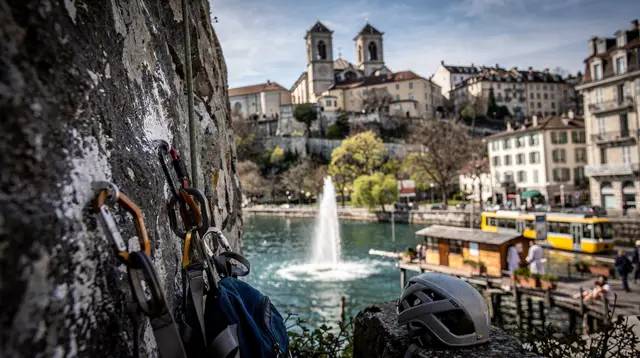
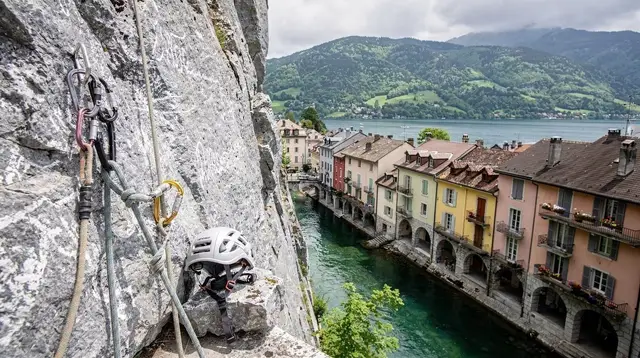
- Via ferrata: fixed cable-and-rung routes bolted into the rock let climbers move through exposed terrain with a harness and lanyard rather than free climbing. Routes range from beginner-friendly to genuinely demanding, and most operators run them with a guide for first-timers.
- Paragliding: tandem flights over the valley, flown with a certified pilot, are one of the more accessible ways to see Mont Blanc from the air with zero experience needed on the visitor’s part. Flights are weather-dependent and can be postponed at short notice for wind or cloud, so it’s worth keeping a spare day free rather than scheduling it for a single tight window.
- Skiing: in winter (broadly December to April, snow-dependent), the same lift infrastructure that carries summer sightseers serves one of the Alps’ best-known ski and off-piste areas.
For a full first taste of the valley without committing to a single specialist activity, a guided day trip that combines the cable car, the glacier and a look at the town itself is often the simplest starting point — see the private day trip to Chamonix and Mont Blanc for that kind of overview.
Those who want the aerial perspective specifically can look at the tandem paragliding flight over the valley, while a gentler, guide-led way to end a day in the mountains is the sunset hike with fondue in the alpine pastures above Chamonix. In winter, the snowshoeing outing with a local cheese and wine tasting pairs a manageable snow activity with the valley’s food traditions.
Paragliding launch sites: Plan de l’Aiguille versus Planpraz
Tandem paragliding around Chamonix isn’t a single fixed experience — pilots fly from more than one launch point on either side of the valley, and the view changes depending on which side you take off from. Flights launching from Plan de l’Aiguille, on the Aiguille du Midi side, put Mont Blanc directly in front of the glider on the descent; the tandem flight from Plan de l’Aiguille and the flight facing Mont Blanc both fly this side of the valley. On the opposite slope, Planpraz offers a different angle over the town and the Aiguilles Rouges ridge, a shorter approach favoured by some operators for morning flights when the Aiguille du Midi side is busier. Either way, the flight itself is short, led by a certified pilot, and requires no experience or particular fitness from the passenger — the main variable to plan around, as with the cable cars above, is wind and cloud rather than skill.
Chamonix versus Zermatt: two different mountains, two different trips
It’s worth being unambiguous about this, because it’s one of the most common mix-ups in planning a Geneva-based Alps trip: Chamonix sits beneath Mont Blanc, in France, about an hour from Geneva. Zermatt, home of the Matterhorn, sits in the Swiss canton of Valais, roughly 4 hours from Geneva by road or rail, and requires switching to a shuttle train from Täsch since the village itself is car-free.
The Matterhorn is not visible from Chamonix, and it is not visible from Geneva. The two mountains belong to different massifs, in different valleys, reached by different routes — they’re often mentioned in the same breath because both are iconic Alpine peaks near Swiss-French Switzerland, but they are not a package deal for a single day trip. Trying to combine both destinations in one day from Geneva isn’t realistic; each deserves its own dedicated excursion, and the table below lays out the practical contrast.
| Chamonix (Mont Blanc) | Zermatt (Matterhorn) | |
|---|---|---|
| Country | France | Switzerland |
| Distance from Geneva | ~1 hour by road | ~4 hours by road/rail |
| Iconic peak | Mont Blanc, 4,805m | Matterhorn, 4,478m |
| Top cable car point | Aiguille du Midi, 3,842m | Klein Matterhorn, ~3,883m |
| Village access | Drive in directly | Car-free; shuttle from Täsch |
| Currency | Euro | Swiss franc |
Planning notes: booking, weather and what to wear
A few practical points make the difference between a smooth day and a frustrating one:
- Book the Aiguille du Midi and Mer de Glace ahead in high season. Both sell timed-entry tickets that routinely sell out days in advance in July and August; a spontaneous same-day visit is a gamble in peak summer.
- Check the forecast, but accept you can’t control it. Weather at 3,842m changes fast and doesn’t always match conditions in the valley below. If the goal is specifically the Mont Blanc panorama, building in a flexible extra day (or picking a trip with some schedule slack) is the only real hedge against cloud.
- Dress for a mountain, not a lakeside city. Even a summer visit to the Aiguille du Midi calls for a warm layer and wind protection; Geneva’s own weather that same morning is no guide to what the summit will feel like.
- A guide is not optional for alpinism or via ferrata. Certified guides carry the safety equipment, know current glacier and rockfall conditions, and are how beginners access this terrain responsibly — this isn’t a cost to shop around to avoid.
- Border crossing is low-friction but not invisible. Geneva to Chamonix means Switzerland to France, both inside Schengen, so there’s typically no routine passport check, but carrying ID is still sensible practice, and it’s a useful reminder that this is an international trip, not a local suburb.
How much time to set aside
Adventure sports around Chamonix don’t compress well into a single rushed afternoon, and how much time to budget depends on which activities are on the list. The Aiguille du Midi alone — travel from Geneva, the two-stage ascent, time on the viewing platforms, and the descent — comfortably fills a day on its own, especially once queues and weather-dependent waits are factored in. Adding the Mer de Glace in the same day is possible but tight, since both sites deserve unhurried time rather than a checklist visit; travellers who want to see both without feeling rushed generally do better giving the valley two days rather than one.
Anyone weighing up exactly how a single day should be structured, including realistic timings for transport from Geneva, can check the Chamonix day trips guide; those looking further ahead at logistics — what to book, what to pack, and how the shoulder seasons differ from peak summer — will find more detail in the Chamonix planning guide and the Chamonix passes and tickets guide, which lays out which combined tickets make sense for which itinerary. For the practicalities of actually getting from Geneva to the valley, whether by train, bus, transfer or rental car, see the Chamonix transport guide.
Season matters almost as much as the day-of schedule. The Aiguille du Midi and Mer de Glace both operate year-round, weather permitting, but summer (roughly June through September) brings the longest opening hours, the clearest average conditions for the Mont Blanc panorama, and also the biggest crowds and the tightest ticket availability. Paragliding and via ferrata are essentially warm-weather activities, running from spring into autumn once snow has cleared the launch sites and rock routes; snowshoeing and skiing take over once winter snow arrives, typically from December. Visitors chasing a specific activity — paragliding over green alpine pastures rather than snowshoeing across them, for instance — should check that the season lines up with the plan before locking in dates, since a stunning summer itinerary and a stunning winter one look almost nothing alike in this valley.
Travellers who want a broader look at combining Chamonix with other Mont Blanc-area stops can see the Chamonix and Mont Blanc excursions guide, while those focused purely on trails rather than cable cars may prefer the Chamonix hiking guide. For a winter-specific visit, the Chamonix winter sports guide covers skiing conditions and season timing in more depth, and the Mer de Glace glacier and snow guide goes further into the ice cave and glacier science. Those weighing up an aerial view specifically should also check the Chamonix paragliding flights guide for route and weather detail.
If Chamonix is one stop on a longer loop, it pairs naturally with a broader mountain itinerary — see the four-day hiking trip through Mont Blanc and Valais for one way to link it with Zermatt-area terrain without trying to squeeze both into a single rushed day. Closer to Geneva, Mont Salève, reached by a cable car that also starts on the French side of the border, offers a much smaller-scale taste of alpine views for those with less time.
Foodie travellers rounding out a valley visit can also look at the wine, cheese and charcuterie tasting as a lower-key complement to a day of altitude and adrenaline, and rafting fans nearby can consider the introductory rafting outing with an aperitif in Haute-Savoie. For context on the valley’s other main town, see Megève, a quieter alternative base a short drive from Chamonix itself, covered further in the Megève Mont Blanc excursions guide.
Alpine Adventure Sports
Verified deep-linked GetYourGuide tours. Book through these links and we earn a small commission at no cost to you.
GetYourGuide does not provide a product photo for this activity — the image shows the meeting point, photographed by us.