Hiking at Glacier 3000: Trails and the Peak Walk
Can you hike at Glacier 3000 without mountaineering experience?
Yes. A cable car from the Col du Pillon carries hikers straight to the high-altitude station at around 3,000m, and from there marked trails along the ridge and the Peak Walk suspension bridge require no climbing gear or technical experience — only sturdy footwear, warm layers, and acceptance that wind, cold and cloud can change the experience at any time.
Walking the ridges above the Diablerets glacier
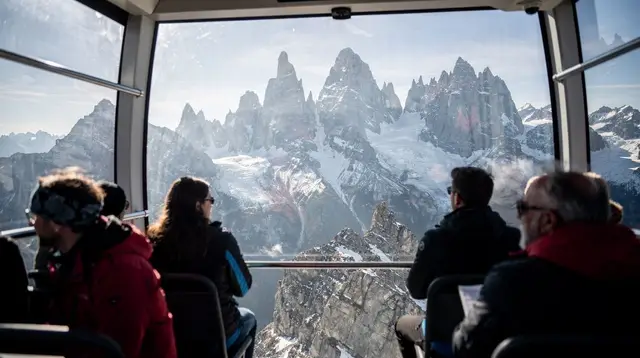
Glacier 3000 sits above the Col du Pillon, in the Diablerets massif, roughly two hours by road from Geneva. What makes it accessible to ordinary visitors — not just climbers — is that a cable car does almost all of the vertical work, lifting hikers from the col to a high station near 3,000m in a matter of minutes. From there, a network of short, marked trails lets you walk along the ridge, look out over the glacier itself, and cross the Peak Walk, a suspension bridge strung between two rocky summits. None of it requires ropes, crampons, or prior mountaineering experience.
This guide is about that on-foot, summer experience: trails, the bridge, what the walking actually feels like at this altitude, and how to plan around the one variable nobody controls — the weather. It does not cover skiing or other on-snow winter activities at Glacier 3000; those run on separate infrastructure in a different season and are covered in a dedicated glacier and snow guide and winter sports guide for the same destination.
Getting from Geneva to the Col du Pillon
There is no direct train to the Col du Pillon, so most visitors arrive either by car or as part of an organised day trip. By road, the drive from Geneva takes around two hours, running along the Lake Geneva shore before climbing into the Diablerets valley. Public transport is possible via train to Aigle or Gstaad and onward postbus, but connections add time and are less convenient for a single-day visit.
Several operators run the route as a guided or private day trip that bundles transport with the cable car ticket, which removes the logistics of parking, timing connections, and finding the ticket office once you arrive. A day trip from Montreux to Glacier 3000 is one practical option if you’re already on the lake shore, while a trip from Lausanne to Glacier 3000 and Les Diablerets works well for those based further along the lake. Travellers coming from the Gstaad side can consider a private day trip taking in Glacier 3000, Montreux and Vevey, which combines the mountain with lakeside towns in one outing.
For a broader look at how a Glacier 3000 excursion fits alongside other alpine day trips from the city, see the general Geneva day trips guide. Travellers who want to start directly from Geneva rather than staging from the lake shore can look at a private day trip from Geneva to Glacier 3000 and its fun park, which handles the full return journey from the city in one booking, or a four-day tour from Geneva pairing Glacier 3000 with Chamonix and Mont Blanc for visitors who want to build the mountain into a longer Alpine stretch rather than a single day.
If the cable car itself is the only piece you need to arrange — because you’re driving yourself to the Col du Pillon and don’t need transport bundled in — a standalone Glacier 3000 cable car roundtrip ticket covers just the ascent and descent, leaving the rest of the day open.
The cable car and the high station
The cable car from the Col du Pillon rises in stages to the Scex Rouge area near 3,000m, where the top station, viewing platforms, and trailheads sit. Queues build in the middle of the day in high season, particularly in July and August, so an early departure from the col reduces waiting time and gives the best chance of catching clear morning light before afternoon cloud can build over the peaks.
Once at the top, the walking begins immediately outside the station — there’s no need to hike up to a trailhead. This is the core of what makes Glacier 3000 different from most 3,000m terrain in the Alps: the elevation gain is done mechanically, and what’s left on foot is a series of short, manageable walks rather than a mountaineering approach.
The Peak Walk suspension bridge
The Peak Walk connects two separate rocky summits with a pedestrian suspension bridge at close to 3,000m — reportedly among the only bridges anywhere built specifically to link two distinct peaks. Crossing it takes only a few minutes on foot, with a metal grille underfoot and railings on both sides; no harness or technical equipment is involved. In clear conditions, the views extend across the glacier and into the surrounding peaks.
The bridge is exposed to wind, and management closes it in strong gusts or storms for safety — a closure that can happen with little notice and that no visitor can predict from the valley floor. Because the crossing depends entirely on conditions on the day, it should be treated as a highlight to hope for rather than a guaranteed centrepiece of the visit.
Trails near the glacier
Beyond the Peak Walk, several short marked trails fan out from the top station, following the ridge line and skirting the edge of the glacier itself. These are walking trails, not climbing routes — well-marked, generally short (from a few minutes to under an hour depending on the loop chosen), and designed for visitors in normal outdoor clothing and sturdy shoes rather than mountaineering kit.
It’s worth being precise about what these trails do and don’t offer. They run alongside and above the glacier, giving clear views down onto the ice and across the wider Diablerets massif — they are not a route onto the open glacier surface itself. Walking directly on the glacier, beyond any short, maintained snow area near the station, falls into guided glacier-travel territory with its own equipment and risk profile, and isn’t part of a standard summer visit on these trails.
| Trail feature | What it involves | Gear needed |
|---|---|---|
| Peak Walk | Suspension bridge between two summits, few minutes to cross | None — sturdy shoes |
| Ridge trails near top station | Short marked loops, glacier views | Sturdy shoes, warm layers |
| Viewing platforms | Short paved or gravel walks | None |
| Open glacier surface | Not part of standard visit | Guided glacier travel only |
For hikers who want to combine a Glacier 3000 walk with other alpine trail days in the region, the Chamonix hiking guide and Zermatt hiking guide cover comparable high-altitude walking elsewhere in the Alps, while the Mont Salève hiking guide offers a much shorter, lower-altitude alternative closer to Geneva itself.
Altitude, cold, and what to actually expect
At just under 3,000m, the physical experience is noticeably different from a lakeside walk in Geneva or a stroll through Lausanne. Even fit visitors commonly notice shortness of breath on exertion, and some feel lightheaded — the cable car removes the climbing effort, but not the thinner air once you’re standing at the top. Moving slowly between viewpoints, taking breaks, and staying hydrated make the difference between an enjoyable few hours and an uncomfortable one.
Temperature is the other constant surprise. Even in the height of summer, conditions at the top station run routinely 15-20°C colder than down at lake level, and wind adds a further chill factor on exposed sections like the Peak Walk. Layered clothing — a windproof or insulating outer shell, gloves, and a hat — is worth carrying even on a day that starts warm in Geneva or Montreux. Closed, sturdy shoes with reasonable grip matter on trail sections that can be icy or wet outside of peak summer weeks.
Weather: the one thing you can’t plan around
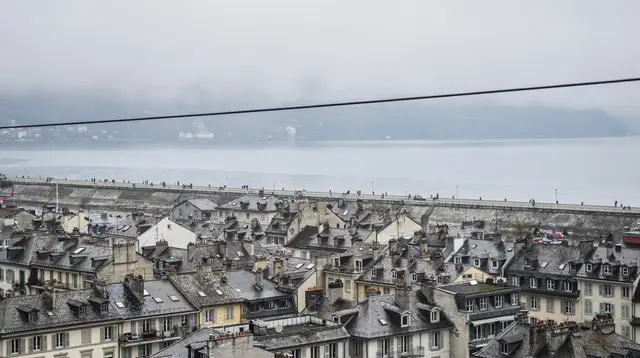
Visibility at Glacier 3000 depends entirely on the day’s weather, and this deserves emphasis: conditions at nearly 3,000m can be completely different from what’s happening in Geneva, on the lake shore, or even partway up the valley. It’s entirely possible to leave a sunny Geneva morning and arrive at the top station to find cloud, fog, or even snow flurries closing off the view — and just as possible for the reverse to happen, with clear alpine sunshine above a valley sitting under the low winter fog that sometimes blankets the Geneva basin.
Checking a live webcam or mountain forecast for the Diablerets/Col du Pillon area before setting out is the single most useful thing a visitor can do to avoid disappointment. No operator or cable car company can guarantee a clear summit view on any given day, and it’s worth building flexibility into a Glacier 3000 day — treating a fully open panorama as a bonus rather than an assumption, and having a backup plan (a lakeside town, a museum, a lower-altitude walk) in mind if cloud rolls in.
Best time of year to go
Glacier 3000’s trails and the Peak Walk are a summer proposition, generally accessible from late spring through early autumn, once snow has cleared enough from the marked paths for normal walking shoes rather than winter equipment. Within that window, timing still matters. Early morning departures from Geneva or the lake shore give the best odds of a clear summit, since cloud tends to build over the massif as the day warms — a pattern that repeats often enough at this altitude to be worth planning around rather than treating as bad luck. Weekdays and the shoulder parts of the season (June, and September before the weather turns) tend to see shorter queues at the cable car than the peak of July and August, when both the lift and the ridge trails near the top station are at their busiest.
Because the whole point of the visit is the view and the walking, a forecast that shows wind, storm risk, or heavy cloud over the Diablerets is a legitimate reason to reschedule if your dates allow it. Unlike a museum or a town visit, a socked-in Glacier 3000 day loses most of what makes it worth the two-hour drive.
What to pack for the day
Given the altitude and the temperature swing described above, a short packing list makes a real difference to comfort on top:
| Item | Why it matters |
|---|---|
| Windproof or insulating outer layer | Wind chill on the ridge and Peak Walk adds to the 15-20°C drop from lake level |
| Sturdy closed shoes with grip | Trail surfaces can be uneven, icy, or wet outside peak summer weeks |
| Gloves and a hat | Worth carrying even on a warm Geneva morning — conditions at the top are a different climate |
| Sunglasses and sun protection | UV exposure is stronger at altitude, especially with snow or ice underfoot |
| Water | Staying hydrated helps offset the lightheadedness some visitors feel at 3,000m |
| A light day bag | Enough to carry the above without needing to return to the cable car station mid-visit |
None of this is specialist mountaineering gear — everything on the list is ordinary outdoor clothing, which is part of what makes Glacier 3000 approachable for visitors who wouldn’t otherwise consider a 3,000m destination.
Making it a longer alpine day
Because most of a Glacier 3000 visit is already built around a two-hour drive or an organised excursion, some travellers extend the trip rather than treating it as a single stop. A Glacier 3000 High Level Experience day trip combined with Montreux pairs the ridge walk with time in the lakeside town on the way back, while a Gold Tour taking in both Glacier 3000 and Montreux offers a similar combination for travellers who’d rather have both booked as one package.
For those building a multi-day itinerary around the wider Vaud and Valais alps rather than a single day trip, the four-day hiking itinerary through Mont Blanc and Valais and the three-day lake and mountains itinerary both give a sense of how a Glacier 3000 day can sit alongside other high-altitude stops without repeating the same kind of walking twice.
Combining Glacier 3000 with other Diablerets and Vaud stops
Because reaching the Col du Pillon already involves a two-hour drive or organised excursion from Geneva, most visitors build the day around more than the mountain alone. The route up commonly passes through or near Aigle, known for its vineyards and castle, and within reach of the Lavaux vineyard terraces along the lake. A day trip from Montreux or Lausanne can pair the alpine walk with a lakeside morning or afternoon, turning a single-purpose cable car trip into a fuller day out.
For travellers interested in a broader alpine loop that includes Glacier 3000 alongside Gstaad or Verbier-area excursions, planning ahead with the Sion walking tour guide or a local Sion city highlights walking tour can round out a multi-stop day through the Valais and Vaud alpine region.
What Glacier 3000 hiking is not
It’s worth being clear about the limits of this kind of visit, since expectations set the experience. This is not a technical glacier trek or a mountaineering route — no ice axes, ropes, or guided glacier crossings are involved in the standard trails around the top station. It is also not a guaranteed clear-view destination: cloud and wind can close the Peak Walk or blanket the ridge in fog on any given day, regardless of season or how clear it looked from the valley. And it is not the same visit as a winter ski trip to the same station — the trails, clothing, and planning covered here are specific to summer walking, with skiing and on-snow winter activities addressed separately in the Glacier 3000 winter sports guide.
Within those honest limits, a Glacier 3000 hiking day delivers something genuinely rare within a two-hour drive of Geneva: walking at nearly 3,000m, standing over a real glacier, and crossing a bridge built specifically to connect two Alpine summits — all without technical gear, provided the weather cooperates.
Alpine and Lakeside Hiking
Verified deep-linked GetYourGuide tours. Book through these links and we earn a small commission at no cost to you.
GetYourGuide does not provide a product photo for this activity — the image shows the meeting point, photographed by us.