Glacier 3000: Skiing and Snow Above the Diablerets
Is Glacier 3000 a good winter snow destination from Geneva?
Yes — at around 3,000m, Glacier 3000 above the Diablerets holds snow far more reliably through the winter season than low-altitude Geneva, with skiing, snow tubing and the glacier-crossing Peak Walk. Conditions still vary by day and by month, and it is not a guaranteed white-out at every date of the season.
Why Glacier 3000 is the reliable snow option near Geneva
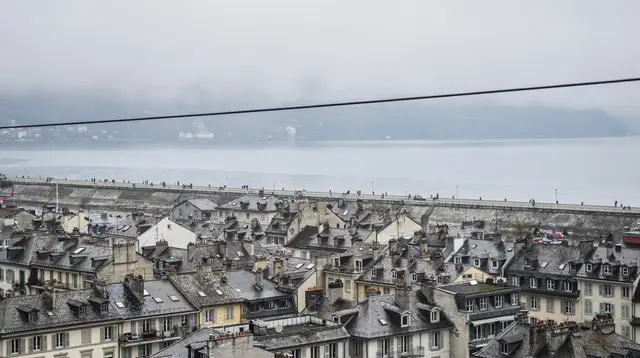
Geneva itself sits at about 375m above sea level, on the lakeshore, where snow is a genuine but unreliable winter event — some years bring a proper snowy cityscape, others pass with barely a dusting. Glacier 3000, high above the resort town of Les Diablerets, is a different proposition entirely. The cable car station tops out close to 3,000m, and at that altitude, snow cover through the core winter months is far more dependable than anything you’ll find down at lake level. That gap — a low, snow-uncertain city and a high, snow-reliable massif less than two hours away by road — is exactly why this site treats them as two separate stories rather than one.
This page is about that winter, on-snow side of Glacier 3000: skiing, snowboarding, snow tubing and crossing the Peak Walk suspension bridge in a genuinely alpine, often white landscape. It deliberately does not cover the summer hiking routes across the same terrain — for that, see the separate hiking guide to Glacier 3000, which describes trails on bare rock and scree once the snow has cleared. The two seasons at this one site look, feel and behave so differently that conflating them would do visitors a disservice: a route note written for July gravel has little to say about a January whiteout, and vice versa.
What “reliable” actually means here
It’s worth being precise, because “reliable” is not the same as “guaranteed.” Altitude buys Glacier 3000 a longer, more consistent snow season than resorts or cities lower down — but the mountain is still subject to the same daily variables as anywhere else in the Alps. Wind can shut lifts. Fog can roll in and erase visibility on the plateau. A warm spell, even a short one, can soften snow or open patches of bare ground on lower sections of a run. None of that is unusual for high-altitude skiing anywhere, and none of it should be read as reason to avoid the trip — but it does mean checking conditions on the day, rather than assuming every date on the calendar delivers identical snow.
The practical takeaway: build some flexibility into a Glacier 3000 day, especially if it’s the single alpine outing of a Geneva trip. A day with a clear, calm forecast is worth prioritising over a day chosen purely for convenience.
| Factor | At Geneva (375m) | At Glacier 3000 (~3,000m) |
|---|---|---|
| Snow reliability, core winter | Inconsistent, some winters barely see it | Consistently snow-covered in season |
| Typical daytime feel in winter | Cool, sometimes foggy (temperature inversions) | Cold, often windy — real alpine cold |
| What you can do on snow | Little to nothing reliably | Skiing, snowboarding, tubing, Peak Walk |
| Travel time from central Geneva | — | Roughly 2 hours by road |
Getting there from Geneva
Glacier 3000 is reached by cable car from a base station at the Col du Pillon, above Les Diablerets, itself accessible from two directions. The more common approach from Geneva runs via Montreux and up through the valley toward the Col du Pillon; the alternative approach comes in from Gstaad on the Bernese side, useful if that town is already part of a wider itinerary. Either way, allow around two hours of road travel each way from central Geneva, more if traffic or winter road conditions slow things down.
Public transport connections exist via train and postbus through Montreux or Gstaad, but they add meaningfully to the door-to-door time compared with driving, and connections can be tighter around ski-season peak periods. For visitors without a rental car, a guided day trip that handles the transfer is often the simplest way to fit Glacier 3000 into a Geneva-based stay without losing most of the day to logistics — a private van pickup, for instance, removes the need to time train and postbus connections around lift opening hours.
A private full-day option worth considering is the private van day trip from Montreux that combines Glacier 3000 with Château d’Aigle, which turns the transfer itself into part of the day rather than dead time.
Going straight from Geneva, without a stop in Montreux
Not every visitor wants to build a day around a stop in Montreux or Lausanne on the way to the mountain. For travellers based in the city itself, particularly those without a rental car and reluctant to piece together train and postbus connections through the Col du Pillon, a direct pickup from central Geneva removes that planning step entirely. The private day trip from Geneva to Glacier 3000 and its Fun Park is built around exactly this door-to-door approach, collecting travellers in the city and handling the roughly two-hour road transfer each way as part of the booking, with the Fun Park’s snow tubing and other non-ski activities folded into the same day for anyone travelling with a mixed group.
It’s a useful option to weigh against the Montreux-based itineraries above: a direct Geneva departure trims the day down to essentially two blocks — travel and mountain time — at the cost of skipping the Swiss Riviera towns along the way. For a first visit focused purely on the snow, that trade-off is often worth making; for a visitor who also wants to see Montreux or Vevey, one of the Riviera-combining trips described above makes better use of the same amount of driving.
On the mountain: what there actually is to do
Skiing and snowboarding. Glacier 3000’s terrain suits a range of levels, with runs accessible from the top station and connecting lift network. It is not a sprawling resort on the scale of Verbier or Zermatt, but it offers genuine glacier and high-alpine skiing within a compact area, which is part of its appeal as a day trip rather than a full ski holiday. Visitors without their own equipment or experience can arrange private ski lessons on site, useful for beginners in a group or anyone wanting a refresher before tackling the runs independently.
Snow tubing and non-ski snow activities. For visitors who don’t ski, Glacier 3000 runs snow tubing and other on-snow activities that need no prior experience or gear beyond warm clothing — a practical way for a mixed group, some skiing and some not, to spend the day at the same site rather than splitting up.
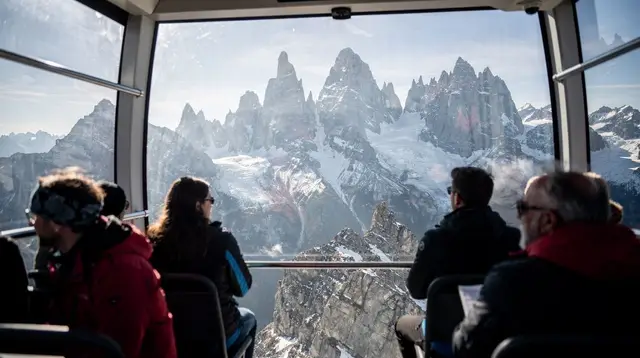
The Peak Walk. The suspension bridge connecting two peaks at the summit area is one of Glacier 3000’s signature features, and it generally stays open through winter, weather permitting. Crossing it in a snow-covered, wind-scoured alpine setting is a different experience from a summer crossing over bare rock — more dramatic, and colder. As with the lifts, high wind can close it temporarily, so it’s worth checking status on arrival rather than assuming access.
Views and photography. On a clear day, the panorama from the top station takes in a wide sweep of the surrounding Alps, including views toward Mont Blanc in good visibility. Fog and cloud are a real possibility at this altitude, though, so a photography-focused visit benefits from checking the forecast rather than fixing a date purely by calendar convenience.
For visitors who want the skiing and snowboarding side handled as a structured full package rather than assembled piece by piece, a guided Swiss Alps skiing and snowboarding day out bundles transport, gear logistics and mountain time into one booking.
Cold at altitude, even on a sunny day
It’s a mistake to underestimate how cold close to 3,000m feels, even under blue skies. Wind chill at that altitude can make a calm, sunny day at valley level feel dramatically colder once the cable car reaches the top. Dress in real winter layers — a windproof and insulated outer layer, gloves, a hat, and sunglasses or ski goggles for glare off the snow. This is not a place where a light jacket suffices “because the sun is out” — the thin air and near-constant wind exposure at the summit change the calculus entirely compared with a mild day down at Geneva’s lakefront or Lausanne.
Combining Glacier 3000 with the rest of the Swiss Riviera
Most Geneva-based visitors treat Glacier 3000 as the alpine centrepiece of a day that also touches the lakeshore towns on the approach or return route. Montreux sits directly on the way and pairs naturally with a stop at Château de Chillon on the lakefront below, if there’s time before or after the mountain. Vevey, a short distance further along the shore, makes another easy add-on for a coffee or lunch stop.
For a single booking that covers several of these in one day, the private day trip linking Gstaad, Glacier 3000, Montreux and Vevey is built around exactly that combination, useful if the goal is to see the Riviera towns as well as the snow without renting a car.
Travellers coming from further along the lake, rather than from Montreux, can also start from Lausanne: the Glacier 3000 day trip departing Lausanne covers that route directly.
Comparing Glacier 3000 to other snow options near Geneva
Glacier 3000 isn’t the only high-altitude snow destination reachable from Geneva, and it’s worth knowing roughly how it compares. Chamonix and the Aiguille du Midi, across the border in France, reach even higher altitude and connect to the Mer de Glace glacier and its retreating ice, but the crossing there is a bigger day involving French border formalities and generally a longer drive. Zermatt and the Matterhorn sit further away still, more of a full day or overnight than a straightforward half-day add-on. Verbier and Crans-Montana offer their own high-altitude skiing, generally with larger resort infrastructure than the compact Glacier 3000 station.
For a Geneva-based visitor short on time who wants one clean, close, genuinely snow-reliable outing without committing a full multi-day itinerary to the mountains, Glacier 3000 via Montreux is usually the simplest of these to fit into a single day.
Those building a longer alpine-focused trip around Geneva might instead consider the four-day tour combining Glacier 3000 with Chamonix and Mont Blanc, which spreads several of the region’s high-altitude highlights, including a look at Mont Blanc, across multiple days rather than a single rushed outing.
Choosing a ticket or a guided package
There’s more than one way to approach the cable car itself. The simplest is a straightforward roundtrip cable car ticket to Glacier 3000, which suits anyone driving themselves to the Col du Pillon base station and wanting flexibility over exact timing rather than a fixed group schedule. At the other end of the spectrum, a private high-level experience tour of Glacier 3000 adds a guide and a more curated pace through the summit area, useful for visitors who want context on the glacier and surrounding peaks rather than working it out from signage alone.
Between those two, several operators run guided day trips that bundle transport, the cable car and a set itinerary into one booking — the Glacier 3000 day trip pairing the high-level experience with a Montreux stop and the Gold Tour covering Glacier 3000 and Montreux are both built this way. Which of these makes sense depends mostly on whether flexibility or a fully organised day matters more: a self-driven ticket suits confident planners with their own car, while a guided package suits anyone who would rather not think about logistics on the day.
Best time in the winter season to go
Because Glacier 3000’s altitude is what makes it reliable rather than any particular date on the calendar, the core winter months generally offer the most consistent snow cover, though exact conditions still shift year to year. Early in the season, coverage can still be building on lower sections of terrain even while the summit itself is well covered; late in the season, warm spells become more frequent and can soften snow lower down even as the top station stays cold. A midwinter visit, checked against the forecast a day or two out rather than booked months in advance on faith, tends to give the most dependable combination of open lifts, a working Peak Walk and genuinely good snow.
This is a different calculus from planning a Geneva city visit itself, where Geneva’s own winter conditions are much less predictable and the city’s winter opening hours and closures matter more than snow depth. Anyone unsure which weeks of winter suit their broader Geneva trip can also check the general best-time-to-visit guidance for Geneva, which covers the shoulder seasons on either side of the ski period.
A realistic day plan
An early departure from Geneva, ideally before 8am, gives the best chance of clear morning light at the summit and time to properly use the mountain before an early-afternoon return drive. Budget roughly two hours each way for driving, plus cable car time up and down, plus however long is planned on the snow itself — a comfortable single day runs from an early Geneva departure to a return by early evening, without feeling rushed.
Check the day’s snow and wind conditions the morning of the trip rather than the night before; alpine weather at this altitude changes quickly, and lift or Peak Walk closures are announced on the day, not in advance. If the forecast looks marginal, it’s worth having a fallback plan — a lakeshore town like Montreux or Vevey can absorb a half-day if the mountain portion needs to be cut short.
Practical notes
Ticketing for lifts, ski passes and equipment rental is handled on site or in advance depending on the operator; for anyone unsure of their skiing ability level, a short lesson booked ahead removes the guesswork of arriving to find conditions more demanding than expected. Bring sun protection as well as cold-weather gear — UV exposure is stronger at altitude even in winter, and snow glare adds to it. As with any high-altitude outing near Geneva, travel insurance that covers winter sports activities is worth confirming before the trip rather than after an incident.
Winter in Geneva
Verified deep-linked GetYourGuide tours. Book through these links and we earn a small commission at no cost to you.
GetYourGuide does not provide a product photo for this activity — the image shows the meeting point, photographed by us.