Does It Snow in Geneva? What I Tell People Before They Pack
Does it snow in Geneva?
Occasionally, but not reliably — Geneva sits at just 375m by the lake, so winters are cold and grey rather than consistently white, and any snow that falls in the city often melts within a few days. For dependable snow, you need to go up: Mont Salève, the Jura, or the Alpine resorts of Valais and Haute-Savoie, all within an hour or two.
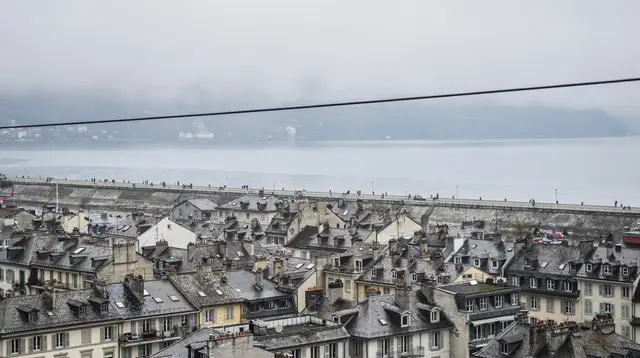
I get asked this every winter, usually by someone who has just booked a December trip and is picturing a Christmas-card version of Geneva: a frozen lake, snow piled on the Jet d’Eau, the Old Town dusted white under fairy lights. I understand where the image comes from — Geneva markets itself as a gateway to the Alps, and the postcards in every souvenir shop show mountains buried in snow. But the city itself is not a mountain town, and I’d rather tell people the truth before they land than watch them stare at a wet, grey lakefront in disbelief.
Geneva’s actual altitude gives away the answer
Geneva sits at about 375 metres above sea level, right at the western tip of the lake. That’s roughly the same elevation as the rest of the Swiss Plateau — not far off Bern or Lausanne, and nowhere near the altitude where snow reliably sticks around. Compare that to Zermatt at over 1,600m, or the ski slopes above Verbier and Crans-Montana climbing past 2,000-3,000m, and the gap explains almost everything. Snow needs cold air to hold onto, and down here by the lake, the air usually isn’t cold enough for long enough.
The lake itself makes things milder still. A body of water as large as Lac Léman moderates the temperature around it — it cools the air in summer and, in winter, it keeps the immediate shoreline a few degrees warmer than you’d expect. That’s part of why the lake essentially never freezes over (it has done so only a handful of times in recorded history), and why snow that falls right on the waterfront tends to turn to slush faster than snow falling a few streets back from the lake.
What actually happens in a Geneva winter
Winters here are genuinely cold — temperatures hovering around freezing, sometimes well below it, from December through February — but “cold” and “snowy” aren’t the same thing. In a typical year, Geneva gets snow on maybe ten to twenty days, and most of those are a light dusting that’s gone by afternoon or melted within a couple of days, not a blanket that builds up over the season. Some winters bring a proper snowfall that closes streets and delights kids for an afternoon; others go by with barely a flurry. I’ve had Decembers in Geneva with bare, wet pavements the whole month, and I’ve had a January where the Old Town genuinely looked like a snow globe for about 36 hours. Neither is the norm — both are possible.
What’s far more consistent than snow is the fog. Geneva sits in a basin, and in winter it’s prone to temperature inversions — cold, damp air gets trapped down here while the hills and mountains around us sit in bright sunshine above a “sea of clouds” (locals call it the mer de nuages). More than once I’ve left the city under a flat grey lid and arrived in Chamonix or up the Salève forty minutes later to blinding sun and blue sky. It’s one of the odder features of this region’s geography, and it catches visitors off guard as much as the lack of snow does.
There’s also the bise, a cold, dry wind that funnels straight down the lake from the northeast. It doesn’t bring snow so much as it makes whatever cold there is feel considerably worse — a still, grey 2°C day and a bise-driven 2°C day are not the same experience at all. Layer up if you hear it’s blowing.
Where the snow actually is
If snow is genuinely part of your trip’s purpose — not just nice scenery, but skiing, sledding, or standing in the actual white stuff — you need to leave the lakefront and go up. The good news is that “up” is never far from Geneva.
| Where | Distance/time from Geneva | Snow reliability in winter |
|---|---|---|
| Geneva city centre | — | Occasional, brief, often melts fast |
| Mont Salève | ~20-30 min, cable car from the French side | Good — snow-capped most of winter |
| Jura mountains | ~30-45 min | Good, especially higher villages |
| Chamonix / Mont Blanc | ~1 hour by car or bus | Reliable, glacier snow year-round higher up |
| Verbier, Crans-Montana | ~1.5-2 hours | Reliable, established ski resorts |
| Zermatt | ~3.5 hours by train | Reliable, snow into spring at altitude |
| Interlaken area | ~2.5-3 hours by train | Reliable in winter |
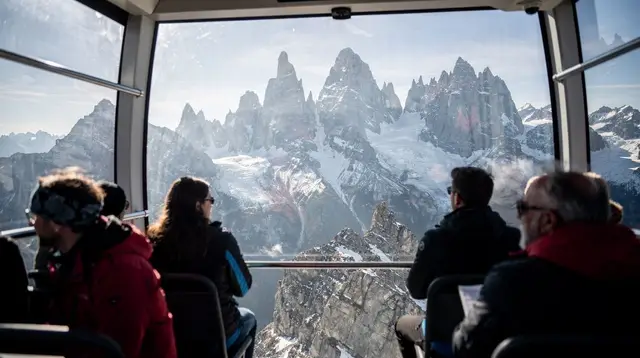
Mont Salève is the easiest fix if you just want to see snow without committing a full day — it rises directly above Geneva, and even though the cable car up starts on the French side of the border, the round trip from the city can be done in an afternoon. On a clear winter day the ridge is white while the city below is merely cold and damp — genuinely one of the more surreal contrasts this region offers.
For proper alpine snow, Chamonix is the classic day trip: about an hour away, with the Aiguille du Midi cable car climbing to 3,842m, where snow is essentially guaranteed for most of the year regardless of what’s happening down in Geneva. Zermatt, further out at roughly three and a half hours by train, trades convenience for near-certainty — it sits high enough, and stays cold enough, that snow is part of the deal from autumn well into spring.
What I’d actually tell you to plan around
If your trip is built around seeing or playing in snow, don’t build it around Geneva itself — build it around a day trip or an overnight up into the mountains, and treat the city as your base and transport hub rather than the snowy backdrop. If you’re coming in December for the Christmas markets and lakefront lights, know that you might get snow and might not, and that either way the city will be cold, sometimes windy, and often grey with that lake-basin fog rather than crisply white.
I don’t say any of this to talk people out of a winter visit — Geneva in winter has its own charm, and the mountains within reach make it one of the better winter bases in Europe precisely because you don’t need snow in the city to get snow nearby. I just don’t want anyone standing on the Pont du Mont-Blanc in a light rain, wondering where their postcard went.
Frequently asked questions about snow in Geneva
Does it snow in Geneva city centre?
Occasionally, but not reliably. Geneva sits at about 375m by a large lake that moderates temperatures, so most winters bring only ten to twenty days with any snow, and much of that melts within a day or two, especially close to the water.
Does Lake Geneva freeze in winter?
No, not under normal conditions. The lake is large enough that it essentially never freezes over completely — it has happened only a handful of times in recorded history, most recently in the 1960s.
When is the snowiest time of year in Geneva?
If it happens at all, it’s typically between December and February, with January usually the coldest month. Even then, snow is intermittent rather than continuous.
Where’s the closest place to Geneva with guaranteed snow in winter?
Mont Salève, the ridge overlooking the city, is the fastest option at around 20-30 minutes away by cable car (starting from the French side). For a full alpine experience, Chamonix is about an hour away.
Can I ski near Geneva without a long trip?
Yes. Resorts in the nearby Jura and areas around Chamonix, Megève and Morzine are reachable within one to two hours, making a day ski trip from Geneva realistic without an overnight stay.
Is Geneva cold in winter even without snow?
Yes. Temperatures commonly hover around or below freezing from December through February, and the bise wind can make it feel considerably colder than the thermometer suggests, even on snow-free days.
Why does Geneva feel foggy instead of snowy in winter?
The city sits in a basin prone to temperature inversions — cold, damp air gets trapped at lake level while the surrounding hills and mountains sit in sunshine above the cloud layer. It’s a distinctive local feature, and often more common than snow itself.
Is it worth visiting Geneva in winter if I want a “snowy” trip?
Yes, but treat Geneva as your base rather than the destination for snow itself. Pair your stay with a day trip to a guided day trip from Geneva to Zermatt or a full-day excursion from Geneva to Interlaken for the alpine scenery the postcards promise.
If you’d rather stay closer to the lake while you decide, a guided day tour from Geneva to Montreux covers the Swiss Riviera without needing snow at all, and on a grey city day I’ll usually recommend Geneva’s Old Town or an offbeat self-guided audio tour of Geneva as a satisfying, weather-proof alternative.
For the fuller picture of what’s actually open and worth doing in the cold months, see my notes on Geneva in winter, and if you’re still deciding when to come at all, my best time to visit Geneva breakdown covers every season honestly. Chasing real alpine snow specifically? Check the real distance from Geneva to the Matterhorn and remember that Mont Blanc itself is in France, not Switzerland before you plan your route.
Practically speaking, if snow matters to your trip, build in at least one excursion to Chamonix, the Aiguille du Midi, or Zermatt — all detailed in my Mont Blanc excursions and winter sports guides — rather than hoping the city itself delivers. For shorter, closer options, Mont Salève and the hiking routes above it are the fastest way out of the fog and into the white.
And if you’re travelling with family and want a low-effort way to guarantee a snow moment without a long journey, my Geneva with kids guide and the Geneva day trips overview both flag which nearby options are most likely to deliver snow on a given date, plus how to check conditions before you set out — see also the general things to do around Geneva hub for season-by-season planning across the whole region, including Interlaken and Lucerne as longer alpine add-ons.
Winter in Geneva
Verified deep-linked GetYourGuide tours. Book through these links and we earn a small commission at no cost to you.
GetYourGuide does not provide a product photo for this activity — the image shows the meeting point, photographed by us.