Crans-Montana Winter Sports: Skiing on a Sunny Valais Balcony
Is Crans-Montana a good winter sports base for a Geneva trip?
Yes, but as a multi-day base rather than a day trip: getting there from Geneva means a train change or a mountain drive of several hours, not a quick hop. The plateau's own altitude is moderate, so snow reliability at village level depends on the winter, while the upper slopes toward Plaine Morte stay skiable well into spring.
Most winter sports guides in this series describe compact resorts squeezed into steep alpine valleys. Crans-Montana is a different shape of ski destination: a wide, sunny plateau perched above the Rhône valley in Valais, with sweeping views across to the peaks on the far side rather than a single dramatic summit overhead. That geography shapes everything about skiing here, from the terrain itself to how long it takes to arrive from Geneva.
Where Crans-Montana sits, and why the approach matters
Crans-Montana is not a same-day excursion from Geneva the way Mont Salève or even Chamonix can be for a determined visitor. The resort sits on a shelf above the Rhône valley in central Valais, reached from Geneva either by train — typically changing at Sion before a connecting bus or funicular up to the plateau — or by a mountain road that climbs out of the valley floor in a long series of switchbacks. Either way, budget two to three hours each direction, and treat the trip as the start of a stay rather than a bolt-on to a Geneva-based day. For structured comparisons of how this fits alongside other Alpine bases, see our day trips from Geneva guide, which is honest about what is and isn’t realistic in a single day.
This distance is worth stating plainly because it is easy to assume, looking at a map, that anywhere in Valais is “close” to Geneva. Crans-Montana is closer to Sion and the Rhône valley than to Geneva, and visitors planning ski time here do best treating it as its own multi-day trip, ideally combined with other Valais stops like Zermatt or Crans-Montana itself extended over several nights.
The terrain: broad, sunny, and moderate rather than extreme
Crans-Montana’s skiable terrain spreads across a genuinely wide plateau, and its defining trait is exposure to sun. The slopes face the Rhône valley and catch light for most of the day, which locals and regulars often cite as the resort’s signature feature — long lunches on open-air terraces, gentle cruising runs, and a general atmosphere that leans toward relaxed winter days rather than technical descents. If you’re weighing this destination against others in the region, our winter sports comparison covers how Crans-Montana, Zermatt, Verbier, and Gstaad differ in character.
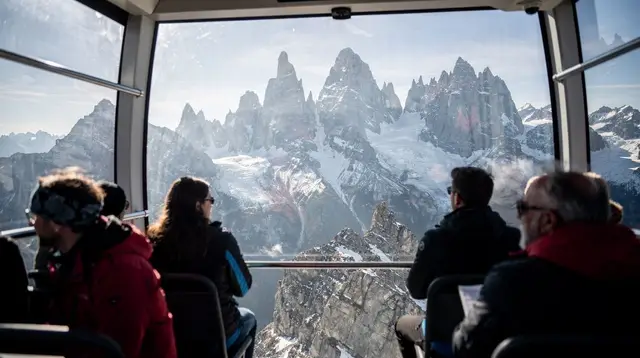
Compared with Zermatt, which sits beneath the Matterhorn with year-round glacier skiing at high altitude, Crans-Montana is lower and more temperate in feel, even though its lift network reaches up toward 3,000 metres at Plaine Morte. Compared with Verbier, known for steep off-piste terrain and a more intense alpine atmosphere, or Gstaad, with its quieter, more understated valleys, Crans-Montana reads as the more panoramic, sun-terrace-oriented option of the four — a resort where the view and the lunch stop are as much a part of the day as the descent itself.
That doesn’t mean the terrain is limited. The plateau’s runs range from wide, gentle pistes well suited to beginners and intermediates up to steeper sections and off-piste opportunities for stronger skiers, particularly toward the higher glacier sector. But the overall character skews toward accessible, confidence-building skiing rather than the committing, high-consequence lines found at some neighbouring resorts.
Altitude, not the village, decides the snow
This is the point worth being most careful about. Crans-Montana village itself sits at a moderate altitude, roughly 1,500 metres, which places it in a band where snow cover genuinely depends on the winter. In a cold, snowy season the village can hold excellent conditions all winter; in a mild or late-starting one, lower slopes can thin out or turn patchy well before the season’s official end, a pattern shared with many mid-altitude Alpine resorts.
The lift network, however, climbs much higher — up toward Plaine Morte at close to 3,000 metres, where a small glacier area extends reliable skiing later into the season regardless of what’s happening down at the base. In practice, this means a visit to Crans-Montana rewards checking current snow reports by sector rather than assuming uniform conditions across the whole domain. A run that’s icy or thin near the village can be excellent powder a cable car ride higher up, and the reverse is also true after a fresh snowfall that hasn’t yet reached the upper slopes. Treat any snow promise for the village itself with caution — the honest answer is that it depends on the specific winter and the specific altitude you’re skiing that day.
When to go: early, mid-, and late-season conditions
Because Crans-Montana’s village sits at that moderate 1,500-metre band, timing matters more here than at higher, glacier-anchored resorts. Early season, before the snowpack has built up at lower altitude, conditions on the beginner and intermediate runs closest to the village can be thin or patchy even while the upper sectors toward Plaine Morte are already skiing well. Midwinter is generally the most reliable stretch, when snow has accumulated across the whole vertical range and the plateau’s full network — from gentle valley runs to the higher glacier terrain — is typically open.
Late in the season, the pattern flips: the sun exposure that makes Crans-Montana pleasant for lunch on a terrace also means lower slopes soften and thin first, while Plaine Morte’s altitude keeps skiing possible for those willing to ride higher for their turns. None of this is a substitute for checking the resort’s own snow report close to your travel dates — the point is simply that “Crans-Montana in winter” covers a wider range of on-the-ground conditions than resorts where snow reliability doesn’t vary so much by sector.
Where to stay: the plateau’s different sectors
Crans-Montana is really shorthand for a plateau with more than one distinct center — historically two adjoining villages, Crans and Montana, that have grown into a single resort area with several hubs. Visitors booking accommodation do best thinking in terms of proximity to lifts and to the pedestrian core rather than assuming the whole plateau is one compact village. A base close to the main lift stations cuts down on the shuttle and walking time that can eat into short ski days, which matters even more on a trip that already required a multi-hour journey from Geneva to reach.
Families or groups staying several nights sometimes prioritize being near the gentler beginner terrain described above, while stronger skiers heading for Plaine Morte each morning may prefer a base closer to the lifts that reach highest. Either way, the resort’s compact, largely pedestrian-friendly layout means most accommodation options are within a manageable walk or short shuttle ride of the slopes.
Skiing with a guide or lesson
For visitors new to the resort’s varied sectors, or those wanting to make the most of limited days, a private ski lesson tailored to your level is one of the more efficient ways to learn the terrain quickly rather than guessing at trail maps. Groups or families sometimes prefer a broader guided skiing and snowboarding adventure across the Swiss Alps that can incorporate Crans-Montana alongside other Valais terrain, useful if your trip spans more than one base.
Getting there and around
| From | Method | Approximate time |
|---|---|---|
| Geneva (city or airport) | Train to Sion + bus/funicular | 2-3 hours |
| Geneva Airport | Private transfer | Direct, but still a mountain-road journey |
| Sion | Bus or funicular | 30-45 minutes |
A private transfer between Geneva Airport and Crans-Montana avoids the train change and luggage handling that public transport involves, which matters more with ski bags and boot bags than with ordinary luggage. It doesn’t make the trip faster in absolute terms — it’s still a genuine mountain journey — but it does make it more comfortable door to door.
Once on the plateau, Crans-Montana’s lift network and local shuttle services connect the village to the ski areas without needing a car, and the resort’s pedestrian-friendly core makes getting around on foot straightforward between runs.
Beyond the pistes
Winter in Crans-Montana isn’t only about skiing. The plateau’s open trails suit snowshoeing and winter walking for non-skiers or rest days, and for visitors wanting a slower counterpoint to a day on the slopes, a nature reset and mindfulness session set against the mountain backdrop is a distinctly different way to spend an afternoon. Those drawn more to relaxation than downhill runs should also see our separate guide to the resort’s spa and thermal side, which covers wellness facilities this skiing-focused page intentionally leaves aside.
Families or groups wanting a break from snow altogether sometimes combine a Crans-Montana stay with a detour to Sion for city sightseeing — a Sion highlights walking tour with a local guide works well as a half-day change of pace — or even as far afield as indoor skydiving in Sion for something entirely different from the pistes.
Warmer-weather visitors returning to the same plateau outside ski season will find a different side of Crans-Montana entirely — our separate Crans-Montana hiking guide covers the trails that open up once the snow retreats, useful context if you’re weighing a winter visit against a summer one, or simply curious what the same terrain looks like without a lift pass.
Getting oriented on a large, sunny plateau
One consequence of Crans-Montana’s shape — wide rather than deep, spread across a plateau rather than stacked up a single valley — is that first-time visitors sometimes find it takes longer than expected to get a mental map of the terrain compared with a more compact resort. A morning spent with a private ski lesson is as much about learning the layout, the fastest routes between sectors, and where the sun-facing runs hold their softness longest into the afternoon, as it is about technique. That orientation pays off over a multi-day stay, since a well-understood plateau lets skiers chase good snow by sector and time of day rather than sticking to the first few runs they happened to find.
For anyone unsure whether Crans-Montana’s own varied terrain is enough, or who wants a taste of neighboring Valais resorts within the same trip, our Verbier and Zermatt winter sports guides (linked above) describe what those bases add — generally more committing, higher-altitude skiing than Crans-Montana’s broader, gentler plateau.
Comparing Crans-Montana with other Valais and Vaud winter bases
Visitors weighing Crans-Montana against a Zermatt day trip from Geneva should note the scale difference: Zermatt’s terrain reaches genuinely high glacier altitude and near-guaranteed snow much of the season, at the cost of a longer, car-free approach through Täsch. Crans-Montana trades some of that altitude reliability for a sunnier, gentler plateau and a shorter (though still non-trivial) approach from Geneva.
Those considering Gstaad as an alternative might look at a private Gstaad ski lesson for all levels, or a private day trip combining Glacier 3000, Montreux and Vevey for a taste of the Vaud Alps’ own character — quieter and arguably more understated than Crans-Montana’s open, panoramic slopes.
For skiers wanting a broader sense of how Valais and Vaud resorts stack up before committing to one base, our Valais and French-speaking Switzerland destination overview and the winter sports category across the site cover Verbier, Morzine, Megève, and Glacier 3000 alongside Crans-Montana, useful if your itinerary allows for more than one stop.
Planning a Crans-Montana ski stay from Geneva
Given the journey length, most visitors get more from Crans-Montana by planning at least two to three nights rather than trying to compress it into a single day. That allows time to explore different sectors of the plateau — sampling both the sunnier, gentler lower slopes and the higher terrain toward Plaine Morte — and to build in a rest day for snowshoeing, a lesson, or simply a slower morning before conditions are checked and a plan for the day is set.
Booking transport and lessons ahead of a winter weekend is worth doing early, particularly around school holiday periods when both trains via Sion and on-mountain lesson slots fill up. For a wider look at building a full winter itinerary that includes stops like this one, see our winter weekend from Geneva and hiking Mont Blanc and Valais itinerary pages, both of which can be adapted around a Crans-Montana base.
Pack for both ends of the altitude range described above: base-layer flexibility matters on a plateau where the village can feel mild in the sun while the top of the lift network, near Plaine Morte, stays genuinely cold and exposed. Bringing or renting equipment suited to variable snow — softer for the lower, sun-affected slopes and firmer for the higher glacier sector — is worth discussing with a rental shop or instructor on arrival rather than assuming one setup covers the whole plateau. Travelers coming in through Geneva Airport who haven’t finalized ground transport should decide early whether they want the flexibility of the train-and-bus route via Sion or the door-to-door comfort of a private transfer, since ski luggage tends to make the choice more consequential than it would be for a bag-free city trip.
If Crans-Montana is one stop on a longer Valais or Vaud itinerary, it pairs naturally with lower-altitude stops that don’t compete for the same snow-dependent days — a wine-focused detour through Sion, a wander through Fribourg or Gruyères further along the rail network, or a return leg via Lausanne and the Lavaux vineyard terraces on the way back toward Geneva and the lake.
Frequently asked questions about skiing in Crans-Montana
Winter in Geneva
Verified deep-linked GetYourGuide tours. Book through these links and we earn a small commission at no cost to you.
GetYourGuide does not provide a product photo for this activity — the image shows the meeting point, photographed by us.