Geneva in Winter: The Alpine Base, Not the Ski Resort
Can you ski in Geneva in winter?
No — Geneva city sits at 375m and snow is occasional, not guaranteed. The nearest real ski terrain is 1-4 hours away by road or rail, at resorts like Verbier, Crans-Montana or Chamonix, which is why Geneva functions as a winter travel hub rather than a ski destination in its own right.
Why Geneva Isn’t Actually a Ski Town
It’s an easy assumption to make: Geneva sits at the foot of the Alps, surrounded by mountains on every horizon, so surely winter here means snow underfoot and skis over your shoulder. In practice, Geneva is something more useful and less obvious — a low-altitude, lakeside city that functions as the logistical gateway to some of the best skiing in Europe, without being a ski destination itself.
The city sits at roughly 375 metres above sea level, on the shore of Lake Geneva. That’s low enough that winter weather here behaves more like a mild, damp European city than an Alpine village. Snow does fall, but it rarely stays. A dusting on the Old Town’s cobblestones might be gone by afternoon, while at the very same hour, across the border in Chamonix or up at Verbier, skiers are contending with metres of packed powder. Treating Geneva as a base for winter excursions, rather than expecting the city itself to deliver a ski experience, is the difference between a trip that meets your expectations and one that quietly disappoints.
What Winter Actually Looks Like in the City
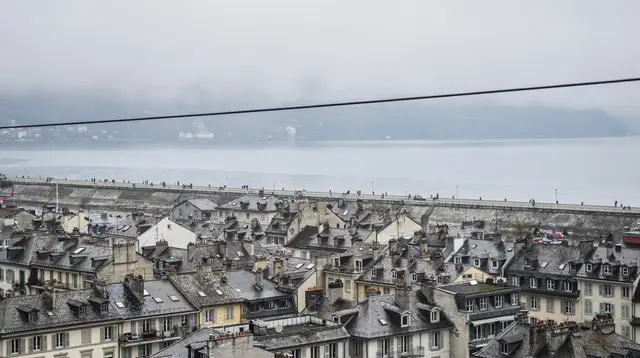
Expect city winters to be cool, grey more often than crisp-blue, and occasionally marked by the bise — a sharp, dry wind that funnels down the lake and makes the air feel colder than the thermometer suggests. January daytime temperatures typically hover between about -2°C and 6°C, with sunnier stretches interrupted by fog, especially during the temperature inversions that periodically trap cloud cover over the Geneva basin while the surrounding hills sit in sunshine above it.
None of that makes Geneva a bad winter destination — it makes it a different kind of winter destination. The lakefront promenades, the Jet d’eau, and the narrow streets of the Old Town all have a genuine, low-key charm under grey skies and short days, and the city leans into the season with a run of Christmas markets, illuminated streets, and warming food. What it won’t deliver is snow-covered pistes on your doorstep, so plan the trip with that expectation set correctly from the start.
The Altitude Gap: Why a Few Hundred Metres Change Everything
The core fact to hold onto is this: Geneva’s low elevation means winter precipitation here often falls as rain or wet, short-lived snow, while resorts even a modest distance away sit high enough for reliable, deep, lasting snowpack. The gap isn’t really about distance in kilometres — it’s about altitude. Chamonix’s valley floor starts around 1,000m and its cable cars climb toward glacier country; Verbier’s slopes run from about 1,500m past 3,000m; Crans-Montana sits above 1,500m on a sunny plateau. Each of those elevations sits well above the rain-snow line that keeps Geneva itself mostly green or grey through the winter.
This is also why a same-day round trip to actually ski is an ambitious plan rather than a routine one. Road and rail connections from Geneva are genuinely good, but travel time still eats into a ski day.
| Resort | Country | Typical travel time from Geneva | Best access |
|---|---|---|---|
| Chamonix | France | ~1 hour by car | Direct road, no border formalities beyond a passport check |
| Verbier | Switzerland | ~2-2.5 hours | Train to Le Châble + gondola |
| Crans-Montana | Switzerland | ~2-2.5 hours | Train to Sierre + funicular |
| Zermatt | Switzerland | ~3-3.5 hours | Train, then mandatory shuttle from Täsch |
| Gstaad | Switzerland | ~2.5-3 hours | Train with a connection |
| Glacier 3000 | Switzerland | ~2.5 hours | Train to Les Diablerets + cable car |
Given those numbers, a day trip to ski is workable for the closest options — Chamonix most of all — but for most of the others, a one- or two-night stay makes far better use of the travel time than squeezing skiing into a single long day. If a full-day outing without an overnight is the goal, see our winter weekend planning guide for a version of this trip that works within tighter time.
Packing for Two Climates in One Trip
The single most common misstep for a Geneva-based winter trip is packing for only one of its two climates. The city calls for warm but ordinary winter wear: a proper coat, waterproof shoes for slushy pavements, gloves and a hat for wind chill and evening walks along the lake. That’s a world away from what a day at altitude requires — insulated ski-specific layers, waterproof boots rated for snow rather than city puddles, sunglasses or goggles against glare off the snowpack, and sun protection that matters more at 2,500m than most travelers expect.
Anyone planning both a few days in the city and a side trip up to Mont Blanc or into ski country should pack for the altitude trip as the harder constraint and let the city layer scale down from there, not the other way round. A light city coat that’s fine for a Geneva evening is not enough gear for a morning on the Aiguille du Midi or a chairlift in Verbier.
Urban Winter Rituals That Aren’t a Ski Substitute
Geneva does have its own winter culture, and it’s worth enjoying on its own terms rather than as a stand-in for the mountains. The city’s Christmas markets bring lights, stalls and mulled wine to the lakefront and Old Town squares through December — smaller and cosier than the big markets in Strasbourg or German cities, but a pleasant way to spend an evening. Bains des Pâquis, the lakeside bathing pier, keeps its wood-fired sauna running through the colder months alongside brisk lake swims — a genuinely popular local ritual, and one worth trying, but it is an hour of sauna-and-lake, not a substitute for a ski day.
A short, well-organised city outing is a good way to spend a non-ski day here. A guided city discovery tour covers the Old Town, the international district and the lakefront in a few efficient hours, which suits shorter winter daylight better than an unstructured wander. For travelers who’d rather explore at their own pace, an self-guided audio walking tour covers similar ground without a fixed schedule.
Building a Realistic Winter Itinerary
A sensible winter trip based in Geneva usually mixes a couple of city days with one focused excursion to altitude, rather than trying to cram skiing into every day. A common shape looks like this:
- Day 1-2 in the city: Old Town, the lakefront, International Geneva or CERN, and an evening at the Christmas markets if the dates line up.
- A day trip along the lake: a scenic, low-altitude alternative to skiing, such as a run down to Montreux and Château de Chillon — this is where a guided day trip from Geneva to Montreux is a comfortable way to see the Swiss Riviera in winter light without renting a car.
- One or two nights up at altitude: Verbier, Crans-Montana, or Chamonix for anyone who actually wants to ski, snowshoe or simply stand in real snow.
- A lake cruise or flexible pass day: winter lake cruises run shorter routes than summer, but a short Lake Geneva cruise still works well on a clear, cold day, and a Geneva city pass covering dozens of activities is worth considering for a trip mixing museums, transport and a few paid sights over several days.
For those without a car, it’s worth checking how public transport around the region actually works before committing to a resort day trip — trains and connecting buses or gondolas are reliable, but timing them against lift schedules takes some planning. Anyone weighing Chamonix against Verbier as the winter side-trip should also look at what each resort actually offers once you arrive — see what there is to do in Chamonix and the deeper dive on Chamonix’s winter sports scene — since the two differ meaningfully in terrain, nightlife and how car-dependent they are.
Mont Salève: The Mountain Right Above the City
One near-city option deserves a specific mention because it’s so often misunderstood: Mont Salève, the ridge that rises directly above Geneva, looks like it should be a walkable city-edge mountain. It’s close, but its cable car starts on the French side of the border, so visiting means a short but real border crossing — worth knowing before planning it as a quick, passport-free half-day. It offers views back over the city and the lake rather than downhill ski terrain of its own, so treat it as a viewpoint and light-hike outing, not a ski trip in miniature.
Choosing a Resort: Chamonix, Verbier or Crans-Montana
The three most common answers to “which resort should the winter side-trip be” don’t actually compete with each other so much as suit different kinds of traveler. Chamonix is the obvious default for a Geneva base simply because it’s the closest — about an hour by road — and it pairs dramatic, high-glacier scenery with a genuinely lively town, which is why it absorbs the bulk of day-trippers and short-stay visitors. Verbier sits further out, roughly 2-2.5 hours away with a train-plus-gondola connection, but rewards the extra travel time with a more purely Swiss, less crowded feel and terrain that skis well across a wide range of ability levels.
Crans-Montana, similarly distant, adds a sunnier, south-facing plateau and a noticeably more relaxed, spa-and-wellness undercurrent alongside its slopes — worth knowing if part of the trip is about unwinding rather than only skiing hard. Anyone still undecided should read the fuller comparison in our Chamonix versus Zermatt piece, and check what Chamonix’s winter sports scene actually covers, what Verbier’s winter sports scene offers, and Crans-Montana’s own winter sports rundown before committing to one over the others.
For travelers without their own car, getting between Geneva and any of these resorts is more comfortable than the raw distances suggest. A private transfer removes the guesswork of matching train and gondola schedules — a private transfer between Geneva Airport and Crans-Montana runs door to door, which matters most on travel days bookended by early flights or heavy ski luggage. Chamonix has an equivalent option worth knowing about too: a scheduled airport bus transfer to Chamonix covers the same hour-long hop at a lower cost for travelers happy to share a shuttle rather than book a private car.
A Day in Chamonix, Done Properly
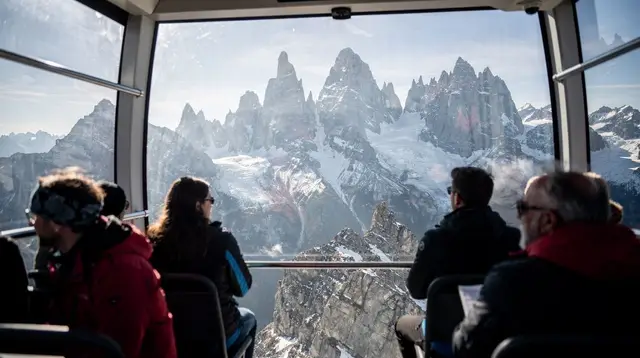
Because Chamonix is close enough for a single day, it’s worth being specific about what a well-run day trip actually looks like, rather than treating it as a generic “go see the mountains” outing. Most organised day trips from Geneva combine the drive itself — genuinely scenic once the road climbs into the valley — with time at the Aiguille du Midi cable car, which lifts visitors from the valley floor to 3,842m for close-up glacier and Mont Blanc views without any climbing required, and often a stop at or near the Mer de Glace, France’s largest glacier.
A guided private Chamonix and Mont Blanc day experience handles the driving and timing across both stops, which matters in winter when cable car queues and weather windows can eat into a tightly booked day. For a broader single itinerary that folds in the Aiguille du Midi, the Mer de Glace and central Chamonix together, a combined Chamonix, Aiguille du Midi and Mer de Glace tour is built around exactly that pairing, and travelers who’d rather move in a smaller group than a full coach can look at a semi-private tour to Chamonix and Mont Blanc instead.
Evenings add their own reason to linger rather than rush back to Geneva the same afternoon. A guided sunset hike and fondue evening in the Alpine land around Chamonix turns the trip into something closer to a full day than a rushed sightseeing loop, ending with the kind of melted-cheese dinner the region is known for rather than a late drive back on an empty stomach. Families or first-time visitors sometimes prefer a themed version of the day trip instead — a Chamonix day trip built around a St Bernard dogs train ride keeps things lighter and more visual for travelers with children in tow, still covering the core Chamonix sights alongside the novelty stop.
For a trip that runs longer than a single day, a structured four-day tour combining Glacier 3000 and Chamonix Mont Blanc strings together several of the region’s best high-altitude stops into one continuous itinerary rather than requiring separate day trips booked one at a time. Whichever format suits the trip, it’s worth reading through Chamonix trip planning basics and how transport around Chamonix itself works beforehand, since the resort town is more walkable than driveable once you’ve arrived.
Winter Wellness as a Counterweight to the Slopes
Not every day of an Alpine winter trip needs to be spent on skis, and Crans-Montana in particular leans into that with its spa culture. A nature reset and mindfulness session in Crans-Montana is a genuinely different kind of mountain day — slower, focused on the plateau’s sunshine and views rather than lift lines — and works well as a rest day slotted between skiing or hiking days rather than as the whole point of the trip. It’s a useful reminder that “a day at altitude” doesn’t have to mean a day on a piste; the same 1,500m-plus air that makes for good skiing also makes for a genuinely restorative non-ski day.
Indoor and Low-Altitude Days When the Weather Turns
Winter in this region isn’t only about choosing between city drizzle and mountain snow — some days call for neither, especially when fog sits over the Geneva basin or a storm closes lifts up at altitude. On those days, the city’s museums and covered sights earn their keep: Geneva’s watchmaking heritage, the Red Cross Museum in International Geneva, and CERN’s visitor exhibits all work regardless of what the sky is doing outside. For a fuller list of what stays open and interesting when the weather doesn’t cooperate, see our guide to rainy days in Geneva and the broader question of what’s actually open in Geneva in winter. It’s also worth checking whether Geneva really gets snow at all before building a trip around the assumption either way — expectations set before departure make a much bigger difference to how the trip feels than anything that happens once you’re here.
Setting Expectations Before You Book
The single most useful thing to take from all of this: don’t book a Geneva winter trip expecting the city to deliver an Alpine ski holiday on its own doorstep. Geneva’s real winter strength is logistical — an airport, rail network and comfortable base within one to four hours of genuinely excellent skiing on both the Swiss and French sides of the border, paired with a mild, atmospheric city experience that stands on its own between excursions. Plan the mountain time and the city time as two separate, complementary parts of the same trip, pack for both climates, and the gap between the lakeshore and the slopes stops being a disappointment and becomes exactly what makes a Geneva-based winter trip work.
Winter in Geneva
Verified deep-linked GetYourGuide tours. Book through these links and we earn a small commission at no cost to you.
GetYourGuide does not provide a product photo for this activity — the image shows the meeting point, photographed by us.