Évian-les-Bains by Boat: Geneva's Classic Lake Crossing
How do you get to Évian-les-Bains from Geneva by boat, and what is there to do once you arrive?
CGN operates scheduled boats across Lake Geneva between the Swiss and French shores, with the Geneva–Évian crossing typically taking around an hour depending on the route and stops. Évian is a French spa town built around its mineral water and Belle Époque architecture, best suited to a few hours of lakeside walking, garden and casino-district sightseeing, and optionally a spa visit — not a full day of sightseeing landmarks.
Cross the lake from Switzerland to France without leaving the water: that’s the appeal of a boat trip from Geneva to Évian-les-Bains. No car, no highway, no border queue — just an hour or so on Lake Geneva that ends in a different country, a different currency, and a distinctly different kind of town.
Why Évian, and why by boat
Évian-les-Bains sits on the southern, French shore of Lake Geneva, directly across the water from the Swiss side. The town’s entire identity is built around one thing: the mineral water that bears its name. Évian water has been bottled here since the 18th century, and the industry shaped the town as it grew — spa hotels, treatment pavilions, formal gardens, and a stretch of Belle Époque architecture that still lines the lakefront and the streets climbing away from it. The old casino, now used for other purposes, and the Palais Lumière, a former thermal establishment turned exhibition and events space, are the two buildings most visitors notice first.
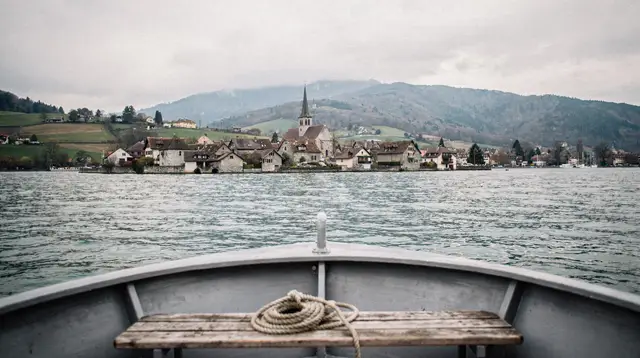
Reaching Évian by boat rather than by road is not just scenic — it’s the natural way to make the trip from Geneva. CGN (Compagnie Générale de Navigation), the company that operates scheduled lake traffic, connects the Geneva side of the lake with French ports including Évian, and the crossing itself becomes part of the outing rather than a means to an end. Watching the Swiss shore recede and the French shore grow larger, with the mountains of Haute-Savoie behind Évian, is a different experience from driving around the lake’s edge by car.
Getting there: the crossing itself
A Geneva–Évian boat crossing typically takes around an hour, though the precise duration depends on the specific route and whether the boat is a fast, more or less direct service or a longer cruise calling at intermediate ports such as Nyon, Yvoire or Lausanne along the way. Some departures run close to a straight line across the lake; others are built as scenic multi-stop cruises where Évian is one call among several rather than the sole destination. It’s worth checking the specific timetable for the departure you’re considering, since “around an hour” covers a real range depending on which service you book.
Frequency is not constant across the year. In summer, the high season for lake traffic, departures run more often and more routes serve Évian directly. Outside summer, particularly in winter, the schedule thins out considerably — fewer sailings, sometimes a reduced set of routes — so it’s a mistake to assume a summer-level service exists in January. Anyone planning a trip outside the warmer months should check current departure times before building a day around a specific crossing.
It’s also worth remembering that general Swiss transport arrangements, including the free visitor transport card that covers city buses, trams and regional trains for people staying in Geneva accommodation, does not automatically extend to CGN’s cross-lake boats. Boat fares are typically a separate cost from local Unireso transport, so budget for the crossing itself rather than assuming it’s bundled in.
Crossing into France: what actually changes
It’s easy to forget, boarding a boat on a lake that looks entirely Swiss from the Geneva shore, that Évian is genuinely French territory. Switzerland and France both sit inside the Schengen Area, which means there is no passport booth waiting at the Évian dock and no routine document check as you step off the boat. But Schengen membership is not the same as being part of the same country, and it’s worth being clear-eyed about what does and doesn’t change at that invisible line in the middle of the lake:
- The currency changes. Évian, like the rest of France, uses the euro, not the Swiss franc used in Geneva and the rest of Switzerland. Cards work everywhere, but if you’re carrying cash, it needs to be euros, not francs, to spend easily in Évian’s shops and cafés.
- Identification is still worth carrying. Even without a checkpoint, spot checks by French or Swiss border and customs authorities do happen, particularly around ports, stations and other travel hubs. A passport or national ID card is the sensible thing to have on you, and it’s often required anyway for hotel or spa check-in.
- Prices and habits shift. Coffee, lunch and general daily costs in Évian tend to run lower than in Geneva, partly because France’s baseline prices are generally below Switzerland’s famously high ones, and partly because of the currency conversion. That said, Évian is itself an established, comparatively upscale French resort town — not a bargain destination, just a noticeably cheaper one than Geneva.
None of this requires paperwork or planning beyond common sense. But treating the crossing as “just another stop on the lake” undersells what’s actually happening: you’re leaving Switzerland.
What there is to do in Évian
Évian rewards a slow few hours rather than a packed sightseeing list. Its landmarks cluster near the water, which suits visitors arriving by boat particularly well.
The Belle Époque lakefront and gardens. The walk from the ferry landing into town passes manicured gardens, period buildings, and views back across the lake toward the Swiss shore. This is the easiest, free way to get a feel for the town’s spa-era architecture without booking anything.
The Palais Lumière. A former thermal bathing establishment converted into an exhibition and cultural venue, it’s one of the more recognisable Belle Époque buildings in town and typically hosts temporary exhibitions — worth checking what’s on before you go, since the programme changes.
The former casino and spa district. Évian’s historic casino building and the surrounding spa-town streets reflect the resort’s heyday, when European visitors came specifically to “take the waters.” The buildings remain even where the original uses have changed.
The source of Évian water, in spirit if not always in direct access. The mineral water industry isn’t just a marketing story here — it’s visible in the town’s layout, its gardens, and the general sense that the whole place grew up around bottling and exporting that water. Don’t expect a factory tour experience aimed at casual visitors; the connection is more atmospheric than hands-on.
Spa and thermal treatments, if booked ahead. Évian’s spa facilities operate on treatment programmes and appointment-based access rather than open walk-in bathing. If a spa visit is part of your plan, book before you travel — arriving hopeful and unbooked is a real risk of disappointment, not a worst-case scenario. A private day trip that pairs Geneva with a thermal spa town is one way to build spa access into the day without guessing at availability.
For structure rather than independent wandering, a private guided walking tour of Évian covers the town’s Belle Époque highlights with context on the water-bottling history behind them. For the crossing itself as the main event, an evening sailboat outing with drinks as the sun sets over the lake turns the trip into an experience in its own right rather than a means of transport.
Évian versus its French-shore neighbours
Évian is one of three well-known towns on the French side of Lake Geneva that visitors often compare, and it’s worth being clear on what separates them, since they’re frequently mentioned in the same breath.
| Town | Character | Best for |
|---|---|---|
| Évian-les-Bains | Belle Époque spa town built around mineral water | Lakeside architecture, gardens, spa time |
| Thonon-les-Bains | Working harbour town with its own thermal tradition | A more everyday French lakeside town, less overtly touristic |
| Yvoire | Small medieval walled village | Compact old-stone charm, flower-lined lanes, a fortified gate |
Évian’s identity is the most singular of the three: nowhere else on the lake combines mineral water branding with this density of spa-era architecture. Thonon feels more like a genuine working French town that happens to have a thermal history, while Yvoire is closer to a postcard medieval village, with none of the spa-resort atmosphere at all. Travellers weighing a day trip from Geneva sometimes visit two of these towns in a single outing, since several boat routes and organised tours link them — a private tour covering both Yvoire and Évian in one day is a way to see the contrast directly rather than choosing one over the other.
Where to board, and what to bring
Boats to Évian leave from ports on the Geneva side of the lake, and it’s worth confirming the exact departure point when you book rather than assuming every CGN service leaves from the same jetty — some routes depart from central Geneva, others from ports further along the Swiss shore. Arriving with time to spare matters more on a boat than it would for a train: boarding is slower, and a missed departure on a route with limited winter frequency can mean a long wait for the next one rather than a quick rebooking.
Dress for the water rather than for the town. Lake Geneva can be noticeably breezier on deck than it feels from the quay, even on a warm day, so a light layer is worth having even in summer. Sunglasses and sun protection matter too — there’s little shade on an open deck, and the reflection off the water adds to the exposure. If the plan includes any walking once you land in Évian, comfortable shoes serve better than anything chosen purely for the boat.
For travelers who’d rather not manage timetables and connections at all, an escorted private day trip to Évian-les-Bains removes the guesswork around departure ports and return timing, with transport arranged as part of the outing. It’s a useful option specifically for the shoulder and winter seasons, when self-planned crossings are most exposed to schedule changes.
Combining Évian with the rest of the lake
Because Évian sits on a CGN route that also touches other French-shore ports, some visitors treat it as one stop in a longer lake day rather than an isolated round trip. A cruise that calls at Yvoire on the way to or from Évian pairs the walled-village charm of one town with the spa-town atmosphere of the other, without needing a second, separate booking. For a more open-ended version of that idea, a private sailing cruise on Lake Geneva can be routed with more flexibility than a fixed-timetable CGN service, which suits travelers who want the water time itself to be the point rather than a fixed itinerary between two docks.
Annecy, further south in Haute-Savoie, is sometimes mentioned in the same breath as Évian and Yvoire, but it isn’t reachable by the same lake — Annecy sits on its own separate lake and is normally reached from Geneva by road rather than by boat across Lake Geneva. It’s worth not conflating the two: a day trip to Annecy and a boat crossing to Évian are two distinct outings, not variations on the same route, even though both are commonly framed as a change of pace from Geneva itself.
A realistic half-day or full-day plan
For visitors basing themselves in Geneva, Évian works well as a half-day outing if the boat schedule allows a same-day return, or as a fuller day if paired with time in another lakeside town. A simple structure:
- Morning or early afternoon departure from a Geneva-side port on a scheduled CGN crossing to Évian.
- A walk through the lakefront gardens and spa district, taking in the Palais Lumière and the former casino architecture.
- Lunch in town, priced in euros and generally gentler on the wallet than a comparable meal back in Geneva.
- Optional spa time, only if booked in advance — this is the step visitors most often assume they can improvise and can’t.
- Return crossing, timed against the current timetable rather than assumed from memory of a previous visit.
Anyone wanting the water time to be the centrepiece rather than a means of transport might instead look at a sailboat excursion that explores quieter stretches of the French shore, which trades the museum-and-gardens itinerary for more time simply on the water.
What not to expect
A few expectations are worth resetting before you go, since they’re common enough to cause real disappointment on the day.
Don’t expect guaranteed spa access. Évian’s thermal and spa facilities run on appointments and treatment slots, not open bathing for anyone who shows up. Without a booking, plan on the town’s outdoor sights rather than the spa itself.
Don’t expect an identical boat schedule year-round. Summer service and winter service on the Geneva–Évian route are genuinely different in frequency, and a plan built on a summer timetable can fall apart in the off-season. Check current departures for your actual travel dates.
Don’t expect a full day of landmark sightseeing. Évian’s charm is atmospheric — gardens, architecture, the lakefront, a general sense of Belle Époque ease — rather than a list of major sights to tick off. Visitors expecting a museum-dense day may find a few hours is genuinely enough, and that’s not a shortcoming of the town so much as an accurate description of what it offers.
Don’t expect the same prices as Geneva, in either direction. Évian is cheaper on the whole thanks to France’s lower baseline costs and the euro exchange, but it’s still a recognised, comparatively upscale resort town — not a discount destination relative to other parts of rural France.
Évian-les-Bains suits travellers who want the experience of crossing a lake into another country without a long journey, followed by a slower, gentler pace than Geneva’s international-city energy. Bring a passport, check the season’s boat timetable, and treat the crossing itself as part of the point, not just the way to get there.
Lake Geneva Cruises
Verified deep-linked GetYourGuide tours. Book through these links and we earn a small commission at no cost to you.
GetYourGuide does not provide a product photo for this activity — the image shows the meeting point, photographed by us.