Cheese Fondue in Gruyères: Where the Cheese Is Actually Made
Where can you eat authentic cheese fondue in Gruyères?
Restaurants around the medieval, pedestrian village of Gruyères serve fondue year-round, most often a half-half mix of Gruyère AOP and vacherin fribourgeois. Prices are in Swiss francs and service is included by law, and several restaurants sit a short walk from La Maison du Gruyère, the demonstration dairy where the cheese itself is made.
Why Gruyères is a different kind of fondue trip
Fondue is served all over French-speaking Switzerland, and a bowl of it in Geneva or Fribourg is no less genuine than one eaten in the hilltop village that shares its name with the cheese. What sets Gruyères apart isn’t a better recipe — it’s proximity. La Maison du Gruyère, the demonstration dairy that produces the AOP cheese, sits a short walk from the medieval, pedestrian old town, so it’s possible to watch the cheese take shape in the morning and eat it, melted into a shared pot, a couple of hours later. Few places in the region let you close that loop between production and plate so directly.
This guide covers what Gruyère cheese actually is, how the fondue served in the village differs from what you might expect, where and when to eat it, what it costs, and how to pair a meal with a visit to the dairy and the rest of the village. It also flags a couple of things worth knowing before you go, since a bit of local knowledge changes how the day is best planned.
What “Gruyère” actually means
Gruyère is a hard cheese made under a protected designation of origin, Gruyère AOP. That designation is a legal guarantee: it specifies the region the milk and cheese must come from (an area spanning parts of the cantons of Fribourg, Vaud, Neuchâtel, Jura and Bern), the methods used, and the minimum ageing period. It works much like an AOC label on a bottle of wine — it tells you where something is from and how it was made, not a marketing claim invented for tourists.
Ageing changes the character of the cheese considerably. A “mild” or “doux” Gruyère, aged around five months, is softer and creamier; a “reserve” or “extra old” Gruyère, aged ten months or more, is firmer, more crystalline, and noticeably sharper. Restaurants and cheese shops in the village typically stock several ages, and it’s worth tasting a slice before committing to a fondue if you’re curious how the cheese changes.
The fondue itself: half-half, not always pure Gruyère
Here’s a detail that trips up a fair number of visitors: the fondue most commonly served around Gruyères isn’t made purely from Gruyère cheese. It’s usually a moitié-moitié — half-half — blend of Gruyère AOP and vacherin fribourgeois, another hard-ish cheese from the same broader region, prized for how smoothly it melts. The vacherin softens the texture and rounds out the sharper notes of an aged Gruyère, producing the silkier, more elastic pot most people picture when they think of Swiss fondue.
A menu that simply says “fondue” without further detail is very likely to mean this half-half version. Some restaurants also offer a fondue made purely from Gruyère, sometimes labelled “fondue au Gruyère” or similar, which tends to taste more pronounced and slightly grainier. Neither version is more “authentic” than the other — both are standard preparations within the same regional tradition, and which one is on your table usually comes down to house style rather than any fixed rule.
Fondue is typically ordered per person and served in a shared caquelon (the earthenware pot) over a small burner, with cubed bread for dipping and, in many restaurants, a side of boiled potatoes, charcuterie, or a simple green salad. Tradition holds that dropping your bread into the pot earns a forfeit — a round of drinks, in the lighter version of the custom — though no restaurant will actually enforce it beyond a friendly ribbing.
Watching the cheese get made: La Maison du Gruyère
La Maison du Gruyère is a working dairy that produces Gruyère AOP cheese on a public viewing schedule, with production runs happening several times a day behind a glass gallery. Entry is not free — there’s a ticketed admission that covers the self-guided exhibition and the viewing gallery over the production floor — but it’s a straightforward, well-signed visit that takes roughly 45 minutes to an hour, and it sits close enough to the village that combining it with a meal is easy logistically.
Checking the day’s production times before you go is worth the extra minute, since seeing the actual cheese-making — the curds being cut, drained, and pressed into wheels — is the highlight, and it only happens at set intervals rather than continuously through the day. A café and shop on site sell cheese, and tasting samples are usually available before you buy.
Where to eat fondue in the village
Gruyères’ old town is compact, pedestrian, and largely made up of stone houses along a single main cobbled street leading up to the château at the top. Restaurants serving fondue line this street and the small squares off it, many with outdoor seating in warmer months looking out over the surrounding hills. Because the village is small, there’s no need to book far in advance outside peak season, though weekend lunches in summer and around winter holidays can fill up, so a reservation is sensible if you’re set on a particular place.
A few things distinguish one fondue restaurant from another here: whether they offer the pure-Gruyère option alongside the half-half, how many cheese ages they stock, whether they add a splash of local white wine or a dash of kirsch to the pot (both common, neither universal), and simply the view from the table — several restaurants along the upper part of the street look out over the valley toward the Moléson and Vanil Noir ranges.
What it costs, and how paying works
| Item | Typical price (CHF) |
|---|---|
| Half-half or Gruyère fondue, per person | 25-35 |
| Fondue with charcuterie side | 30-40 |
| Glass of local white wine | 7-10 |
| La Maison du Gruyère admission | separate paid ticket |
| Château de Gruyères admission | separate paid ticket |
Prices in Gruyères are set in Swiss francs, not euros, and every displayed price already includes Switzerland’s standard VAT — nothing is added at the till. Service is included by law, so there’s no need to calculate a tip; rounding up the bill to the next franc or few is a normal courtesy but not an obligation, and a US-style 15-20% addition isn’t the local custom anywhere in Switzerland, Gruyères included.
Pairing fondue with the rest of the village
Fondue rarely needs to be the whole day. Gruyères combines well with a short list of other things worth doing on the same visit:
- Château de Gruyères, the medieval castle at the top of the village, is a separate paid site from La Maison du Gruyère — the two are often visited together but are billed and entered independently.
- A walk along the main street takes in artisan shops, small museums, and views over the valley; the village rewards slow wandering more than a rushed pass-through.
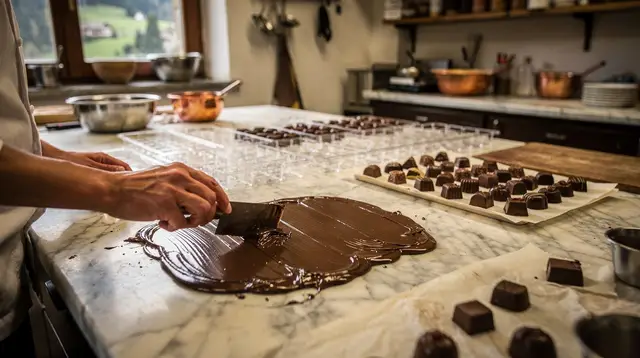
- Chocolate is a natural pairing with cheese here, since several tours and tasting stops in the region combine both in a single itinerary.
- Hiking trails start just outside the village walls for those wanting to work off lunch with a walk toward the surrounding hills.
For a single trip that folds several of these together without self-driving logistics, a guided option can simplify the day considerably. The private tour combining the castle, cheese and chocolate in one exclusive outing is built around exactly this pairing. Travellers based on the lake can also join a day tour from Lausanne that includes a chocolate and cheese tasting, or, from Geneva itself, a private day trip to Gruyères covering both the cheese and chocolate factories. For a lighter-touch, self-paced visit that still includes transport, the Gruyère Village excursion is worth checking against your own schedule.
Getting there without a car
Gruyères is reachable by train via Bulle, with a regional connection continuing to Gruyères station, from which the village is a short, signposted uphill walk. Parking for those driving is located outside the walls at the base of the hill — cars don’t enter the pedestrian centre itself. Combining the trip with nearby stops such as Fribourg on the way is straightforward by train, and several structured day trips from Gruyères bundle the travel with the cheese and chocolate visits described above, which removes the need to plan train connections yourself.
If you’re building a longer regional loop rather than a single day out, the village also fits naturally into a broader itinerary such as two days built around cheese and chocolate, which pairs Gruyères with other production sites in the area.
Common mistakes to avoid
- Assuming the fondue is pure Gruyère. The village’s signature fondue is usually the half-half moitié-moitié blend with vacherin fribourgeois, not a single-cheese pot — check the menu description if you have a preference.
- Assuming the dairy is free to enter. La Maison du Gruyère charges admission for the exhibition and viewing gallery; it isn’t a free walk-through stop.
- Turning up without checking production times. The cheese-making itself happens on a set schedule a few times a day, not continuously, so a random arrival time can mean missing the actual production.
- Expecting to pay in euros. Prices in Gruyères, like the rest of Switzerland, are in Swiss francs; euros aren’t the local currency here even though France is close by.
- Tipping on top of the bill. Service is already included by Swiss law — rounding up is polite, a full percentage tip is not expected.
- Driving into the old town. The historic centre is pedestrian; park outside the walls and walk up.
Comparing Gruyères to other fondue destinations nearby
Gruyères isn’t the only good place in the region for fondue, and it’s worth knowing how it compares to the alternatives before deciding where to build a day around. A Geneva fondue guide covers the city’s own restaurant scene, useful if you’re not planning to leave the lakefront at all. A Fribourg fondue guide covers the cantonal capital nearby, which has its own strong cheesemaking tradition and a historic old town of its own. Across the border, a Chamonix fondue guide shows how the same dish is treated on the French side of the Mont Blanc massif, priced in euros rather than francs.
What none of those alternatives offer is the direct link to production that Gruyères has — seeing the cheese made at La Maison du Gruyère before eating it a few minutes’ walk away is the one thing specific to this village, and it’s the main reason to choose it over an equally good fondue elsewhere in the region.
Making the most of a visit
A well-paced Gruyères day tends to work best in this order: arrive by mid-morning, visit La Maison du Gruyère around a scheduled production run, walk up into the village and browse the main street, tour the Château de Gruyères if it interests you, then settle into a late lunch or early dinner for the fondue itself once appetite has properly built. Trying to fit the fondue in first and the dairy visit afterward works too, but many visitors find the meal lands better as the day’s centrepiece rather than its opener.
For those exploring the wider area on foot afterward, a look at walking tours around Gruyères or the hiking routes starting near the village can round out an afternoon once lunch has settled. And if a family day or a games-and-workshops stop is on the agenda alongside the food, workshop and activity options in Gruyères are worth a look before you finalise the plan. Travellers combining Gruyères with a castle-focused itinerary elsewhere on the lake may also want to check castle visits linked to Gruyères for how the château here compares to Château de Chillon.
However you structure the day, the core appeal doesn’t change: a genuinely protected cheese, made in full view a few minutes from where it ends up melted in a pot, in a village small enough to see on foot in an afternoon. That combination of production and plate, side by side, is what distinguishes eating fondue in Gruyères from eating it anywhere else in the region.
Cheese and Fondue Tastings
Verified deep-linked GetYourGuide tours. Book through these links and we earn a small commission at no cost to you.
GetYourGuide does not provide a product photo for this activity — the image shows the meeting point, photographed by us.