Fondue in Fribourg: The Half-and-Half Original
What makes Fribourg's fondue different from fondue elsewhere in Switzerland?
Fribourg's moitié-moitié (half-and-half) fondue blends Gruyère with vacherin fribourgeois, a soft, washed-rind cheese made only in this canton. The vacherin melts more smoothly than Gruyère alone, giving Fribourg's version a softer, creamier texture than the fondues served in Geneva or Valais, where vacherin is harder to source fresh.
A fondue Fribourg claims as its own
Ask a cook in Fribourg where “half-and-half” fondue was invented and don’t expect a shrug. In a country where nearly every canton with a cheese tradition has a claim on the national dish, Fribourg’s version is unusual in that it is genuinely built from a local ingredient rather than borrowed for the tourist trade. Moitié-moitié — literally “half-and-half” — refers to a blend of two melted cheeses, and in Fribourg that blend means Gruyère cut with vacherin fribourgeois, a soft cheese produced nowhere else. This is not a marketing distinction. It changes what lands in the pot, and it changes how the fondue eats.
This guide is about that specific version: what makes it different from the fondue you’ll find in Geneva or Gruyères, where to eat it in Fribourg’s old town, what it costs, and a few things worth knowing before you sit down. For the wider list of fondue stops across the region, see the regional cheese fondue guide; for Fribourg beyond the fondue pot, the Fribourg walking tours guide covers the old town itself.
What makes vacherin fribourgeois different
Gruyère, the cheese most visitors already associate with Swiss fondue, is a hard, aged cheese with a firm, nutty character. Vacherin fribourgeois is something else: a semi-soft, washed-rind cheese made under a protected designation of origin within the Canton of Fribourg, aged for a shorter period and with a noticeably milder, creamier profile. When melted into a fondue pot, vacherin behaves differently than Gruyère alone — it liquefies more smoothly and contributes a softer, more velvety texture to the finished dish.
That’s the practical reason Fribourg’s moitié-moitié fondue tastes and feels different from a fondue made with Gruyère as the dominant or sole cheese, as is more common in Geneva or the Valais towns further east. The blend isn’t a matter of proportion trivia for its own sake — it’s the difference between a fondue that pulls in long, elastic strands and one that pours more like a smooth cream. Neither is more “correct,” but they are not interchangeable, and a kitchen that swaps in a different soft cheese instead of true vacherin fribourgeois is, strictly speaking, not making the Fribourg version.
Why “half-and-half” needs a second cheese at all
Straight Gruyère fondue is not wrong, but on its own the cheese can set up stiff and stringy once it cools even slightly in the pot, which is part of why so much of French-speaking Switzerland reaches for a blend rather than a single cheese. Vacherin fribourgeois solves that problem specifically because it melts at a lower temperature and holds its smoothness longer, so a Fribourg pot stays dippable and pourable well after a Gruyère-only version would have started to seize. Restaurants here will sometimes finish the blend with a small dash of white wine and a touch of garlic rubbed into the pot, standard fondue technique everywhere in the region, but the ratio of Gruyère to vacherin is the part that’s specific to Fribourg rather than borrowed from a neighbouring canton.
None of this is a strict recipe you’ll get quoted table-side — kitchens vary the exact ratio, and a handful add a small proportion of a third cheese for body — but the presence of genuine vacherin fribourgeois, rather than a generic soft-cheese substitute, is the detail locals treat as non-negotiable. It’s also the detail hardest for a visitor to verify without asking directly, since a fondue arrives already melted and blended; if the distinction matters to you, asking the server what’s in the pot before ordering is a reasonable and locally unremarkable question.
Fribourg’s fondue vs. Geneva and Gruyères
| Fribourg | Geneva | Gruyères | |
|---|---|---|---|
| Cheese blend | Gruyère + vacherin fribourgeois | Gruyère-led moitié-moitié | Gruyère-forward, often single-cheese |
| Texture | Smooth, soft, creamy | Firmer, more elastic | Firm, pronounced Gruyère bite |
| Claim to origin | Local ingredient (vacherin is made in-canton) | Adopted regional dish | Named-for-the-cheese destination |
| Typical setting | Old town restaurants on the Sarine spur | City-centre and lakefront brasseries | Hilltop medieval town, tourist-dense |
| Currency | Swiss francs (CHF) | Swiss francs (CHF) | Swiss francs (CHF) |
If your itinerary already includes Gruyères, eating fondue in both towns on the same trip is a genuinely interesting comparison rather than a redundant one — the cheese in the pot is not the same dish twice.
Where to eat it: Fribourg’s old town
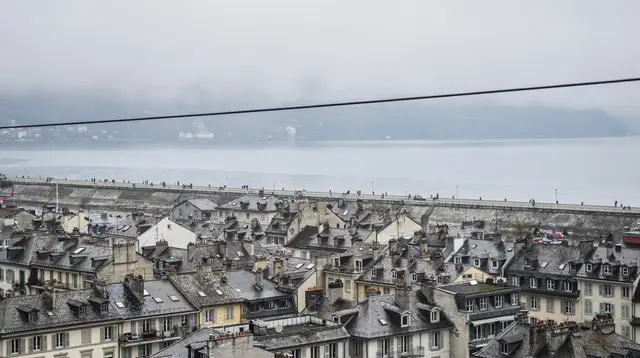
Fribourg’s old town sits on a rocky spur high above a loop in the Sarine river, one of the best-preserved medieval town centres in Switzerland, and it’s also where most of the serious fondue restaurants are concentrated. Look for small, family-run addresses along the steep lanes near the cathedral and around the lower town by the river — these tend to be the places most committed to sourcing genuine vacherin fribourgeois rather than a generic substitute. Restaurants here serve fondue in every season, not just winter; it’s treated as a standing local specialty rather than a cold-weather-only dish, which is itself a point of difference from how some visitors expect fondue to be rationed to the ski season.
A self-guided route through the old town’s food stops is a practical way to get oriented on a first visit and taste more than one address without committing to a single sit-down meal — a self-guided tasting route through Fribourg’s old town covers several local food stops at your own pace, useful groundwork before choosing where to sit for the fondue itself.
For a different, more active way to see the same streets before or after eating, an urban golf format turns the old town’s staircases and alleys into a course — an urban golf experience through Fribourg’s old town is a way to walk off the appetite (or the meal) while still exploring the same rocky spur above the Sarine.
What it costs, and why service is already included
Switzerland is not a country where fondue is a budget option, but it’s also not priced dramatically above other restaurant meals here. A pot for two at a mid-range Fribourg address typically falls in the same band as a mid-range Swiss restaurant dinner more broadly — expect prices in Swiss francs, not euros, since Fribourg sits fully inside Switzerland, unlike the French towns across the nearby border such as Annecy or Évian-les-Bains, which price everything in euros and at generally lower levels.
One thing that trips up visitors used to North American dining: service is included in the price by law throughout Switzerland, Fribourg included. There’s no need to calculate a 15-20% tip on top of the bill — rounding up or leaving small change is the normal local gesture, and waitstaff neither expect nor rely on a larger tip.
| Item | Typical range (CHF) |
|---|---|
| Fondue moitié-moitié, per person | 28-38 |
| Side salad | 6-10 |
| Glass of white wine | 7-10 |
| Coffee to finish | 4.50-6 |
Prices vary by address and portion size — some restaurants charge per person, others price a shared pot by weight — so check the menu before ordering if the format isn’t clear.
Pairing it the local way
Tradition in Fribourg, as across French-speaking Switzerland, pairs fondue with a dry white wine or with black tea, and steers away from cold drinks or beer alongside the dish — the local belief is that very cold liquids sit poorly with a stomach full of melted cheese. A simple green salad on the side is the standard accompaniment, cutting through the richness, and cubed bread for dipping is non-negotiable; some Fribourg restaurants also offer boiled potatoes or a plate of cured meats as a heartier addition for a full dinner rather than a starter-sized pot.
Fribourg beyond the fondue pot
Fribourg is a genuinely bilingual city — French and German coexist here in a way that’s unusual even by Swiss standards, visible in street signs and shopfronts that shift language block by block. The old town’s cathedral, covered bridges, and steep medieval lanes above the Sarine are worth the visit on their own, separate from any meal. The Fribourg museums and landmarks guide and the Fribourg walking tours guide both cover that ground in more detail than fits here, and the Fribourg food tours guide is the place to look if fondue is only one course of a longer culinary day.
For a guided introduction that ties the old town together without needing to plan a route yourself, a chocolate and old town tour with a boat ride covers the equivalent Geneva-side experience for travellers pairing a fondue day in Fribourg with time spent in the city itself before or after.
If cheese is the draw for your day, pairing Fribourg with Gruyères — home to both a hilltop castle and the cheese-production visitor centre La Maison du Gruyère — makes for a full day built entirely around Switzerland’s two most closely associated cheese towns.
For chocolate alongside the cheese theme, a combined outing that covers both is worth considering — a private Gruyères tour combining the castle with cheese and chocolate tastings pairs the two towns’ specialties in a single excursion, useful if Fribourg is one stop on a broader day rather than the only destination.
Travelling up from the lake rather than from Geneva directly, a guided option departing Lausanne covers similar ground — a Gruyères day tour from Lausanne with chocolate and cheese tasting included is a practical way to combine Fribourg-region cheese country with a Lake Geneva base, without needing to drive or manage train connections yourself.
Starting from Geneva itself rather than Lausanne, a private Gruyères cheese and chocolate tour with a local guide departing Geneva covers the same Gruyères ground with door-to-door transport, a reasonable option if Fribourg and Gruyères are both on the day’s plan and you’d rather not manage two separate train connections.
When to build Fribourg into a Geneva-based trip
Because fondue in Fribourg is served year-round rather than rationed to ski season, there’s no single “right” time to schedule this stop — it works as easily on a summer day trip as a winter one, which is unusual among the region’s cheese destinations. What does change with the season is the rest of the day around the meal: the old town’s outdoor terraces and riverside paths along the Sarine are more pleasant to walk in summer, while a winter visit leans more naturally toward the cathedral interior and the covered bridges, with the fondue pot itself as the main event rather than a stop along an outdoor walking route.
Travellers basing themselves in Geneva rather than staying overnight in Fribourg should plan the fondue meal as the anchor of the day, since a full pot is a substantial, unhurried dinner-style meal rather than a quick lunch stop — arriving in the early-to-mid afternoon leaves time to see the old town before sitting down to eat, without rushing the last train back to the lake.
Getting to Fribourg
Fribourg sits on the main rail line between Geneva/Lausanne and Bern, which makes it one of the more straightforward day trips from the lake — no need for a car, and no border crossing, unlike outings to Annecy or Chamonix, which involve crossing into France. For travellers building fondue into a wider itinerary rather than a single meal, the three-day lake and mountains itinerary and the two-day cheese and chocolate itinerary both work Fribourg-region stops into a longer plan.
If pricing and currency confusion between Swiss and French destinations is a concern before you travel, the guide to paying in francs, not euros and the honest look at how expensive Geneva really is are useful reading — Fribourg is generally a little gentler on the wallet than Geneva itself, but it is still priced in francs at Swiss levels, not at the lower euro prices found just across the French border.
Frequently asked questions about Fribourg’s fondue
Is Fribourg’s moitié-moitié fondue the same as the half-and-half fondue served in Geneva or Lausanne?
Not quite. The name refers to the same 50/50 cheese principle everywhere in Romandy, but Fribourg restaurants use vacherin fribourgeois specifically, a soft cheese produced within the canton. Elsewhere, kitchens more often substitute a different soft cheese or lean closer to a Gruyère-heavy blend, since fresh vacherin fribourgeois is not always distributed as widely outside its home canton.
What is vacherin fribourgeois, exactly?
It is a semi-soft, washed-rind cow’s milk cheese made under a protected designation of origin (AOP) within the Canton of Fribourg. It is milder and softer than Gruyère, and it is this softness that gives Fribourg’s fondue its characteristically smooth, almost silky texture once melted.
Do Fribourg restaurants price fondue in euros?
No. Fribourg is in Switzerland, and menus are priced in Swiss francs (CHF), not euros. This is worth stating plainly because several nearby French towns across the border, such as Annecy or Évian, price meals in euros — the two currencies and price levels should not be assumed interchangeable.
Is service included in the fondue price in Fribourg?
Yes. As throughout Switzerland, service is included in restaurant prices by law, so no additional tip is expected. Rounding up the bill or leaving small change is common, but a US-style 15-20% tip is not the local norm.
Can I get fondue in Fribourg outside of winter?
Yes. Unlike some destinations where fondue is treated as a strictly cold-weather dish, restaurants in Fribourg’s old town serve it year-round, reflecting its status as a defended local specialty rather than a seasonal tourist offering.
Is Fribourg the same as Gruyères, or somewhere close to it?
They are different places in the same broader cheese-producing region. Fribourg is the bilingual cantonal capital, built on a rocky spur above the Sarine river; Gruyères is a separate hilltop town, and the source of Gruyère cheese, roughly 30 minutes further south. Both are worth visiting for cheese, but they are not the same stop.
What should I order alongside fondue in Fribourg?
A green side salad is the standard accompaniment, since it cuts through the richness of the melted cheese, along with cubed bread for dipping. Some Fribourg addresses also serve cured meats or a small plate of potatoes as a heartier side, and a glass of dry white wine or black tea is the traditional pairing — cold drinks are usually avoided alongside fondue by local custom.
Cheese and Fondue Tastings
Verified deep-linked GetYourGuide tours. Book through these links and we earn a small commission at no cost to you.
GetYourGuide does not provide a product photo for this activity — the image shows the meeting point, photographed by us.