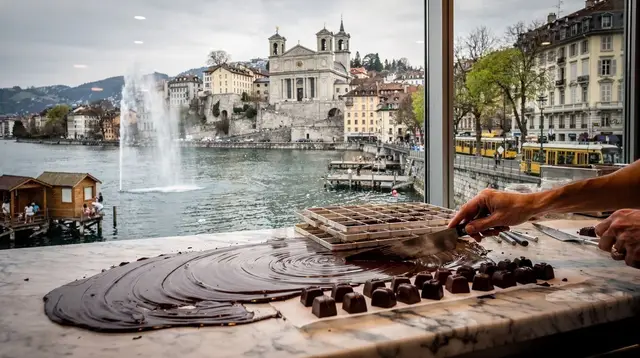
Jet d'Eau & Lakefront Photo Sessions in Geneva
Where's the best spot to photograph the Jet d'Eau?
The quays near the Jardin Anglais and the breakwater closest to the fountain give the classic view, with Mont Salève often visible behind it on clear days. Late afternoon to sunset gives the softest light, but the Jet d'Eau is switched off in strong wind, in winter freezing conditions, and during maintenance, so it is never a guaranteed sight.
One shot, one spot: framing the Jet d’Eau
Geneva has plenty to photograph — the Old Town, the Reformation Wall, the artisan streets of Carouge — but there’s one image most visitors actually come for: the Jet d’Eau plume rising over the Rade de Genève, with the lake, the mountains and maybe a sailboat in frame. That single shot doesn’t need a full city tour. It needs the right stretch of quay, the right hour, and a realistic expectation about whether the fountain will even be running.
This page is deliberately narrow. It isn’t a guide to photographing all of Geneva — for that, see the broader Geneva photo sessions guide — it’s about the lakefront viewpoint specifically: where to stand, what light to wait for, and what can go wrong with timing a visit around a fountain that is switched off more often than most first-time visitors expect.
Why the lakefront, and not a city-wide tour
A full Geneva photo walk covers the Old Town, St-Pierre Cathedral, the international district and the lake in one route. That’s the right choice if you have half a day and want variety. It is the wrong choice if your goal is specifically the Jet d’Eau shot with clean water, good light and Mont Salève in the background — chasing multiple locations eats the golden-hour window, and the fountain doesn’t wait for you to finish the Old Town first.
Treating the lakefront as its own session means arriving with one job: be in position, camera ready, before the light turns. Everything else in Geneva can be seen before or after.
Where to stand
The Jardin Anglais side. The lawns and promenade near the Jardin Anglais and its flower clock give a wide, uncluttered view across the Rade, with the Jet d’Eau roughly centred and the Alps sometimes visible far behind it on the clearest days. This is the easiest spot to reach on foot from the Old Town or the train station and works well if you want people, boats and the skyline in the same frame.
The breakwater jetty. A stone jetty extends out toward the fountain itself, putting you much closer to the spray — close enough that wind can carry mist onto a lens, which is worth knowing before you bring out anything you don’t want to wipe down. This spot gives a more dramatic, vertical framing of the plume, with less of the city skyline and more of the water and sky.
Across the water, from the Old Town shoreline. From the opposite bank, near the lake steps below the Old Town, you get the classic postcard composition: the fountain on one side, the Alps or Mont Salève on the other, and the water filling the middle distance. This viewpoint needs a longer lens or a wider crop to make the fountain a real subject rather than a distant detail.
| Viewpoint | Distance to jet | Best for | Downside |
|---|---|---|---|
| Jardin Anglais promenade | Moderate | Wide skyline shot, easy access | Fountain can look small in frame |
| Breakwater jetty | Close | Dramatic close plume shot | Spray can reach camera in wind |
| Old Town shoreline | Far | Classic postcard composition, mountain backdrop | Needs zoom or crop to isolate fountain |
None of these require a ticket, a booking, or entry to a paid site — the whole lakefront is open, public space.
Timing: light matters more than the fountain schedule
The single biggest variable in a lakefront photo isn’t the fountain, it’s the light. Midday sun over the lake tends to be flat and can bleach out the spray against a pale sky. Late afternoon, and especially the hour approaching sunset, gives warmer tones, longer shadows on the water, and a better chance of catching Mont Salève lit from the side rather than as a flat silhouette.
In summer, the Jet d’Eau typically runs from around 9am until after sunset and is illuminated after dark, which opens a second, very different photo opportunity: the plume lit against a night sky, reflected in the lake. In winter, running hours shrink to roughly 10am-4pm, which narrows the golden-hour overlap considerably — a winter visit timed for sunset may find the fountain already switched off for the day rather than simply not yet illuminated.
The honest limitation: it might not be running
This is the part worth being blunt about. The Jet d’Eau is not a static monument — it’s switched off in strong wind, in freezing winter conditions, and during maintenance, and none of these interruptions come with much advance public notice. A visitor who plans a single tightly-timed trip to the lakefront, expecting the fountain to be there exactly on schedule, can be disappointed.
There’s no way to promise it will be running when you arrive, and no page or planner can responsibly claim otherwise. The practical response is to build in slack: treat the lakefront walk as worthwhile even without the plume — the Rade de Genève, the flower clock, the promenades and the lake itself are attractive on their own — and check back later in the day if conditions were marginal on arrival. Wind that grounds the fountain at 2pm sometimes drops by early evening, and it’s occasionally switched back on for exactly the sunset window photographers are waiting for.
Building a short session around it
For an independent visitor with a free hour, a simple approach works well: arrive at the Jardin Anglais side about ninety minutes before sunset, check whether the fountain is running, and if so, shoot from there first before walking the few minutes to the breakwater jetty for a closer angle. If the light or the fountain isn’t cooperating, the same walk still covers Geneva’s most photogenic public stretch of lakefront, and a return visit the next evening costs nothing but time.
For visitors who’d rather not scout it themselves, a guided city photography outing can shortcut the trial and error — someone who already knows the current best angles, roughly what time the light turns, and how to work around whichever viewpoint is crowded that day. A guided photography session around Geneva’s most photogenic spots typically includes the lakefront among several stops, so it suits travellers who want more than just the Jet d’Eau shot in the same outing.
For a tighter focus on Instagram-style framing and composition tips at each stop, a private walking tour built around Geneva’s most photogenic highlights is a more curated option, useful if you want a photographer’s eye guiding where exactly to stand rather than working it out from a map.
Pairing the lakefront with the rest of the city
Because this page deliberately isolates the lakefront, it’s worth saying plainly: the Jet d’Eau session pairs naturally with a walk through the Old Town either before or after, since the two are a short walk apart along the quays. A guided tour of the Old Town and its historic treasures covers St-Pierre Cathedral and the medieval streets, and slots naturally either side of a lakefront session timed for golden hour — arriving in the Old Town by early afternoon leaves the evening free for the fountain.
Visitors curious about Geneva’s quieter, more offbeat corners after the obvious lakefront shot might also enjoy a self-guided audio walk exploring the city’s history through its darker and more unusual stories — the self-guided Sins & Virtues audio tour of the city works at your own pace and doesn’t compete with a fixed lakefront timing window.
For visitors staying longer and building out a full itinerary, one-day Geneva essentials and the two-day Geneva city break both build in a lakefront evening around the rest of the city’s landmarks, and the broader Geneva walking tours guide covers the Old Town side of that pairing in more depth.
Weather and season notes
Wind is the recurring variable. Geneva’s lakefront is exposed to the bise, a strong, cold, dry wind that funnels down the lake and is the single most common reason the Jet d’Eau gets switched off outside of scheduled hours. A windy forecast is a reasonable signal to build a backup plan — an indoor alternative, or simply a later check-in — rather than a hard promise the fountain will be off. For broader seasonal planning around Geneva, see when to visit and the winter guide, and for how to get around the lakefront and the rest of the city between sessions, the Geneva transport guide covers the free visitor transport card and the tram and bus network.
Rain rarely ruins a lakefront photo outright — a damp, moody sky can actually suit the fountain shot — but a full washout is better spent elsewhere; the rainy day in Geneva itinerary has indoor alternatives for that scenario.
Practical checklist
- Check current wind conditions before setting out; strong wind is the most common reason the fountain is switched off outside its scheduled hours.
- Aim to arrive 60-90 minutes before sunset for the best light, and expect to wait or walk between the two or three main viewpoints.
- In winter, plan around the shorter 10am-4pm running window rather than assuming an evening sunset shot will catch it running.
- Bring a lens cloth if shooting from the breakwater jetty — spray from the fountain can reach a camera in windier conditions.
- Have a backup plan for the visit that doesn’t depend on the fountain running, since no schedule guarantees it.
- Combine the session with a nearby stop — the Old Town or the Jardin Anglais flower clock — so the visit has value even if timing with the fountain doesn’t work out.
Frequently asked questions about Jet d’Eau photo sessions
Is the Jet d’Eau guaranteed to be running when I visit?
No. It is switched off in strong wind and below about 2°C, and it runs shorter hours in winter (roughly 10am-4pm) than in summer (from around 9am to after sunset). Maintenance closures also happen without much public notice.
What is the single best viewpoint for a photo with the Jet d’Eau and the lake?
The lakeside promenade near the Jardin Anglais and the breakwater jetty closest to the fountain are the two classic spots. The jetty gets you closer to the spray; the Jardin Anglais side gives more separation and a cleaner skyline behind it.
What time of day gives the best light for lakefront photos?
Late afternoon into sunset is generally best, when the light is warmer and lower, and the Jet d’Eau is more likely to be lit against a darkening sky in the hour after sunset in summer. Midday light tends to be flatter and can wash out the water spray.
Can I see Mont Salève in the background from the lakefront?
On clear days, yes. Mont Salève rises directly across the water to the south, and it appears behind the Jet d’Eau from several of the lakefront viewpoints, though it is a French mountain, not a Swiss one, even though it looms over the Geneva skyline.
Do I need to book a professional photographer, or can I shoot this myself?
Either works. A short guided city photography session can help with timing, angles and settings if you want a polished result without scouting it yourself; independent visitors get the same view for free by simply walking the quays at the right hour.
How long should I budget for a lakefront photo session?
For an independent visit, 45 minutes to an hour covers checking a couple of viewpoints and waiting for the light. A booked photography session is typically framed as a fixed block, commonly around one to two hours including some walking between spots.
Is the Jet d’Eau visible at night?
Yes, when it is running. It is illuminated after dark in the warmer months, which gives a different, more dramatic look than the daytime shot, though the same wind and cold-weather shutdowns apply after sunset too.
What should I do if the Jet d’Eau is off when I arrive?
Treat the lakefront walk as worthwhile on its own — the Rade de Genève, the Jardin Anglais flower clock and the promenades are attractive without the fountain — and check back later in the day, since it is sometimes switched back on after a lull in the wind.
Lake Geneva Cruises
Verified deep-linked GetYourGuide tours. Book through these links and we earn a small commission at no cost to you.
GetYourGuide does not provide a product photo for this activity — the image shows the meeting point, photographed by us.