Paragliding Over Montreux and the Lavaux Vineyards
What does a paragliding flight over Montreux actually show you?
A tandem flight typically launches from the hillsides above Montreux, near Rochers-de-Naye, and glides down over the Lavaux vineyard terraces and Lake Geneva, with Château de Chillon visible far below on the shoreline. The château itself is only seen from the air on this flight — visiting its rooms and courtyard is a separate, ground-level ticket. Flights depend on thermal wind conditions and are not guaranteed to run, especially in strong wind over the lake.
A vineyard-and-lake view, not a glacier view
Montreux sits on the northern, Swiss shore of Lake Geneva, backed by steep hillsides that climb quickly toward Rochers-de-Naye. That geography is what makes tandem paragliding here distinctive: launch from the slopes above town and the descent unfolds over the Lavaux vineyard terraces, a UNESCO World Heritage landscape of stepped vines running down to the water, with Lake Geneva itself filling the view and Château de Chillon visible as a small stone shape on the shoreline far below.
It’s worth being clear about what this is not. It is not a glacier flight — for high-mountain, ice-and-rock scenery, paragliding over Chamonix is the flight built for that, launching toward Mont Blanc rather than a lake. And it is not the same experience as touring Lavaux on the ground: cycling or scooting through the vineyard terraces puts you among the vines at eye level, walking between rows and stopping at villages, while paragliding shows the same terraces from several hundred metres up, as a single sweeping pattern of terracing, lake and shoreline. Both are valid ways to see Lavaux; they show it differently, and pairing one with the other on the same trip is common.
Where flights launch and what determines whether they run
Tandem operators based in Montreux typically bring passengers up toward the Rochers-de-Naye area for launch, since altitude and open slope are what a paraglider needs to get airborne. The Rochers-de-Naye cogwheel railway climbs from Montreux train station into this same high ground, and some visitors combine a scenic ride up with their paragliding day, even when the flight itself launches from a lower point on the mountain’s flank chosen for wind conditions that day.
a ticket up to Rochers-de-Naye is worth booking separately if the mountain scenery interests you beyond the flight — the summit area has its own marmot park and panoramic views that a paragliding transfer doesn’t necessarily include.
The flight itself depends on thermal wind: warm air rising off the slopes as the sun heats the hillsides through the morning, which is what lets a paraglider gain altitude and glide rather than sink quickly to the ground. This generally makes midday and early afternoon the more reliable window, once the thermal has had time to build, rather than first thing in the morning. It also means conditions genuinely vary day to day — a booking is a booking on a wind-dependent activity, not a guarantee that a flight departs at the exact minute reserved.
Montreux’s tandem paragliding flight over Lake Geneva is flown with a licensed pilot doing the launch, flying and landing, so no prior experience is needed — passengers are along for the ride, strapped into a harness alongside the pilot.
A Montreux flight depends on thermal wind, so a day can be postponed and the pilot may move you to the following afternoon. Leave a spare day in your Geneva stay and avoid scheduling the paragliding on the morning of your departure. A return date you can change makes that easier, and you can compare fares into Geneva on Aviasales when choosing dates.
What a strong-wind day means for the flight
Strong wind over the open lake is a real limiting factor, not a formality. Paragliding depends on manageable, generally light-to-moderate air movement; wind that is strong enough to push a wing around unpredictably, particularly gusting wind funnelling down the lake basin, is a standard reason operators postpone or cancel a flight for passenger safety. This is worth building into trip planning: a paragliding flight booked for a specific afternoon in Montreux is not a flight the operator can simply force to happen if the wind that day doesn’t cooperate. Flexible dates, or booking early enough in a Montreux stay to allow a second attempt, reduce the risk of missing it entirely.
Rain and low cloud have the same effect, since visibility and wet conditions both work against a safe tandem flight. None of this is unique to Montreux — it is true of tandem paragliding generally, wherever it is flown — but it matters more here than at some other launch sites because the flight path crosses open water at the base of the descent, where wind behaves differently than over land.
What you actually see in the air
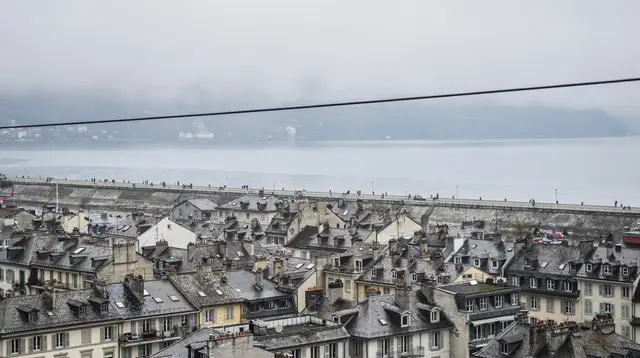
The core of the view is the relationship between vineyard and lake: the Lavaux terraces stepping down the hillside in tight bands, the water opening out below and around Montreux and Vevey, and the built-up lakeside towns reduced to a thin strip between vines and shore. Château de Chillon appears as a landmark on the shoreline — recognisable from its shape and setting at the water’s edge, but seen only as a small structure from altitude, not from inside. Anyone wanting the towers, the courtyard, the great hall and the dungeon needs a separate, ground-level visit; an entrance ticket to Château de Chillon covers that walk-through experience, and it pairs naturally with a paragliding day either before or after the flight, since the castle sits a short distance along the shore from central Montreux.
On a clear day, the far shore of the lake is visible too — that side belongs to France, not Switzerland, and the flight itself does not cross the water to it. The Montreux flight stays over Swiss ground and Swiss airspace throughout, gliding down the hillside rather than out across the lake toward the French side. Inland and to the east, the higher peaks around the Vaud Alps and toward the Bernese Oberland can show up in good visibility, adding depth beyond the immediate vineyard-and-lake foreground.
How this compares to paragliding over Lake Annecy
Montreux isn’t the only lakeside paragliding option within reach of Geneva. Across the border in Haute-Savoie, Annecy and Lake Annecy offer a similar tandem-flight concept — launch from the hills above the lake, glide down over water and shoreline — but the scenery underneath is different in character. Where the Montreux flight shows stepped vineyard terraces and a Swiss lakeside town backed by Château de Chillon, the Annecy flights unfold over a smaller, intensely turquoise alpine lake ringed by steeper peaks, with the old town and canals of Annecy itself visible at one end. Annecy’s thermal paragliding flight over the lake and a paragliding flight over Lake Annecy from Talloires are the equivalent tandem experiences there, both covered in more detail in the guide to paragliding over Annecy.
Neither flight is objectively better — they show different landscapes and sit in different countries, which matters for travellers weighing a day trip against a longer excursion. Montreux paragliding fits naturally into a Swiss Riviera day built around Lavaux and Chillon; Annecy paragliding fits into a day trip to Annecy from Geneva, which is a separate outing across the French border rather than an add-on to a Montreux visit. Travellers deciding between the two are usually choosing between a vineyard-and-lake day on the Swiss side or an alpine-lake day on the French side, not comparing two versions of the same flight.
Making a full day of Lavaux, Chillon and Montreux
Because the paragliding flight itself is relatively short and entirely weather-dependent, most visitors build it into a longer day that doesn’t collapse if the flight is delayed or postponed. Lavaux offers the most natural pairing, since it’s the landscape seen from the air: a guided outing such as a Lavaux wine and vineyard experience with a boat cruise covers the terraces from the water and among the vines, giving a ground-level counterpart to the aerial view. For a day that ties Montreux, Vevey and Chillon together in one guided outing rather than separate bookings, a combined Montreux, Vevey and Chillon Castle tour from Geneva covers the same shoreline the flight passes over, with a proper walk-through of the castle included.
Anyone who prefers the mountain rather than the water side of Montreux’s geography can pair paragliding with time on the same slopes used for launch: Rochers-de-Naye hike and picnic day trip spends more time in that high ground than a paragliding transfer alone allows, useful for travellers who want the marmots, the alpine botanical garden and a longer walk rather than just a flight and a quick descent. Because both activities start from broadly the same area above Montreux, they slot together into a single mountain-focused day, with the Rochers-de-Naye cogwheel railway doing double duty as transport for both.
For travellers basing themselves in Geneva rather than staying overnight in Montreux, a Lake Geneva grand tour or a shorter one-day Montreux and Chillon itinerary both already assume Lavaux and Chillon as stops; slotting in a paragliding flight simply adds an aerial layer to a day that was already built around the same shoreline. Food-focused travellers might add a stop for chocolate tasting in Montreux or a Montreux food tour afterward — both low-effort, indoor-friendly activities that work well as a wind-day backup if the flight itself has to move to a later slot. A Lake Geneva boat cruise from Montreux offers yet another way to see the same water from a very different vantage point, at lake level rather than several hundred metres above it.
Planning a paragliding day from Geneva or within Montreux
Montreux is roughly an hour by train from Geneva, making a paragliding flight realistic as part of a longer Montreux day or a Swiss Riviera stay rather than requiring an overnight. Because the flight is weather-dependent, it works best scheduled with some slack in the itinerary — not as the only activity planned for a tightly timed single day.
| Pairing with paragliding | Why it works |
|---|---|
| Rochers-de-Naye cogwheel railway | Climbs into the same high ground used for launch; good before or after if weather delays the flight |
| Château de Chillon (ground visit) | Seen only from the air during the flight; a separate ticket completes the castle experience |
| Montreux lakefront walk | Low-effort, flexible timing if the flight gets rescheduled around better wind |
| Lavaux on foot, bike or scooter | Ground-level view of the same terraces seen from above |
A short walking introduction to town before or after the flight fills time without much planning: Montreux’s one-hour discovery walk covers the lakefront and old town at an easy pace, useful as a buffer activity on a day when the flight is delayed to catch better thermal conditions later.
Booking logistics and what to expect on the day
Tandem operators generally ask passengers to arrive at a meeting point in Montreux before transferring up to the launch area, with a briefing on harness use and landing technique before takeoff — none of it requiring prior paragliding knowledge. Weight limits, minimum age, and basic health restrictions (heart conditions, pregnancy, recent injuries) are standard across tandem operators and worth checking directly with the operator when booking, since specifics vary.
Clothing matters more than most first-time flyers expect: launch altitude near Rochers-de-Naye is noticeably cooler and windier than the lakeside in Montreux, so layers and closed, sturdy shoes serve better than what feels appropriate down at the water. Cameras and phones are usually fine if secured, though exact policy — whether the pilot carries a mounted camera, whether passengers can bring their own — differs by operator and is worth confirming ahead of time rather than assuming.
Because the flight window shifts with wind and thermal development, some operators keep booking times approximate rather than fixed to the minute, with actual departure confirmed on the day. Building a spare hour or two around the booked slot, rather than scheduling a train straight after, avoids the stress of a wind delay running into a tight connection.
Frequently asked questions about paragliding over Montreux
Where do tandem paragliding flights in Montreux take off from?
Most tandem operators launch from the slopes above Montreux, on the flank of Rochers-de-Naye, reached by a short transfer or the Rochers-de-Naye cogwheel railway. Exact launch points shift with the wind on the day, since pilots choose whichever site is flyable rather than a fixed spot.
Do I fly over the inside of Château de Chillon?
No. You see the château from above, as a small shape on the lakeshore below, not its rooms, courtyard or towers. Chillon is a ground-level, ticketed visit on its own, entirely separate from a paragliding flight and not included in it.
Is the flight guaranteed to happen if I book a specific time?
No flight over Lake Geneva is guaranteed. Tandem paragliding depends on thermal wind, which builds through the morning and is generally most reliable around midday and early afternoon; strong wind, rain, or low cloud can cancel or delay a flight, including one booked in advance.
What do you actually see during the flight?
The Lavaux vineyard terraces stepping down toward the lake, the Montreux and Vevey shoreline, Lake Geneva itself, and Château de Chillon as a distant landmark below. On a clear day the French shore of the lake and the higher Alps inland are visible too, but the vineyard-and-lake view is the core of the flight.
Is the French shore of Lake Geneva visible during the flight?
Yes, in clear conditions. Montreux sits on the Swiss, northern shore; the flatter land visible across the water is France. The flight itself stays over Swiss airspace above Montreux and Lavaux — it does not cross the lake.
How long does a tandem flight last, and is any experience needed?
Tandem flights are flown with a licensed pilot who does the flying and landing; no experience or training is required. Total time including transfer, briefing and the flight itself usually runs a couple of hours, though the airborne portion is shorter and varies with conditions on the day.
What should I wear or bring?
Closed, sturdy shoes and layers suitable for the weather at altitude, which is cooler and windier than lakeside Montreux. Cameras or phones are often carried in a secured pocket or wrist strap; check with the specific operator, since policies on personal cameras vary.
Can I combine paragliding with a Rochers-de-Naye visit or a Chillon visit on the same day?
Yes. Because the launch area sits near Rochers-de-Naye, many visitors pair the flight with a ride on the cogwheel railway, and a ground-level visit to Château de Chillon works well before or after, since it is a separate, short trip along the shore from Montreux.
Paragliding Over the Alps
Verified deep-linked GetYourGuide tours. Book through these links and we earn a small commission at no cost to you.
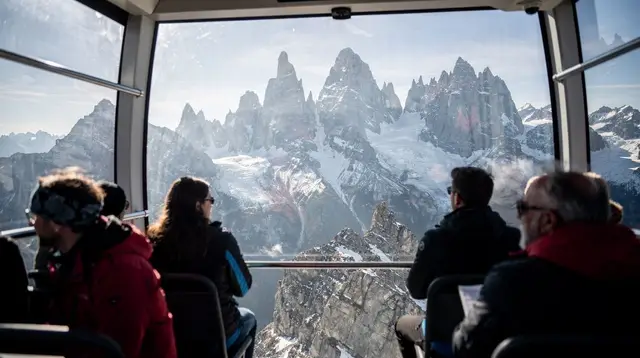
GetYourGuide does not provide a product photo for this activity — the image shows the meeting point, photographed by us.