Neuchâtel's Old Town, Castle and Museums: A Lakeside Heritage Guide
What are the essential heritage sights in Neuchâtel?
The old town's yellow-stone streets, the hilltop Château de Neuchâtel and Collégiale, and the lakefront Musée d'art et d'histoire are the three anchors. All sit within a compact, walkable core above Lake Neuchâtel, Switzerland's largest lake lying entirely within its borders.
A yellow-stone town above its own lake
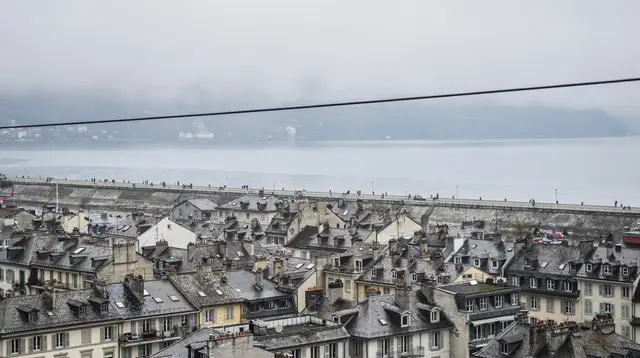
Most visitors organising a trip around Geneva map the region in terms of Lake Geneva — but head north into the Jura foothills and a different lake, and a different kind of Swiss town, appears. Neuchâtel is built almost entirely from a warm, pale-yellow local sandstone, which gives its old town a unified, sunlit look that local writers have long called “a piece of jewellery cut from a block of butter” — a slightly odd phrase, but one that captures the effect of the honey-coloured façades against the lake and the wooded hills behind.
The town rises in a fairly compact stack: the lakefront at the bottom, an old commercial and residential core in the middle, and a fortified hilltop — castle and collegiate church together — at the top. Unlike Fribourg, whose character comes from a steep medieval river gorge and strong religious history, or Gruyères, whose draw is a single fortified hill village, Neuchâtel’s identity is lacustrine and Jura-edged: a lakeside town that happens to have a castle, rather than a castle-town that happens to sit near water. That distinction matters for anyone trying to decide, from Geneva, which of these Fribourg-region destinations to prioritise on limited time.
This guide covers Neuchâtel’s general heritage sights — old town streets, the castle and collegiate church complex, and the lakefront art and history museum. It deliberately leaves out the town’s watchmaking story, a substantial subject in its own right with dedicated collections and sites, covered separately.
Lake Neuchâtel: the largest lake entirely within Switzerland
Before getting into the streets and buildings, it’s worth placing the water, because it explains the whole layout of the town. Lake Neuchâtel is the largest lake located wholly inside Switzerland — larger in surface area than sections most visitors associate with Swiss lakes, yet far less internationally known than Lake Geneva, since it borders no other country. Lake Geneva, by contrast, is the largest lake in Western Europe overall, but roughly 40% of its shoreline lies in France. That contrast is a genuinely useful orientation point: Neuchâtel’s lake is smaller in international profile but bigger in a technical, entirely-domestic sense, and its shoreline promenades, sailing clubs and lakefront museum all read differently once that’s understood.
The town itself sits on the lake’s northern shore, backed by the first ridges of the Jura mountains — a noticeably different landscape from the pre-Alpine slopes around Montreux or Vevey on Lake Geneva’s Swiss Riviera.
The old town: streets, squares and civic architecture
Neuchâtel’s old town rewards slow, undirected walking more than a checklist of individual monuments. The core historic streets climb gently from the lakefront toward the château, threaded with covered arcades, fountains, and 16th- to 18th-century façades in that same pale local stone.
A few anchors worth building a route around:
- Place des Halles, the old market square, ringed by arcaded buildings and still hosting a produce market on regular days.
- The Hôtel de Ville (town hall), a neoclassical building distinct in style from the older stone core around it.
- Rue du Château and the stepped lanes leading up toward the fortified hilltop, which give the best sense of the town’s vertical layering.
- Fountains and civic statuary scattered through the old town, many dating to the 16th and 17th centuries, typical of the period when Swiss towns invested heavily in public water infrastructure as a display of civic wealth.
None of these individually demands a ticket or a long stop; together they’re what makes an hour or two of walking in Neuchâtel worthwhile even for visitors who don’t plan to go inside a single museum. A local-led route through these streets, aimed specifically at visitors with limited time, is exactly what the short guided walk through Neuchâtel’s old town is built for — useful if the goal is orientation within an hour rather than open-ended wandering.
The Château de Neuchâtel and the Collégiale
At the top of the old town, the castle and the collegiate church sit side by side on the same fortified promontory, sharing a terrace with sweeping views over the rooftops to the lake and, on clear days, the distant Alps.
Château de Neuchâtel dates back to the 12th century in its earliest sections, though what stands today is a layered mix of medieval and later additions. It is not a museum-piece castle in the way Château de Chillon is on Lake Geneva — it currently serves as the seat of the Neuchâtel cantonal government, which means the interior is not freely open to casual visitors. Access to the inside is generally limited to scheduled guided tours, offered at set times rather than on demand, and subject to change around official business. The exterior, courtyard and terrace, by contrast, are typically accessible and free to explore, and the terrace view alone is one of the better reasons to make the climb.
The Collégiale, right beside it, is a Romanesque and Gothic collegiate church, notable for its brightly glazed polychrome roof tiles — a decorative technique seen on several prominent buildings across French-speaking Switzerland — and for the Cenotaph, a large 15th-century sculpted monument inside depicting the counts of Neuchâtel, considered one of the most important surviving works of medieval sculpture in Switzerland. The nave is generally open to visitors without charge, in the ordinary way of an active church, though hours can be more limited outside of services and shift with the season.
Together, the castle terrace and the Collégiale form the single best viewpoint over the old town and the lake, and pairing the two — free exterior and church, optional interior tour — is the natural way to spend the uphill half of a Neuchâtel visit.
Musée d’art et d’histoire: the lakefront collection
Down at lake level, a short walk from the old town, the Musée d’art et d’histoire de Neuchâtel (MAHN) occupies a purpose-built lakefront building and holds the canton’s principal fine art and local history collections under one roof — regional paintings, decorative arts, archaeology, and rotating temporary exhibitions.
Its best-known holdings are the Jaquet-Droz automata: three elaborate 18th-century mechanical figures — the Writer, the Draughtsman and the Musician — built by Pierre Jaquet-Droz and his collaborators, each capable of genuinely writing text, drawing images or playing music through purely mechanical means. They’re demonstrated in action on specific scheduled days rather than continuously, so visitors hoping to see them actually move should check the museum’s demonstration calendar before planning a visit around them, rather than assuming a live demonstration on any given afternoon.
It’s worth being clear about scope here: the automata are remarkable objects of horological engineering, but this guide treats them as part of the museum’s general art-and-history collection rather than as an entry point into Neuchâtel’s broader watchmaking story — that fuller subject, including the region’s manufacturing history and dedicated watch collections, belongs to a separate guide rather than being folded in here.
Orientation: old town, castle hill, and lakefront
| Area | What’s there | Cost |
|---|---|---|
| Old town streets | Arcaded façades, fountains, Place des Halles, Hôtel de Ville | Free to walk |
| Château de Neuchâtel | Cantonal government seat; courtyard/terrace generally accessible, interior by scheduled tour only | Exterior free; interior tour separately ticketed/scheduled |
| Collégiale | Romanesque-Gothic church, polychrome roof, medieval Cenotaph | Free (nave) |
| Musée d’art et d’histoire | Fine art, local history, Jaquet-Droz automata | Paid admission |
| Lakefront promenade | Lake Neuchâtel views, boat landings | Free |
Prices and exact hours shift by season, and the castle’s guided-tour schedule in particular is worth confirming close to the visit date rather than assumed.
Getting there from Geneva
Neuchâtel is a realistic day trip from Geneva, not a quick detour. Figure on roughly an hour and a half to two hours by train, depending on the specific connection — some journeys run via Lausanne, others via Bern, and neither is a single direct hop without at least one change on most schedules. That travel time is comparable to reaching Chamonix or Annecy from Geneva, and it means a Neuchâtel day trip works best as a dedicated outing rather than something squeezed alongside another stop.
Because of that travel time, most visitors treat Neuchâtel as its own day rather than combining it with Fribourg or Gruyères in the same itinerary — those two pair naturally with each other, being closer together, while Neuchâtel sits further north on a different rail corridor. If the itinerary already includes a broader loop through this region, a guided regional tour such as the Gruyères region tour departing from Montreux or Bern covers the Fribourg-Gruyères side of the area without the logistics of self-planned train connections — though note it does not extend to Neuchâtel itself, which is worth booking or planning as a separate day.
Where Neuchâtel fits against its regional neighbours
For travellers deciding between destinations grouped in the same Fribourg-Gruyères section of a Geneva-based itinerary, the practical differences are:
- Fribourg: medieval river-gorge town with a strong religious and architectural identity, straddling a linguistic border between French and German-speaking Switzerland.
- Gruyères: a single fortified hilltop village, smaller and more concentrated, closely tied to the region’s dairy and gastronomic identity.
- Neuchâtel: a lakefront town on the Jura side, organised vertically from water to hilltop castle, with its identity built around the lake and yellow-stone architecture rather than a defensive hill position or a river gorge.
Visitors who enjoyed the food and market culture of Fribourg’s old town may want to extend that thread with the self-guided food tour through Fribourg, while a lighter, more active way to see Fribourg’s landmarks is the urban golf experience through Fribourg’s old town — both useful if Neuchâtel ends up as one stop within a longer swing through this part of French-speaking Switzerland rather than a standalone trip.
For those building a longer loop that takes in Lausanne and Gruyères alongside a Geneva base, a structured option like the private day trip from Geneva covering Lausanne and Gruyères handles the driving and routing directly, though again, Neuchâtel sits outside that particular loop and is better scheduled on its own day given the added distance north.
Planning notes and common mistakes
A few points worth getting right before setting out:
- Don’t assume the castle interior is open. The courtyard and terrace are the reliably accessible parts; the interior functions as a working government building and is only visitable on scheduled guided tours, not as a walk-up museum.
- Don’t expect the automata to be running on any random visit. The Jaquet-Droz automata are demonstrated on specific scheduled days at the Musée d’art et d’histoire, not continuously — check the calendar rather than assuming a live show.
- This is Lake Neuchâtel, not Lake Geneva. The two are entirely separate bodies of water in different parts of Switzerland; don’t plan a Neuchâtel visit expecting the same lakefront or the same boat network as around Geneva or Montreux.
- Budget the full travel time. At roughly ninety minutes to two hours each way from Geneva, Neuchâtel is a genuine day trip, and trying to also fit in Fribourg or Gruyères the same day is usually overambitious given the distances and connection times involved.
- This guide skips the watch story on purpose. Neuchâtel’s role in Swiss watchmaking is substantial and is covered in a dedicated guide rather than summarised here — treat this page as the general architecture-and-museums companion to that separate subject.
Neuchâtel’s heritage sights: frequently asked questions
How far is Neuchâtel from Geneva?
Figure roughly an hour and a half to two hours by train, depending on the connection and whether you change at Lausanne or Bern. It is a genuine day trip, not a quick side stop.
Is the Château de Neuchâtel free to visit?
The castle courtyard and terrace are generally accessible, but the interior is the seat of the cantonal government and is only open on limited guided visits, typically at set times and not every day of the year. Check current access before planning around it — it is not a year-round, freely open attraction.
Is the Collégiale church free to enter?
Yes, the nave of the Collégiale is normally open to visitors at no charge, in the usual way for an active parish church, though hours can be limited outside services.
What is the Musée d’art et d’histoire known for?
It sits directly on the lakefront and holds Neuchâtel’s fine art and local history collections, including the celebrated 18th-century automata by Jaquet-Droz — though the wider story of Neuchâtel’s watch industry is better covered by a dedicated horological guide than by this general museum overview.
Does this guide cover Neuchâtel’s watchmaking history?
Only in passing. Neuchâtel’s role in Swiss watchmaking is a large, separate subject with its own dedicated venues and is covered in its own guide rather than repeated here.
Is Neuchâtel on the same lake as Geneva?
No. Neuchâtel sits on Lake Neuchâtel, the largest lake located entirely within Switzerland, on the Jura side of the country — a different body of water from Lake Geneva (Lac Léman), which borders France.
Can Neuchâtel be combined with Fribourg or Gruyères in one day from Geneva?
It is possible but ambitious given the train times involved from Geneva to each town. Most visitors treat Neuchâtel as its own day trip rather than stacking it with Fribourg or Gruyères, which sit in a different direction and are better paired with each other.
Museums and Landmarks
Verified deep-linked GetYourGuide tours. Book through these links and we earn a small commission at no cost to you.
GetYourGuide does not provide a product photo for this activity — the image shows the meeting point, photographed by us.