Sion Wine Country: Valais Vineyards Beyond Lavaux
Is Sion part of the Lavaux vineyard region?
No. Sion sits in the canton of Valais, a separate wine region from the Lavaux terraces above Lake Geneva in the canton of Vaud. Sion's vineyards climb steep, sun-drenched slopes above the Rhône valley under a more continental climate, and the trip from Geneva takes about two hours by train each way.
Most visitors who ask about Swiss wine country around Geneva end up hearing about Lavaux - the terraced vineyards climbing from Lake Geneva between Lausanne and Montreux. Sion is something else entirely: a different canton, a different climate, and a different kind of vineyard landscape, roughly two hours further east by train. If Lavaux is the lake-facing wine country most people picture, Sion is the mountain-facing one - steep, sun-baked slopes below two fortified hills, in the heart of the Valais.
Why Sion is not “more Lavaux”
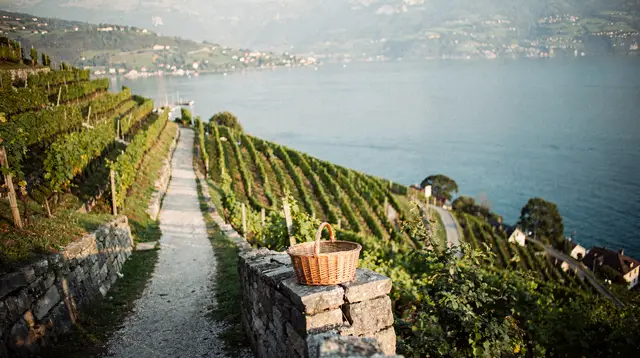
It’s an easy mix-up, since both places sell themselves on vineyards and Swiss scenery, but the two regions don’t overlap. Lavaux sits in the canton of Vaud, on the northern shore of Lake Geneva, and its terraces are famous precisely because they face the water - the lake’s reflected light and moderating warmth are part of what makes that specific microclimate work. Sion sits in the canton of Valais, well inland from the lake, in the broad Rhône valley that runs between the high peaks toward Zermatt and the Matterhorn.
The practical difference that matters most for a visit: this is not a short lakeside excursion. Where towns like Vevey, Montreux or Aigle sit within an hour or so of Geneva, Sion is roughly two hours away by direct train. It isn’t a stop you add onto a lake-cruise day - it’s a destination in its own right, and it deserves to be planned as one.
The climate is different too. Valais lies in something of a rain shadow behind the Alps, which gives it a drier, sunnier, more continental character than the lake-tempered air around Lavaux or the Swiss Riviera. Vines here also climb noticeably steeper ground in places, catching long hours of direct sun on slopes that would be difficult to work by machine.
The valley below Valère and Tourbillon
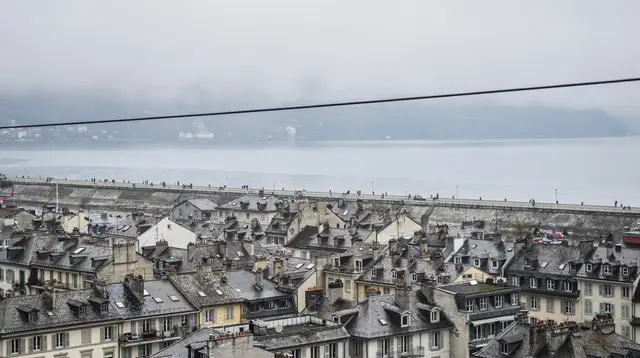
Sion’s old town is dominated by two hills that rise abruptly from the valley floor, each topped with a landmark that has watched over the vineyards below for centuries. Valère, the higher and more visited of the two, carries a fortified church - one of the more unusual religious buildings in Switzerland, built as much for defence as for worship. Tourbillon, facing it across a narrow gap, is crowned by the ruins of a former bishop’s castle, open to the elements and to sweeping views over the town and the valley.
Between and below these two hills, vines spread across the lower slopes in a patchwork that has shaped the local economy for generations. Walking up toward either hill gives a clear sense of how the vineyard rows relate to the town - climbing wherever the sun exposure justifies the effort, often on inclines steep enough to make the case for terracing and manual harvest.
A guided walk through the old town is a practical way to take this in without hunting for the right viewpoints yourself; a local-led walking tour through Sion’s historic centre typically threads between the two hills and the streets below, with commentary on how the town, its fortifications and its vineyards developed together.
A region built on variety, not a single grape
Ask about wine near Lake Geneva and most people will name Chasselas, the white grape behind much of Lavaux’s production. Valais tells a more varied story. The canton is known for growing an unusually wide range of grape varieties, including a number of indigenous ones that are rarely, if ever, found outside this corner of Switzerland. That diversity is part of what makes Valais distinct on the Swiss wine map - rather than one grape defining the region, a mix of local and international varieties share the steep slopes, each suited to particular pockets of the valley’s terrain and sun exposure.
This is worth knowing before a tasting, since it changes what to expect. A flight of Valais wines is less likely to repeat a single grape in different styles and more likely to introduce names that won’t be familiar from anywhere else - part of the appeal for visitors who already know the lake-country wines and are looking for something genuinely different rather than a variation on the same theme.
A structured way to explore this is a tasting built specifically around Sion’s wines: a guided tour and wine tasting focused on Sion’s local wines pairs a walk through the vineyard landscape with a chance to taste several of these varieties side by side, with guidance on what makes each one distinct.
For a closer look at how the wine actually gets made, a working winery visit fills that gap. A winery tour and tasting of five wines at a long-established Valais producer takes visitors through production spaces before sitting down to compare a flight of finished wines - a useful complement to a vineyard walk, since it shows the other half of the process.
Sion versus Lavaux: how to choose if you can only do one
Travellers planning a single Swiss wine day from Geneva often end up weighing Sion against Lavaux, and the honest answer is that the choice comes down to time, taste and how much of a mountain landscape appeals versus a lake one. Lavaux wins on convenience: it’s under an hour from Geneva, its terraces can be walked or seen from a boat in an afternoon, and Chasselas gives a consistent, easy-to-follow theme for a first Swiss wine tasting. Sion asks for a much bigger commitment - roughly two hours each way - but rewards that commitment with a landscape and a set of grape varieties that Lavaux simply doesn’t have.
For a first visit to Switzerland with limited time, Lavaux is the safer, faster choice. For visitors who already know the lakeside terraces, who are continuing on toward Zermatt, Verbier or Crans-Montana anyway, or who want a wine day that also includes two fortified hilltop landmarks rather than a shoreline walk, Sion is worth the extra travel. Some visitors solve the dilemma by doing both on the same longer trip rather than choosing between them: a day tour from Geneva combining Lavaux, Chexbres and Valais wine tasting is built around exactly that pairing, taking in the lake terraces and a taste of Valais wine country in a single organised day, which suits travellers who want the contrast without committing to two separate excursions.
Sion as a gateway to the rest of Valais
Because it sits on the main rail line running deeper into the canton, Sion is worth thinking about as more than an end point. The same route continues on toward Verbier, Crans-Montana and eventually Zermatt, all of which sit further up side valleys off the main Rhône corridor. For travellers building a longer trip into the Alps rather than a single day from Geneva, Sion makes a natural first stop or overnight base - a chance to see the old town and taste the local wine before continuing toward higher ground. Even for those not planning to go further, it’s worth knowing that the town’s position in the valley is part of why it developed as it did: a crossing point and market town long before it became a wine destination, with the surrounding slopes put to vines wherever the exposure allowed it.
Getting there from Geneva - and why it’s not a quick trip
Direct trains connect Geneva to Sion in around two hours, running along the Rhône valley on the same line that continues toward Visp and on to Zermatt. That’s a comfortable, scenic ride, but it’s also the main reason Sion doesn’t fit the same “half-day from Geneva” mould as the towns along the Swiss shore of Lake Geneva.
| From Geneva to | Approx. one-way travel | Realistic visit length |
|---|---|---|
| Nyon / Coppet | 20-40 min | Half day |
| Lausanne / Lavaux | 45 min - 1 hr | Half day to full day |
| Montreux / Chillon | 1 hr - 1 hr 15 | Full day |
| Sion | ~2 hrs | Full day, or overnight |
| Zermatt (via Sion) | ~3 hrs | Overnight recommended |
Budgeting a full day for Sion - four hours of travel plus time on the ground - is the honest way to plan it. Trying to fold a Sion vineyard visit into the same day as, say, a Chillon Castle stop or a Lavaux walk isn’t realistic given the distances involved. Visitors who want to combine several Valais or Vaud stops in a single organised day may prefer a set itinerary instead of self-planning the connections; a day trip from Geneva covering Lavaux, Sion and an underground lake and gorges is built around exactly that longer, multi-stop route.
For anyone continuing further into the mountains afterward, Sion also sits on the route toward Zermatt - worth knowing if a Valais wine day might turn into a longer alpine trip. A transfer from Geneva that combines Chillon Castle, Sion and onward travel toward Täsch is one way to link the wine country stop with a continuation deeper into the Alps, for travellers not tied to train timetables.
What a Sion visit actually looks like
A well-paced day starts in the old town, at the base of Valère and Tourbillon, before working outward into the vineyards on the surrounding slopes. The climb up to Valère rewards the effort with views back over the rooftops and out across the vine-covered hillsides; Tourbillon, a shorter but steeper walk, adds a rougher, more exposed castle ruin and an even wider vista over the valley floor.
From there, the vineyard slopes themselves are best explored on foot along marked paths, where the steepness of the terrain becomes obvious in a way that photographs rarely capture. Rows of vines run close together up inclines that would be genuinely difficult to farm without generations of accumulated knowledge about how to work this specific ground - a contrast worth noting for anyone who has already walked the Lavaux terraces and is picturing something similar; the gradient, the light, and the surrounding mountains here are their own thing.
Tastings, whether at a producer like the one behind the Maison Gilliard visit or as part of a guided walking tasting, are the natural way to close out the day - a chance to sit down after the climbing and match what was tasted to what was seen on the slopes above town.
Beyond wine: Sion for travellers with other interests
Sion’s appeal isn’t limited to vineyards. Travellers building a broader Valais trip, or simply looking for a change of pace after tastings, have a few nearby options worth knowing about. The region around Sion has become known for adventure activities that take advantage of the dramatic terrain - including, somewhat unexpectedly for a valley town, an indoor skydiving experience in Sion that has nothing to do with wine but is a popular stop for visitors staying in the area with family or a mixed group.
Travellers looking to round out a Sion day with something less structured than a museum stop or a tasting room have a couple of other options worth knowing about. A countryside e-bike tour from Geneva that includes a wine tasting takes a different approach to the same idea - covering more ground at an easier pace than walking, with a tasting built into the route - though it’s worth checking the specific route before booking if a Sion or Valais stop matters to the plan. And for anyone who wants to fold food into the day rather than treating wine and a meal as two separate stops, a food tasting session covering cheese, wine and chocolate gives a broader taste of Swiss pairing traditions that complements a Valais wine day without requiring a second outing.
Practical tips for visiting Sion’s wine country
- Book the train, not just the tasting. With roughly two hours of travel each way, an unplanned trip can eat most of a day before any wine is tasted - check the timetable for a direct connection and plan the return leg before setting out.
- Wear proper shoes. The paths through Sion’s vineyards and up to Valère and Tourbillon are steep and often uneven underfoot - this is not a flat lakeside stroll.
- Don’t expect Chasselas to dominate. Valais tastings lean on a wider set of grape varieties, several found almost nowhere else - come curious rather than expecting a repeat of what’s poured in Lavaux or Vevey.
- Consider an overnight. Given the travel time from Geneva, staying a night in Sion allows a relaxed pace through the old town, the two hills and the vineyards, without watching the clock for the last train back.
- Pair it with Valais, not Vaud. If building a longer itinerary, it makes more geographic sense to combine Sion with other Valais stops - Zermatt, Verbier, Crans-Montana - than to try to fold it into a Lake Geneva shoreline day.
- Check opening times for Tourbillon. As a ruined, open-air castle site, access can be affected by weather or seasonal hours - confirm before making the climb a firm part of the plan.
Planning the wider trip
A Sion wine day fits naturally at the start or end of a longer swing through French-speaking Switzerland and the Valais, especially for travellers already heading toward Zermatt or the ski resorts further up the valley. For those staying closer to the lake, it’s worth being upfront that Sion is a deliberate, full-day (or overnight) addition to a Geneva-based trip - not a stop to squeeze in alongside Lavaux, Chillon or Montreux on the same afternoon. Travellers weighing the two wine regions against each other, or planning to visit both on the same trip, may also find it useful to compare notes on Lavaux’s vineyard terraces directly, since the contrast is really the point: two very different Swiss wine landscapes, a couple of hours apart, each worth visiting on its own terms.
Lavaux Vineyard Tours
Verified deep-linked GetYourGuide tours. Book through these links and we earn a small commission at no cost to you.
GetYourGuide does not provide a product photo for this activity — the image shows the meeting point, photographed by us.