Geneva Airport's French Sector, Explained
The first time I landed in Geneva heading straight for Chamonix, I nearly walked the wrong way out of baggage claim. A friend picking me up had told me, half-jokingly, that “you can leave through France and skip Switzerland entirely.” I assumed he was exaggerating. He wasn’t, quite — and the exact mechanics of how that works took me longer to piece together on the ground than I expected. If you’re flying into Geneva and continuing straight on to Chamonix, Annecy or anywhere else in Haute-Savoie without any interest in the city itself, this is worth understanding before you land.
Why the airport has two exits at all
Geneva Airport sits right on the Franco-Swiss border, and the terminal was built with that in mind. Most of the building functions like any Swiss international airport, but a dedicated corridor — the French sector — lets arriving passengers exit directly into France, in the Pays de Gex / Ferney-Voltaire area, without ever formally entering Switzerland. It exists because a large share of the airport’s catchment is French: commuters, second-home owners around Lake Geneva and Chamonix, and travellers whose actual destination is Haute-Savoie, not the city of Geneva.
The two sectors, Swiss and French, are physically separate once you’re past security and passport control on departure — you commit to one side or the other before flying. On arrival, though, it’s simpler: everyone lands in the same terminal and collects bags from the same shared baggage claim, and the split only happens afterward, at the exit.
Because everyone shares the same baggage claim and the split only happens at the exit, decide where you are actually going before anyone is booked to meet you. A driver waiting on the Swiss side is no use if your chalet is in Haute-Savoie, so check which exit your pick-up is tied to. If your destination is in Geneva itself, you can arrange a ride through Kiwitaxi airport transfer options ahead of landing.
Finding it on arrival
This is the part that actually trips people up, because there’s no dramatic fork in a hallway. After baggage claim, look for signage pointing to “Secteur France / French Sector” alongside the usual “Suisse / Switzerland” exit. It’s clearly marked but easy to miss if you’re on autopilot following the crowd, which mostly heads for the Swiss side toward the city, the train station and the tram stop.
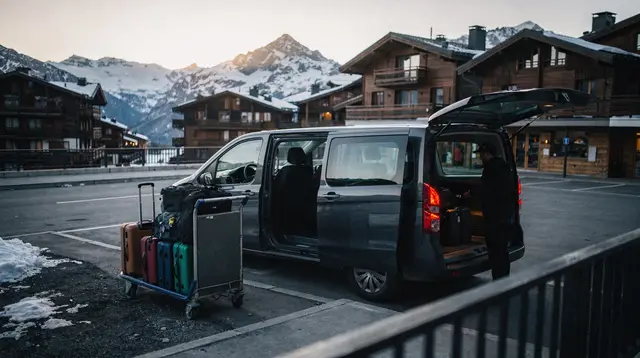
If you’re being picked up by car, tell whoever’s collecting you which side you’re using — the pickup points for the French sector and the Swiss sector are in different spots, and Geneva Airport’s access roads split fairly early. I’ve seen more than one reunion delayed by fifteen minutes because the driver waited outside the wrong door. If you’re renting a car or taking a taxi toward Chamonix or Annecy, exiting via the French sector can save you a short but real detour — you avoid driving into Switzerland and back out again just to reach a border you were going to cross anyway.
What it does and doesn’t exempt you from
Here’s the part worth being precise about, because it’s easy to over-read what “skip Switzerland” actually means.
What it does do: it lets you leave the airport building directly into French territory without walking through the Swiss arrivals hall, and — since both France and Switzerland are inside the Schengen Area — there is normally no routine passport check at that specific internal boundary. For someone whose entire trip is Chamonix or Annecy, with zero interest in Geneva itself, that’s a genuine convenience.
What it does not do:
- It doesn’t remove the need for ID. Carry a valid passport or national identity card regardless of which exit you use. Schengen membership removes routine border checks between member states; it does not remove the legal requirement to hold and be able to produce identification, and airport and police spot-checks happen on both the French and Swiss sides, without notice.
- It doesn’t exempt you from customs. Switzerland is in Schengen but is not in the EU, and that distinction matters for goods, not just people. Customs controls on what you’re carrying — duty-free allowances, VAT-reclaim goods, restricted items — still apply on both sides, and Swiss and French customs officers do carry out occasional checks in and around the airport.
- It doesn’t apply automatically to every arrival. Not all airlines or routings necessarily route arriving passengers with equal ease to both sectors, and which exit is realistic for you can depend on your flight and terminal. Don’t assume it before you’ve checked signage on the day, and don’t plan a tight connection around it.
None of this is exotic border enforcement — Schengen genuinely does mean no routine passport booth at that line — but “no routine check” is not the same as “no requirement to carry ID” or “no possible check,” and I’d rather over-explain that than have someone get caught out.
Who this actually matters for
If your Geneva trip includes any time in the city — the Old Town, the lakefront, a lake cruise — none of this changes anything for you; you’ll use the Swiss side as normal, most likely picking up a free Geneva Transport Card if you’re staying in registered accommodation.
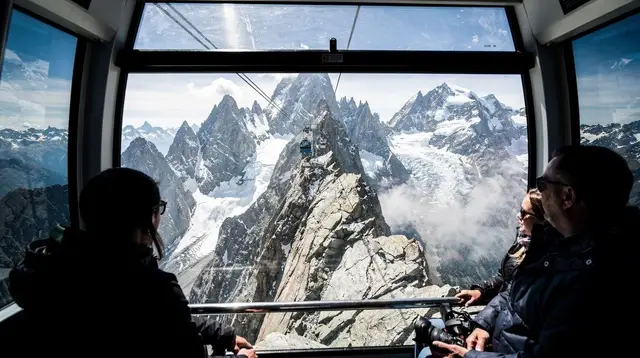
Where it genuinely helps is the traveller landing in Geneva purely as a gateway to somewhere French: heading straight to Chamonix for Mont Blanc and the Aiguille du Midi, or on to Annecy and Lake Annecy. For a full breakdown of transfer options once you’re on the French side, see my separate piece on getting to Chamonix from Geneva Airport — this article is deliberately just about the sector itself, not the onward journey.
If Geneva is on your itinerary at all, even for a half-day before continuing to the Alps, it’s worth pairing this with a short taste of the city. A guided outing like the self-paced audio walk through Geneva’s Old Town fits neatly into a layover-length stop, and if you’re continuing along the lake toward Montreux rather than into France, the day trip from Geneva to Montreux covers that direction well.
For those routing further into the Swiss Alps instead, the transfer from Geneva to Interlaken is a comparable long-distance option on the Swiss side. And if you do have a spare afternoon in the city itself, Carouge is a nice, low-key detour — I’d suggest the outdoor escape game paired with wine tastings in Carouge as a more memorable way to see the district than a plain walk.
Onward transfers, whichever sector you use
Once you’re through your chosen exit, the practical question is simply how to cover the ground from the airport to wherever you’re actually staying. My general Geneva Airport transfers guide covers the full set of options on the Swiss side — trains, buses, taxis — for anyone heading into the city itself.
If you’re using the French sector specifically because Chamonix is the destination, a direct bus transfer from Geneva Airport to Chamonix avoids any need to double back through the city, and my dedicated Chamonix airport transfers guide walks through the alternatives, timing and what to expect on arrival in more depth. The same logic applies further along the French Alps: there’s a similar Morzine airport transfers guide, and travellers heading that way can book a one-way transfer from Geneva Airport to Morzine directly. Megève has its own transfer options too, for anyone continuing there instead.
If Annecy is the actual target rather than Chamonix, see Annecy airport transfers for the equivalent breakdown — the French sector exit is relevant there as well, since Annecy sits on the French side of the border like Chamonix does.
Related reading
This piece is deliberately narrow — just the mechanics of the exit itself. For the broader picture of crossing the border day-to-day once you’re in the region, see crossing into France from Geneva. If the Schengen/EU distinction mentioned above is still fuzzy, Switzerland is in Schengen, not the EU unpacks it properly, and Mont Blanc is in France, not Switzerland clears up a related, surprisingly common mix-up for first-time visitors. Two more practical companions worth reading before you land: paying in francs, not euros, since the two currencies mix in this border region more than you’d expect, and trains versus buses around Lake Geneva if your onward journey continues along the lake rather than up into the mountains.
Frequently asked questions about Geneva Airport’s French sector
Can I really leave Geneva Airport without entering Switzerland?
Yes — the French sector exit leads directly into France (the Ferney-Voltaire / Pays de Gex area) from the shared arrivals area, without routing you through the Swiss side of the terminal.
Do I still need my passport if I use the French sector?
Yes. Schengen removes routine passport checks at this specific border, but you’re still legally required to carry a valid passport or ID card, and spot-checks by police or border officials can happen on either side without warning.
Will customs check my bags in the French sector?
Possibly. Switzerland is in Schengen but not in the EU, so customs rules differ between the two countries, and both French and Swiss customs carry out occasional, unannounced checks on goods at the airport.
How do I know where to go for the French sector when I land?
Follow the signage from baggage claim marked “Secteur France / French Sector,” distinct from the “Suisse / Switzerland” exit — both are reached from the same shared arrivals hall.
Is the French sector faster than going through Switzerland?
For travellers heading straight to Chamonix, Annecy or elsewhere in Haute-Savoie, it usually saves a short detour, since you avoid entering Swiss territory only to cross back into France a few minutes later.
Does every flight or airline let me use the French sector?
Not automatically guaranteed for every routing — check signage and airport information on the day rather than assuming, especially on a tight connection.
Can I switch between the French and Swiss sectors once I’m past security?
The two sectors connect only “airside,” past security, so moving between them requires a valid boarding pass; you can’t casually walk from one to the other in the public arrivals area.
Does using the French sector affect my Schengen entry stamp or visa status?
No — Schengen treats France and Switzerland as one zone for routine border-crossing purposes, so using either exit doesn’t change your Schengen entry record. Travellers who need an ETIAS authorisation or visa for Schengen still need it regardless of which exit they use.
Getting Around Geneva
Verified deep-linked GetYourGuide tours. Book through these links and we earn a small commission at no cost to you.
GetYourGuide does not provide a product photo for this activity — the image shows the meeting point, photographed by us.