Aigle: Wine and Castle in the Chablais Vaudois
What makes Aigle different from Lavaux and from Chillon?
Aigle sits in the Chablais vaudois, a distinct Vaud wine region southeast of the Lavaux terraces, closer to the Valais border. Its landmark, the Château d'Aigle, is a compact, turreted medieval fortress that houses the Musée de la vigne et du vin (Museum of Vine and Wine) — a wine-and-castle pairing that neither pure Lavaux vineyard visits nor a lake-set stop at Chillon offer on their own.
Most first-time visitors to Vaud’s wine country head straight for Lavaux, the terraced vineyards between Lausanne and Montreux, and stop there. Aigle sits further along the same rail line, past Montreux and Château de Chillon, in a wine region with a different name, a different landscape, and a castle built for an entirely different purpose than the lakeside fortress at Chillon.
Where Aigle actually sits
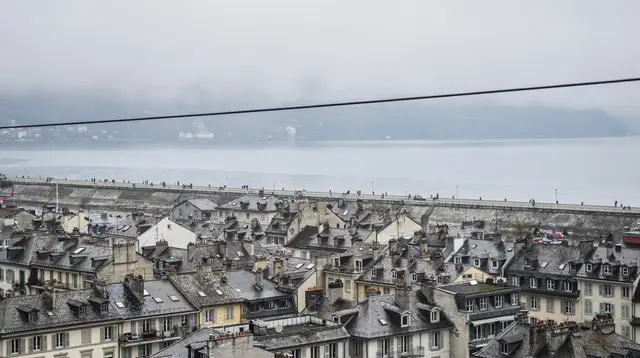
Aigle is a small town in the Chablais vaudois, the stretch of Vaud wine country southeast of the Swiss Riviera, roughly where the Rhône valley starts narrowing toward the Valais border. It is not on the lakeshore itself — the town lies a short distance inland from Lake Geneva, in a broad valley ringed by vineyard slopes rather than perched directly above the water the way Lavaux’s terraces are.
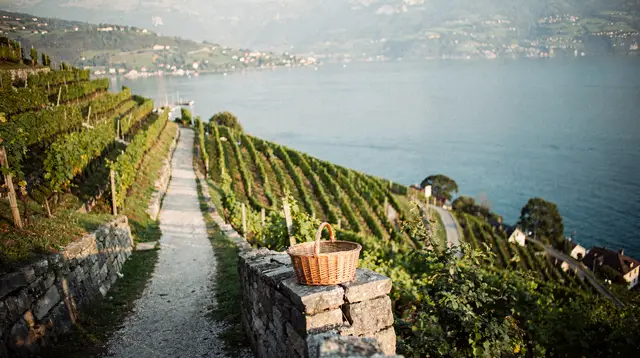
That geography matters for how the visit feels. In Lavaux, the vines drop steeply to the lake and the water is almost always in view. Around Aigle, the vineyards spread across gentler, wider slopes at the foot of the mountains leading toward Villars and Verbier, with the lake visible in the distance rather than underfoot. Travelers who have already walked Lavaux’s terraces and want to see how Vaud wine country looks somewhere else find a genuinely different landscape here, not a repeat of the same view.
Getting there from Geneva
Aigle is reached by train, changing at Lausanne or Montreux, with the full journey from Geneva running roughly an hour and a half door to door. Trains along the lake corridor are frequent, so there’s no need to plan around a single departure — checking the next couple of connections at the station is usually enough. From Aigle’s train station, the old town and the castle are within easy walking distance, and the walk itself climbs gently past the first vineyard rows on the edge of town.
Because Aigle sits on the same line as Montreux and Chillon, it works naturally as an extension of a Swiss Riviera day rather than a separate expedition — see the Montreux and Chillon one-day itinerary for how the pieces fit together, or look at Aigle’s castle-and-château connections more broadly for onward options toward Glacier 3000 and the mountains above.
The Château d’Aigle: a different kind of castle
The Château d’Aigle is the town’s anchor, and it is worth being precise about what it is and isn’t. It is not on the water. Unlike Château de Chillon, which rises directly from Lake Geneva near Montreux and is one of Switzerland’s most photographed lakeside monuments, the Château d’Aigle stands on a low rise above the town, encircled by moats and vineyards rather than by the lake. The two castles are sometimes mentioned in the same breath because they’re both medieval fortresses within easy reach of each other on the same rail line, but they are separate buildings with separate histories, and conflating them shortchanges both.
Architecturally, the Château d’Aigle is compact and turreted — a tight cluster of towers and defensive walls built for control of the valley and its wine trade, rather than the sprawling, romantic lakeside silhouette that makes Chillon so recognizable from postcards. Its scale is more intimate, and much of what makes a visit worthwhile is what the castle now contains rather than the building’s exterior alone.
The castle’s origins trace back to the counts of Savoy, who built an earlier stronghold on the site before Bern took control of the Vaud region in the sixteenth century and rebuilt Aigle as a bailiff’s seat overseeing the valley’s wine trade. That administrative role — a fortress built to manage vineyards and collect their revenue rather than to guard a lakeshore or a mountain pass — explains why the building ended up so naturally suited to housing a wine museum centuries later. Few Swiss castles have a use today that so directly echoes the purpose they were originally built for.
The Musée de la vigne et du vin
Inside the castle is the Musée de la vigne et du vin — the Museum of Vine and Wine — spread across the fortress’s rooms, cellars and towers. The museum traces the tools, techniques and traditions of winemaking in the surrounding Chablais region, from historic pressing equipment to the everyday material culture of a wine-growing valley. Walking through a working medieval fortress that has been given over to explaining the very vineyards visible from its windows is the specific pairing that makes Aigle worth a detour on its own, distinct from a vineyard walk in Lavaux or a purely architectural visit to Chillon.
Exact opening hours and seasonal closures shift year to year, so confirming current days before traveling is sensible, particularly outside the summer season when smaller Swiss museums sometimes reduce their schedule.
Chablais vaudois versus Lavaux: two wine regions, not one
It’s easy to assume all of Vaud’s vineyards are “Lavaux,” since that name carries the UNESCO listing and the fame. In fact Vaud’s wine country is made up of several distinct regions, and the Chablais vaudois around Aigle is one of them — separate from Lavaux both in location and in character.
| Lavaux | Chablais vaudois (Aigle) | |
|---|---|---|
| Location | Between Lausanne and Montreux | Southeast of Montreux, toward Valais |
| Landscape | Steep terraces dropping to the lake | Broader slopes at the foot of the mountains |
| Lake proximity | Vines meet the shoreline | Lake visible at a distance, not adjacent |
| UNESCO status | World Heritage listed | Not part of the UNESCO listing |
| Signature grape | Chasselas | Chasselas, alongside regional varieties |
| Landmark visit | Vineyard trails, Lavaux Express, Vinorama | Château d’Aigle and its wine museum |
Both regions share Chasselas as the dominant white grape, which is part of why they’re sometimes lumped together in conversation. But the terrain, the scale of the vineyards, and the flagship visitor experience are genuinely different — Lavaux is a landscape to walk through, while Aigle is a castle to walk into. For a closer look at the Lavaux side of that comparison, see the dedicated Lavaux wine guide.
What a visit to Aigle actually involves
A typical stop in Aigle starts at the train station, a short uphill walk into the old town, and then the approach to the castle across its surrounding moat and vineyard plots. Inside, the museum visit takes most travelers a little over an hour, covering several floors and towers at an unhurried pace. Afterward, the streets of Aigle’s compact old town make for an easy wander, and the vineyard paths just beyond the town offer a quieter, unticketed look at the slopes themselves.
Because Aigle is not a large town, it suits a half-day visit well rather than a full day on its own — which is exactly why it pairs naturally with Montreux, Chillon, or an onward trip toward Glacier 3000 in the same outing. Travelers building a longer Swiss Riviera loop can find a fuller structure in the three-day Swiss Riviera itinerary, which threads Lausanne, Montreux, Chillon and the Chablais together.
Tastings and organized visits
Independent travelers can walk Aigle’s vineyard paths and visit the castle museum without booking anything in advance, though checking opening days is worthwhile outside peak season. For a more guided approach that folds Aigle into a wider day, an organized tour covering the castle and the surrounding vineyards alongside Montreux is a straightforward way to see the wine-and-castle pairing without managing train connections — the Private Trip Interlaken Aigle Castle Vineyards Montreux covers exactly that combination for travelers coming from further afield.
Those approaching from the Glacier 3000 side of the mountains, or wanting a door-to-door option from Montreux, can look at the Glacier 3000 Chateau D Aigle Private Van from Montreux, which links the high-altitude glacier excursion with a stop at the castle in a single private trip.
Travelers based in Lausanne who want Aigle folded into a broader Riviera day, without the vineyard focus, can consider the Private Day Trip Lausanne to Vevey Montreux Aigle Castle, which strings together the lakeside towns before reaching the castle.
For visitors who prefer to spend their time in the vineyards themselves rather than inside a museum, a dedicated wine-focused outing such as the Wine Tour in the Canton of Vaud Lavaux Vineyards covers Vaud’s wine country more broadly and is a useful comparison point for how Chablais differs from Lavaux on the ground.
Combining Aigle with a Lavaux-based day
Travelers who prefer to build their day around Lavaux rather than around Montreux have another option: starting in the vineyard terraces themselves and treating Aigle as the day’s final, castle-focused stop rather than the middle of a Riviera loop. A tour such as the Lavaux Discover This Unesco World Heritage Site of Terraced Vineyards gives a proper grounding in the UNESCO-listed terraces before the contrast of Aigle’s broader slopes and its castle makes more sense. Travelers departing directly from Geneva without a Lausanne base can also look at the Private Day Trip Geneva to Lavaux Vineyards Nyon Back, which handles the vineyard side of the day before or after an Aigle detour, and the Geneva: Lavaux Chexbres and Valais Wine Tasting Tour, which already stretches toward Valais and sits geographically closer to the Chablais than a pure Lavaux tour does.
Whichever direction the day runs — Montreux toward Aigle, or Lavaux toward Aigle — the point stands that Aigle rewards being paired with something else. Its castle and museum fill a couple of hours well, but the town alone rarely justifies a dedicated round trip from Geneva the way Lausanne, Montreux or Annecy might.
Pairing Aigle with the rest of the Swiss Riviera
Aigle’s position on the Lausanne–Montreux–Valais rail corridor makes it easy to combine with the region’s better-known stops. A day that starts with the Old Town of Montreux and Château de Chillon, then continues to Aigle by a short train ride, covers two very different castles and two distinct wine landscapes without doubling back. Travelers with more time can extend further to Gruyères for a third castle-and-food pairing, or toward Verbier and the Valais for mountain scenery beyond the vineyards.
For those planning the wider Lake Geneva shoreline rather than a single detour to Aigle, the Lake and Mountains three-day itinerary and the Cheese and Chocolate two-day itinerary both offer structures where a Chablais stop like Aigle slots in naturally alongside Gruyères, Montreux and Lausanne.
Practical notes
Aigle can be visited any time of year, though the vineyards are at their most visually striking from late spring through the September and October harvest, when the slopes turn gold and red. Winter visits still allow a full castle and museum visit, with the advantage of thinner crowds than the Riviera towns see in summer. As with the rest of French-speaking Switzerland, prices in Aigle are in Swiss francs, and the town itself is compact enough to see on foot without needing local transport once you’ve arrived by train.
Aigle wine and castle: frequently asked questions
How do I get to Aigle from Geneva?
Aigle is reached by train from Geneva, typically changing at Lausanne or Montreux, with a total journey of roughly an hour and a half. Trains run frequently along the Lake Geneva shoreline, and the walk from Aigle’s station into the old town and up to the castle is short.
Is the Château d’Aigle on Lake Geneva, like Château de Chillon?
No. Château de Chillon sits directly on the water near Montreux, famously rising from the lake itself. The Château d’Aigle stands inland, above the town of Aigle, surrounded by vineyards rather than by the lake — a genuinely different setting and a different building.
What is inside the Château d’Aigle?
The castle houses the Musée de la vigne et du vin, a museum dedicated to viticulture and winemaking, spread across the fortress’s rooms and towers. It covers the tools, traditions and history of wine production in the surrounding Chablais region alongside the building’s own medieval fabric.
Is Aigle part of the Lavaux wine region?
No. Lavaux is the UNESCO-listed terraced vineyard stretch between Lausanne and Montreux. Aigle belongs to the Chablais vaudois, a separate Vaud wine-growing area further southeast, closer to the Valais border, with its own grape varieties, terrain and appellation.
Can I combine Aigle with Chillon or Montreux in one day?
Yes. Aigle, Montreux and Château de Chillon sit along the same rail corridor, and Aigle is a short onward hop from either — making a combined day of castle, lake and vineyard sightseeing straightforward by train.
What grape varieties are grown around Aigle?
The Chablais vaudois around Aigle is known chiefly for Chasselas, the dominant white grape across Vaud’s wine country, alongside other regional varieties. The style and terrain differ from the steep, lake-facing terraces of Lavaux further northwest.
Do I need to book ahead to visit the castle and museum?
Advance booking is generally not required for individual visitors, though checking current opening days and seasonal hours before travelling is worthwhile, since some Swiss museums close or reduce hours outside peak season.
Lavaux Vineyard Tours
Verified deep-linked GetYourGuide tours. Book through these links and we earn a small commission at no cost to you.
GetYourGuide does not provide a product photo for this activity — the image shows the meeting point, photographed by us.