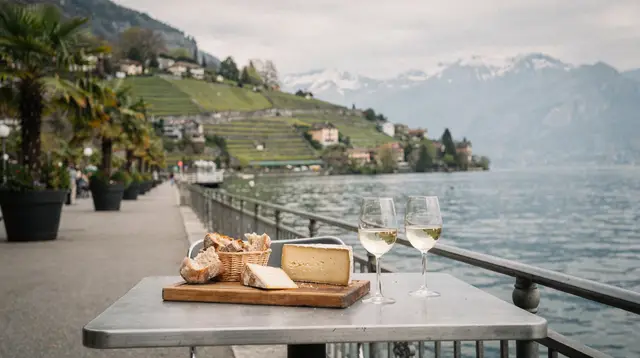
Geneva Food Tours: A Taste of the Old Town
Where can you eat and taste local food in central Geneva?
The Old Town and the streets around Bourg-de-Four and Rue de Rive hold most of Geneva's chocolatiers, cheese shops and fondue restaurants, all within a 15-20 minute walk of the lakefront. Neighbourhood markets at Plainpalais and Rive add fresh produce and street food, but only on specific days of the week.
Geneva rarely gets credit as a food destination — the reputation goes to international institutions, private banks and the Jet d’eau — but the compact grid of streets around the Old Town holds one of the densest concentrations of chocolatiers, cheesemongers and traditional restaurants in Switzerland. This is not a scattered scene requiring taxis and planning; it is a walkable few hundred metres, easily covered on foot in an afternoon between St-Pierre Cathedral and the lakefront.
Why the Old Town is Geneva’s food centre
The streets radiating from Bourg-de-Four, Geneva’s oldest square, and the shopping stretch of Rue de Rive near the lake form the natural core of any food-focused walk through the city. Unlike Carouge, a few tram stops south with its Mediterranean-village feel of independent ateliers, the Old Town carries the atmosphere of a small, dense European capital — cobbled lanes, 18th-century facades, and shopfronts that have supplied the city’s diplomats and residents for generations. It is also the part of Geneva closest to both the cathedral and the lake, so a food walk here rarely means backtracking.
This density matters for a short visit. A single loop through the Old Town, down to Bourg-de-Four, and out toward Rue de Rive can take in a chocolatier, a cheese shop, a market stall (on the right day) and a sit-down meal without ever needing public transport.
Chocolate: Geneva’s other specialty
Switzerland’s association with chocolate is well known, and Geneva’s chocolatiers sit comfortably within that tradition rather than apart from it. Small, independent makers cluster around the Old Town and Rue de Rive, selling pralines, truffles and bars often made on-site or nearby. Because Swiss prices already include VAT and service, what is marked on the shelf is what gets paid — no surprise additions at the till.
For a structured introduction rather than shop-hopping alone, a chocolate-focused route through the centre pairs tastings with some background on how Swiss chocolate-making developed in this part of the country. Compare that with the more artisan, workshop-style stops on the Gruyères chocolate route for a sense of how the two towns differ — Geneva’s shops are urban and polished, Gruyères’ feel closer to production.
Cheese, fondue and Genevan specialities
Fondue is the dish most visitors associate with Switzerland generally, but Geneva has its own regional specialities worth seeking out specifically. Longeole, a coarse pork sausage seasoned with fennel seed and traditionally simmered with lentils or potatoes, is a Geneva-region dish rarely found outside French-speaking Switzerland. It shows up on traditional restaurant menus in the Old Town, especially from autumn through winter, though many places serve it year-round.
Cheese shops near Bourg-de-Four sell the raw materials for a fondue at home, alongside advice on the classic moitié-moitié blend of Gruyère and Vacherin cheeses. For a guided, hands-on introduction, a tasting session focused on cutting and combining cheeses is a practical alternative to guessing at proportions — and for cheese connections outside the city, the Fribourg cheese route leads toward the towns where much of this cheese is actually made.
a guided tasting session covering cheese-cutting technique alongside wine and chocolate pairings is a compact way to get hands-on instruction rather than piecing it together shop by shop.
Wine and cheese in a historic cellar
Beyond shop counters and street-level tastings, several of the Old Town’s vaulted cellars host seated wine-and-cheese sessions that go deeper than a quick sample. a wine and cheese tasting held in a historic Old Town cellar pairs regional wines from around Lake Geneva with a selection of Swiss cheeses, in a setting that is itself part of the appeal — thick stone walls and vaulted ceilings rather than a standard restaurant dining room. It works well as an evening alternative to a walking tour, for visitors who would rather sit down and taste at a slower pace than keep moving between shops.
A structured walking tour of the centre
For visitors who want the Old Town’s food scene covered in one organised outing rather than self-guided wandering, a small-group walking tour is the most time-efficient option. a walking tour through central Geneva that includes tastings and a full meal along the route typically threads through the Old Town’s lanes, stops at a handful of specialist shops, and ends with a sit-down course — useful for anyone who wants the food scene explained rather than discovered by trial and error.
This kind of tour suits short stays particularly well. Someone with a single afternoon before an onward journey, or a stopover between flights, can see the cathedral quarter, taste several specialities and eat a proper meal without needing to plan a separate itinerary — see the one-day Geneva essentials itinerary for how a food walk fits alongside the city’s other highlights.
For visitors who would rather have chocolate as the throughline of the walk, with the lake worked in rather than left for later, a guided walking tour combining Old Town chocolate stops with the lakefront covers similar ground with a different emphasis — useful if chocolate, rather than a full meal, is the main draw. A more elaborate version of the same idea, an award-winning chocolate and Old Town tour that includes a boat ride on the lake, adds a short cruise to the walking route, stretching the outing into a half-day that mixes tasting with sightseeing on the water.
Markets: Plainpalais and Rive
Beyond shops and restaurants, Geneva’s neighbourhood markets add fresh produce, cheese stalls and occasional street food to the picture — but only on the days they actually operate. The Plainpalais market, held on a broad open square a short walk from the Old Town, and the smaller Rive market near the lakefront both run on fixed days of the week rather than daily. Turning up on the wrong day means empty cobblestones rather than stalls, so it’s worth checking the current schedule before building a visit around either market specifically. Neither market should be assumed to be open on a whim — treat market visits as a bonus if the timing lines up, not a guaranteed stop.
Practical basics: pricing, tipping and water
A few practical points make eating in Geneva easier for first-time visitors, and all three are easy to get wrong:
- Prices include service. Swiss law requires service to be built into the displayed price at restaurants and cafes, so the number on the bill is the number to pay. Rounding up to the nearest few francs, or leaving small change, is normal and appreciated — a calculated 15-20% tip is not expected and isn’t the local custom.
- VAT is already included. Switzerland’s standard VAT rate is included in every displayed price; unlike some countries, nothing is added at the till.
- Tap water is free and safe to drink. Geneva’s tap water is potable, and public fountains around the Old Town and lakefront can be used to refill a bottle at no cost — there is no need to buy bottled water while walking the centre.
| Item | Typical price (CHF) |
|---|---|
| Coffee | 4.50 - 6 |
| Chocolate (100-150g box) | 8 - 20 |
| Simple lunch | 20 - 30 |
| Mid-range dinner, per person | 50 - 75 |
| Fondue for two, restaurant | 70 - 100 |
Remember that these are Swiss franc prices — a short trip across the border to Annecy or Yvoire switches to euros, and to generally lower prices, which is worth keeping in mind when comparing notes with anyone splitting a visit between Geneva and neighbouring France. For a broader sense of how these figures compare with everyday costs across the city, see is Geneva expensive — real prices, which sets restaurant and cafe spending against transport and accommodation.
When to go and what’s open
Geneva’s Old Town food scene is largely a year-round proposition — chocolatiers and cheese shops keep regular hours regardless of season — but a few things shift with the calendar. Fondue, as noted above, leans toward autumn and winter even where it stays on menus all year, and outdoor seating around Bourg-de-Four fills up in the warmer months in a way it doesn’t in January. The Geneva in winter guide covers which shops and restaurants keep full hours through the colder months, while Geneva in summer: lake season looks at how the lakefront end of a food walk changes once the Bains des Pâquis and lakeside terraces are in full swing. For a general steer on timing a visit, the best time to visit Geneva overview weighs food, weather and crowd levels together.
Getting between food stops
The core Old Town food walk is compact enough to cover on foot alone, but a couple of the comparisons above — Carouge, or a trip across the border — need transport. Geneva’s public network of trams and buses connects the Old Town to Carouge in a few minutes, and most visitor accommodation includes a transport pass covering the relevant zones; the Geneva transport card guide explains what that pass does and doesn’t include, which matters if a food day is going to combine the centre with an outlying neighbourhood. For those tempted to keep going past Geneva’s own food scene, the Gruyères day trip guide sets out how to reach the cheese-and-chocolate town itself, where a day tour from Geneva visits Gruyères’ cheese and chocolate factories directly — a logical next step for anyone whose Old Town tastings leave them wanting to see the production side as well.
How this compares to other food walks nearby
Geneva’s Old Town food scene is one of several in the region, each with a different character:
- Carouge, a few tram stops south, trades the international-capital feel for a slower, artisan atmosphere — independent bakeries, small workshops and a more relaxed pace. See the Carouge food tour guide for that comparison in more depth.
- Lausanne, an hour along the lake by train, has its own food scene built around a larger, hillier old town, covered in the Lausanne food guide.
- Fribourg, further from the lake, leans more heavily into cheese-specific traditions given its proximity to Gruyère-producing country, detailed in the Fribourg food guide.
- Annecy, across the border in France, offers a similar canal-and-old-town food walk but priced in euros rather than francs — see the Annecy food tour guide.
None of these fully substitutes for the others; the Old Town’s advantage is proximity to the cathedral and the lake, letting a food walk slot directly into a broader day in central Geneva rather than requiring a separate trip.
Pairing a food walk with other Old Town sights
Because the food scene sits inside the same few blocks as Geneva’s main historic sights, it pairs naturally with sightseeing rather than competing with it. A typical half-day might combine a walk past St-Pierre Cathedral, a stop at Bourg-de-Four, a chocolate or cheese tasting, and a finish at the lakefront near the Jet d’eau. For something different in pace, a self-paced audio tour that weaves through the Old Town’s streets lets visitors set their own tasting stops along a guided route, rather than following a fixed group schedule.
Visitors curious about Geneva’s other signature craft, watchmaking, can combine a food walk with a stop at watch-industry sites nearby — see the watchmaking guide — or take a tuktuk tour covering Geneva’s watchmaking landmarks as a change of pace between tastings.
Frequently asked questions about eating in central Geneva
Is a food tour in Geneva worth it for a short visit?
Yes, if time is limited — a guided walking tour compresses tastings of cheese, chocolate and local specialities into two to three hours without needing to research individual shops, and covers ground visitors would otherwise miss between the Old Town and the lakefront.
Do I need to tip on top of the bill in Geneva?
No. Service is included by law in Swiss restaurant and shop prices, so the amount on the receipt is the amount to pay. Rounding up or leaving small change is common but not expected, and a US-style 15-20% tip is not the norm.
Is Geneva tap water safe to drink?
Yes. Tap water in Geneva is potable, including from the public fountains found around the Old Town and the lakefront, so refilling a bottle rather than buying water is normal and free.
Are Geneva’s food markets open every day?
No. The Plainpalais and Rive markets run on set days of the week, not daily — check the current schedule before planning a visit around them, since a market-focused walk on the wrong day will find empty stalls.
What is longeole and where can I try it?
Longeole is a coarse, fennel-seasoned pork sausage from the Geneva region, traditionally simmered and served with lentils or potatoes. It appears on menus at traditional restaurants in the Old Town and Carouge, particularly in the cooler months.
How does a Geneva food tour compare to one in Carouge?
Central Geneva’s Old Town offers a dense, historic setting shaped by its role as an international city, with chocolatiers, cheese shops and formal restaurants packed into cobbled streets near the cathedral. Carouge, a short tram ride away, has a slower, artisan-village atmosphere with independent bakeries and workshop-style cafes.
Can I find fondue outside the winter season?
Yes, though it is more strongly associated with autumn and winter. Many Old Town restaurants serve cheese fondue year-round, since it draws visitors regardless of season, but it is worth confirming availability if visiting in high summer.
Geneva Food Tours
Verified deep-linked GetYourGuide tours. Book through these links and we earn a small commission at no cost to you.
GetYourGuide does not provide a product photo for this activity — the image shows the meeting point, photographed by us.