Nyon by Boat: The Short Lake Cruise from Geneva
How long does the boat from Geneva to Nyon take, and is it worth doing as a half-day trip?
The CGN boat between Geneva and Nyon takes roughly 30-45 minutes each way depending on the route and stops. It works well as a half-day trip: you get a lakeside castle, Roman-era remains, a small maritime museum, and open views across the water toward Mont Blanc, all without crossing into France.
Why Nyon works as a short escape from Geneva
Of all the lakeside towns within reach of Geneva, Nyon is one of the quickest to actually get to and get back from. It sits on the Swiss, northern shore of Lake Geneva, a straight shot along the water from the city, and unlike the French towns across the lake, reaching it involves no border crossing, no passport check, no currency switch. You leave Geneva in francs, you arrive in Nyon in francs.
That makes Nyon a good fit for a specific kind of traveller: someone with a half-day rather than a full day, someone who wants a lake outing without the logistics of a France excursion, or someone stacking a short cruise onto a morning already spent in the Old Town or along the Jet d’eau. It is not a substitute for a full day trip to somewhere like Annecy or Chamonix — it is a shorter, closer, lower-commitment outing, and that is exactly its appeal.
Nyon packs a genuine historical range into a small old town: a Roman colony’s foundations underfoot, a medieval-to-Savoyard castle overlooking the port, and a museum devoted entirely to the lake that shaped the town’s fortunes. None of it takes all day to see, which is precisely why it suits visitors on a tighter schedule than a full lake-circuit itinerary allows.
Getting from Geneva to Nyon: boat or train
Two realistic ways exist to reach Nyon from Geneva, and they suit different travellers.
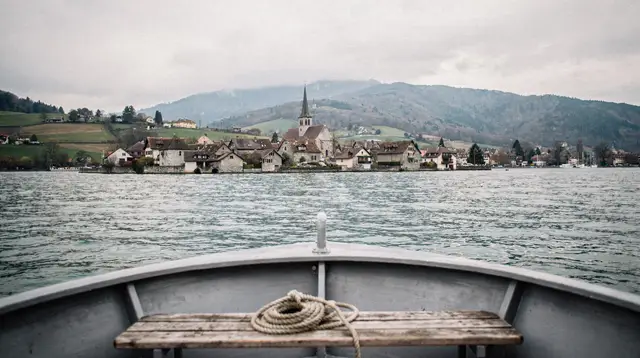
The CGN lake boat departs from the Geneva lakefront and follows the shoreline toward Nyon, with sailing times that vary by season and by whether the boat is a direct service or one that calls at intermediate stops. Exact schedules shift through the year, with more frequent departures in the warmer months and a reduced timetable outside peak season — check current times before planning your return, rather than assuming a fixed hourly service. The crossing itself is the point: open lake views, the Swiss shoreline receding behind you, and on a clear day the Alpine skyline across the water in France.
The train is the faster, more predictable option. Direct services run from Geneva’s main station to Nyon on the Swiss rail network in well under an hour, on a fixed timetable that runs consistently through the day regardless of season. If your priority is simply arriving and leaving on schedule, the train is the more reliable choice; if the boat trip itself is part of the appeal, the lake crossing is worth the extra time.
A practical note: rail passes commonly used elsewhere in Switzerland do not automatically cover CGN boat fares. The train and the boat are operated differently, and a rail ticket or pass that gets you smoothly around Swiss trains will not necessarily get you onto a CGN sailing. Check current fare coverage before you board, rather than assuming one ticket covers both.
| Option | Approx. duration | Character |
|---|---|---|
| CGN lake boat | ~30-45 minutes, varies by season and route | Scenic, weather-dependent, schedule varies by season |
| Direct train | Well under an hour, fixed schedule | Fast, reliable, runs consistently year-round |
What to see in Nyon: castle, Roman remains, and the lake museum
Château de Nyon overlooking the port
The Château de Nyon is the town’s visual anchor, a turreted castle standing directly above the harbour, visible from the water as you arrive. Its grounds and courtyard are generally open to walk through without a ticket, and the terrace gives a clean view down over the port, the boats, and the lake beyond — a natural first stop after disembarking. The castle also houses a museum inside, covering the building’s history and its collections, and that interior visit requires a separate, paid admission — the courtyard view is free, the museum inside is not.
Roman Nyon: Colonia Iulia Equestris
Long before it was a Swiss lakeside town, Nyon was a Roman colony, founded in the 1st century BC under the name Colonia Iulia Equestris. That Roman-era history is still visible in the town centre: excavated remains, including a Roman basilica uncovered in the heart of Nyon, sit alongside a museum dedicated to the town’s classical period. It is an easy contrast to the medieval castle just up the street — two very different eras of the same small town, walkable in the same short visit.
Musée du Léman: the lake itself, on display
Down near the port, the Musée du Léman turns its attention to the lake rather than the town, covering the history of navigation on Lake Geneva, the fishing traditions that once supported lakeside communities, and the wildlife that lives in and around the water. It is a paid museum, and a natural complement to a boat trip that just crossed the same lake it describes — context for the water you arrived on, rather than an unrelated stop bolted onto the itinerary.
What makes Nyon different from Yvoire, Évian, and Vevey
Nyon is one stop among several classic lake destinations reachable from Geneva, and it is worth being clear about what sets it apart.
Yvoire, Thonon-les-Bains and Évian-les-Bains all sit on the French shore of the lake. Reaching them means crossing into France, switching to euros, and — for Yvoire in particular — trading Nyon’s Roman-and-castle history for flower-draped medieval lanes and a fortified village feel. Évian brings its own spa-town heritage, quite different from Nyon’s layered Roman and Savoyard past.
Vevey, further along the Swiss shore toward the Alps, sits deeper into what is often called the Swiss Riviera, closer to Montreux and Château de Chillon — a longer trip from Geneva than Nyon, and oriented more toward that stretch of lakeside resort towns than toward Roman archaeology.
Nyon’s specific combination — close enough for a half-day, Swiss the entire way, Roman ruins next to a medieval castle, and open lake views toward Mont Blanc without a border crossing — is not quite duplicated by any of the other classic lake stops. It is the option for a traveller who wants a genuine outing on the water without spending a full day or crossing into another country to get it.
Nyon and the edge of La Côte wine country
Nyon sits at the near edge of La Côte, the stretch of vineyard slopes that runs along the Swiss shore of Lake Geneva toward Lausanne, distinct from the better-known Lavaux terraces further east, which carry UNESCO World Heritage status and climb more steeply above the water near Vevey and Montreux. La Côte’s vineyards are gentler in profile, spreading back from the lakeshore rather than rising in tight, dramatic terraces, but they belong to the same wine-growing tradition of the Vaud canton and share the same lake-facing exposure.
A visitor with an interest in the region’s wine can fold a short walk or tasting stop into a Nyon visit without needing the longer detour that Lavaux itself demands. It’s a quieter, less-photographed version of the same story: vines, water, and the Alpine skyline across the lake, just with a Roman town and a castle attached rather than a cluster of terraced wine villages.
Making the most of a half-day in Nyon
A workable rhythm for a short visit: arrive by boat or train, walk up to the castle courtyard for the port view, wander the old town’s narrow streets past the Roman remains, and finish at the Musée du Léman near the water before heading back. That sequence covers the town’s three defining layers — medieval castle, Roman colony, and the lake itself — without requiring a rushed pace.
For visitors who’d rather have the town’s history explained than piece it together on their own, a guided walking tour of Nyon can string the castle, the Roman remains and the old town lanes into a single narrated route, which is useful if the half-day is the only time you’ll spend in the town and you don’t want to miss the context behind what you’re looking at. For a faster, more active way to cover the same ground plus the waterfront beyond it, a bike or scooter tour based in Nyon trades the slower walking pace for more distance covered in the same window.
If you want to extend the outing rather than turn straight back to Geneva, several boat-based experiences depart from Nyon itself and lean into the lake setting rather than the town’s landmarks. A nighttime sailing under the stars departing from Nyon turns the same stretch of water into an evening outing, while a sunset apéro sailing on a stylish boat from Nyon pairs the lake views with an early-evening drink on board. For something more active, a lake excursion to a hidden beach from Nyon gets you off the boat and into a quieter stretch of shoreline that isn’t reachable on foot. And rather than a scheduled CGN sailing, a private sailing cruise on Lake Geneva puts you on your own boat with your own timing, which suits a group that doesn’t want to build the day around a public timetable.
If Nyon turns out to be just one stop on a longer appetite for the lake, a private full-day tour circling the whole of Lake Geneva from Geneva covers considerably more ground in a single day, threading together several of the towns around the water rather than focusing on Nyon alone. A more structured way to reach Nyon specifically, without relying on the public boat or train timetable, is a private day trip from Geneva to Nyon that handles the transfer and lets you set your own pace once you’re there.
Combining Nyon with the French shore
Because Nyon sits roughly opposite the French towns across the water, some visitors use it as one stop in a longer lake circuit rather than an isolated half-day. A cruise from Geneva to Yvoire’s castle and old town covers the medieval-village side of the lake that Nyon doesn’t offer, while a private boat cruise on Lake Geneva with an optional fondue on board turns a lake outing into a full meal on the water, an option worth considering if a short Nyon visit is only part of a longer day rather than the whole of it. None of these routes require choosing between Nyon and the French shore outright — the point of a private boat, in particular, is that the itinerary bends around what you actually want to see rather than a fixed public schedule.
For a broader frame on how a short Nyon outing fits into a longer stay, the one-day Lausanne and Lavaux itinerary covers the stretch of Swiss shoreline just beyond Nyon, while the five-day Lake Geneva grand tour works through the whole lake, Swiss and French shores both, over a longer stay — useful context if a half-day in Nyon leaves you wanting to see how it fits alongside Lausanne and the rest of the lakeside towns rather than standing as a one-off trip.
Planning the trip: practical notes
Because Nyon is a genuinely short trip from Geneva, it pairs easily with other plans on the same day rather than needing to anchor a full itinerary on its own. A morning in Geneva’s Old Town followed by an afternoon boat to Nyon is a realistic combination; so is folding Nyon into a broader day trip pattern where it serves as the closer, lower-effort alternative to a longer excursion toward the mountains.
Given the variable seasonal sailing schedule, it’s worth checking current CGN boat times before committing to the boat in one direction and assuming you can catch a return sailing at a convenient hour — outside peak season, gaps between departures can be wider than expected. The train remains the dependable fallback if the boat timetable doesn’t line up with your plans.
For travellers weighing Nyon against the French-shore towns, the practical difference comes down to what you’re optimising for: no border crossing and Swiss francs throughout favours Nyon; a different historical texture and euro pricing point toward Yvoire, Thonon or Évian instead. Neither is a wrong choice — they simply answer different questions about how much time, and how much border-crossing effort, you want to spend on a lake outing from Geneva.
Weather and season shape the visit more than the town itself does. The castle courtyard and the old town are outdoor, walkable spaces regardless of season, but the boat crossing is the part most affected: a clear day brings the Alpine skyline into view across the water, while overcast conditions can flatten that view considerably. Outside the warmer months, when CGN sailings thin out, the train becomes the more practical way to reach Nyon even for travellers who would otherwise prefer the boat, simply because it removes the schedule risk from the day.
Lake Geneva Cruises
Verified deep-linked GetYourGuide tours. Book through these links and we earn a small commission at no cost to you.
GetYourGuide does not provide a product photo for this activity — the image shows the meeting point, photographed by us.