Nyon Wine Country: La Côte Vineyards Near Geneva
Is the wine region around Nyon the same as Lavaux?
No. Nyon sits in La Côte, a separate wine appellation stretching along Lake Geneva's shore between Geneva and Lausanne, on gentler slopes than the steep, UNESCO-listed Lavaux terraces further east near Vevey and Montreux. Both grow mostly Chasselas, but they are distinct wine regions with their own producers and character.
A different vineyard than the one you’ve heard of
Ask most visitors to Geneva about Swiss wine country on Lake Geneva, and they’ll mention Lavaux — the steep, stone-walled terraces between Lausanne and Montreux that made UNESCO’s World Heritage list. It’s a fair reflex: Lavaux’s postcard views are genuinely spectacular. But it isn’t the only vineyard on the lake, and for anyone based in Geneva without a full day to spare, it isn’t necessarily the most practical one either.
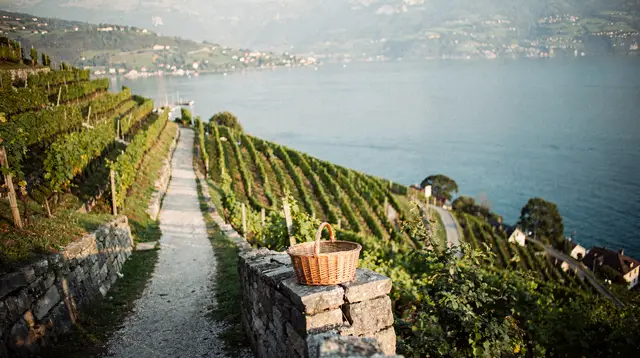
La Côte is the other major Vaud wine region on Lake Geneva — a long, gently rolling band of vines running along the shore roughly between Geneva and Lausanne, with Nyon as its best-known town. It shares a grape with Lavaux (Chasselas dominates both) and it shares the same lake, but it is a separate appellation, on different terrain, with its own producers and its own, less-terraced character. Confusing the two is an easy mistake — this guide is specifically about Nyon and La Côte, not about Lavaux.
If your priority is a wine-focused outing that’s genuinely close to Geneva, doesn’t require a full day, and doesn’t demand a head for steep terraced paths, La Côte around Nyon is worth knowing about on its own terms.
La Côte versus Lavaux: what’s actually different
The two regions get lumped together often enough that it’s worth being precise. Both sit on the northern, Swiss shore of Lake Geneva, both are part of the canton of Vaud’s wine-growing tradition, and both grow Chasselas as their signature white grape. That’s where the similarity mostly ends.
| La Côte (Nyon) | Lavaux | |
|---|---|---|
| Location relative to Geneva | Closer — under an hour by train | Further — typically 1-1.5 hours by train |
| Terrain | Gentle, rolling slopes | Steep, narrow stone terraces |
| UNESCO status | No | Yes (World Heritage since 2007) |
| Typical wine style | Often described as lighter, rounder | Often described as more mineral, structured |
| Best paired with | A château, a lakefront walk, a half-day pace | A full day of terrace walking, dramatic lake views |
Neither region is “better” in any absolute sense — they suit different amounts of time and different kinds of walking. If someone tells you Nyon’s vineyards are “part of Lavaux,” that’s inaccurate: they’re separate appellations, and a producer’s label will say so.
Why Nyon works for a quick trip from Geneva
The practical case for Nyon is simple: distance. Nyon sits on the main rail line between Geneva and Lausanne, with frequent direct trains taking well under an hour from central Geneva. That makes it realistic as a half-day outing — leave Geneva mid-morning, spend a couple of hours among the vines and in the old town, and be back in the city for dinner, all without a rental car.
Lavaux, by contrast, generally rewards committing closer to a full day: the train ride is longer, and its terraced paths — while beautiful — take real time to walk properly. If your Geneva itinerary is tight, or wine is one stop among several rather than the whole day’s plan, Nyon is the lower-commitment option.
The terrain reinforces this. La Côte’s vineyards roll rather than climb. Paths between rows of vines are largely flat or gently sloped, which means less specialized footwear, less time, and an outing that works for a wider range of fitness levels and ages than Lavaux’s staircased terraces.
Getting there and getting around
From Geneva, take a regional or InterCity train toward Lausanne and get off at Nyon; the ride is direct and takes well under an hour. Nyon’s station sits a short, mostly flat walk from the lakefront and the old town, and several vineyard areas are reachable on foot from there, with others a short local bus or taxi ride away.
No car is required for a straightforward Nyon visit, though having one opens up smaller, more scattered domains further from the town center. Local buses connect outlying villages in the La Côte wine region if you want to range further without driving.
What a wine visit around Nyon actually looks like
Unlike some wine regions built around one flagship visitor center, La Côte around Nyon is a patchwork of individual domains — family estates, cooperative cellars, and a handful of larger producers — spread across the vineyard belt rather than concentrated in a single tasting hall. That has upsides (a more personal, varied experience) and a practical downside: it takes some planning to know which door to knock on.
Some smaller producers do welcome walk-in visitors during posted opening hours, particularly around the September-October harvest, but a free pour on arrival is not something to count on at every cellar. Many tasting rooms prefer visitors to call or book ahead, and any structured, guided tasting — the kind that includes several wines with commentary from a host — should be assumed to carry a cost rather than be free. If a specific domain matters to you, checking its hours or booking directly (or via a guided tour) removes the guesswork.
For visitors who’d rather not track down individual cellars, a guided option removes that planning step and typically bundles several stops or a boat element into one outing.
a guided wine tour across the canton of Vaud’s vineyard country covers this kind of structured tasting circuit for visitors who want the wine without the legwork of arranging individual cellar visits.
Starting from Geneva instead of doing it independently
Taking the train to Nyon and arranging cellar visits yourself is entirely workable, but it isn’t the only way to see Vaud’s lakeside vineyards. A handful of tours depart directly from Geneva and handle the transport, the stops, and the tasting logistics as a package, which suits visitors who’d rather not plan a route between individual domains or who are combining a vineyard visit with only a few free hours in a longer Geneva stay.
a private day trip from Geneva that takes in both the Lavaux vineyards and Nyon is built specifically around this pairing — useful if you’d rather see both wine regions in one outing than choose between them. For a more active version of the same countryside, an e-bike tour through the Geneva countryside with a wine tasting or museum stop covers similar ground at a different pace, without requiring a car or a full day on foot.
Food-focused visitors have an option too: a food-and-wine tasting session covering cheese cutting alongside Swiss wine pairs the Chasselas story with the region’s other signature product, for those who’d rather sit down to a guided tasting in Geneva than track cellars across La Côte.
Chasselas: the grape you’ll keep seeing
Chasselas is the grape most associated with Vaud’s lakeside vineyards, and it dominates plantings around Nyon just as it does in Lavaux. It’s a light-skinned grape that produces dry, generally light-bodied white wines, often described as subtle rather than showy — the kind of wine that rewards drinking with food (perches from the lake, or a fondue, are classic local pairings) rather than as a standalone showpiece.
La Côte’s Chasselas is often characterized as rounder and slightly softer than Lavaux’s, which is frequently described as more mineral and taut — a difference commonly attributed to the gentler slopes, different soil, and somewhat different sun exposure of La Côte compared with Lavaux’s steep, reflective stone terraces. That said, style varies a great deal by individual producer and vintage, and it’s worth tasting rather than assuming.
Some La Côte producers also grow red varieties (Gamay and Pinot Noir among them, as elsewhere in Vaud), so the region isn’t purely a white-wine story, even if Chasselas remains the signature.
When to go: matching the season to the visit
La Côte’s vineyard calendar follows the same broad rhythm as the rest of Vaud’s wine country. Spring brings the vines back into leaf and the rolling hillsides turn a fresh green, with fewer visitors around than in high summer — a good stretch for a quieter walk among the rows. Summer is when the region is at its most visited, the lakefront in Nyon is at its liveliest, and combining a vineyard walk with a swim or a boat outing on Lake Geneva makes the most sense weather-wise.
The harvest window in September and October is arguably the most interesting time to visit on the wine side specifically: this is when the walk-in welcome at smaller producers is most likely, and when the vineyards themselves look and feel most like a working wine region rather than a scenic backdrop. Winter, by contrast, is the quiet season — many smaller cellars scale back their opening hours or close to casual visitors, so booking ahead matters more, and the outing shifts from a vines-and-lake day toward more of a château-and-old-town visit with wine as a secondary element.
None of this rules out a visit outside harvest season — Nyon’s château, Roman remains, and old town don’t depend on the vines being in a particular state — but travelers whose main interest is the wine itself get the richest version of the experience by timing a trip toward early autumn.
Combining vines with Nyon’s other side: château and Roman ruins
Wine isn’t the only reason people visit Nyon, and it’s worth knowing what else sits within easy reach, even though this guide’s focus stays on the vineyard side of a visit.
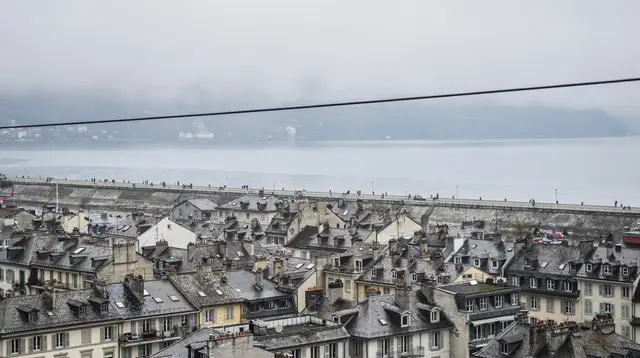
Nyon’s medieval château overlooks the lake from the old town and is a recognizable landmark from the water and the shore alike. The town also has a genuine Roman history — it was founded as Colonia Iulia Equestris — and archaeological remains from that period turn up around the old town, including a small museum dedicated to the Roman era. Neither the château nor the Roman sites require a special detour if you’re already in Nyon for a vineyard walk; both sit within the same compact town center, making it realistic to combine a couple of hours in the vines with an hour or two of château-and-old-town sightseeing in one visit.
For anyone weighing time against a longer outing to Lausanne or the Lavaux terraces, Nyon’s combination of a walkable old town, a lakefront château, and nearby vineyards makes it a reasonably complete half-day in itself.
On and off the water
Nyon’s position directly on Lake Geneva also makes it a natural starting point for boat-based outings, which pair naturally with a vineyard visit without requiring a full extra day.
a lake excursion from Nyon to a secluded beach spot is one way to add a lake element to a vineyard day without committing to a long cruise.
For a longer summer evening, a sunset sailing outing with drinks on board, departing from Nyon gives a wine-adjacent way to close out the day on the water rather than on land, and for something later, a nighttime sailing tour from Nyon is an option for visitors staying in the area into the evening.
For more on lake cruise options specifically departing Nyon, see the dedicated Nyon lake cruises guide; for the château and Roman-remains side of a Nyon visit, see castles and heritage sites around Nyon and walking tours of Nyon’s old town.
Planning a day: Nyon versus going further
If time from Geneva is genuinely limited — a spare afternoon, or a morning before another commitment — Nyon’s combination of quick train access, flat walking, a château, and vineyards makes it the more efficient choice over Lavaux, Lausanne, or the lakeside villages further out like Coppet or Yvoire across the French border.
If instead you have most of a day and want the more dramatic terraced scenery Lake Geneva’s vineyards are best known for internationally, Lavaux remains the stronger pick — see the separate guide to Lavaux’s wine terraces for that version of the trip, and the wider comparison in Lavaux versus Valais wine country if you’re weighing Vaud’s lakeside vineyards against Switzerland’s other major wine region.
For a structured single-day plan that folds Lausanne and Lavaux together, the one-day Lausanne and Lavaux itinerary lays out timing for that fuller version, while day trips from Geneva puts Nyon in context against the region’s other half-day and full-day options.
Common mistakes to avoid
A few points worth being clear on before you go:
- Nyon’s vineyards are not Lavaux. They are a separate appellation (La Côte), on different terrain, even though both sit on Lake Geneva’s Swiss shore and share Chasselas as their main grape.
- Don’t assume every cellar door is open, or that tastings are free. Some smaller producers welcome walk-ins, but many prefer bookings, and guided or structured tastings typically carry a cost.
- Don’t expect Lavaux-style terraced drama in La Côte. The appeal here is ease and proximity to Geneva, not dramatic steep terraces — those are found further east.
- A car isn’t required, but it helps if you want to reach smaller, more scattered domains beyond what’s walkable from the station.
Getting the most from a Nyon wine day trip
A realistic plan: take a morning train from Geneva to Nyon (under an hour), spend an hour or two exploring the château and old town, walk or take transport out to a vineyard area for a tasting (booked ahead if you have a particular domain in mind), and either head back to Geneva by early evening or extend into a lake outing if the weather and season suit it. Because the whole loop fits comfortably into half a day, it works well as one stop among several on a longer Geneva stay, rather than requiring its own dedicated day the way a full Lavaux or Chamonix excursion typically does.
Lavaux Vineyard Tours
Verified deep-linked GetYourGuide tours. Book through these links and we earn a small commission at no cost to you.
GetYourGuide does not provide a product photo for this activity — the image shows the meeting point, photographed by us.