Verbier in Winter: Skiing and Freeride from Geneva
Is Verbier a good winter trip from Geneva?
Yes. Verbier is roughly two to two and a half hours from Geneva by car, or by train to Martigny or Le Châble with a connecting cable car up to the resort. Reliable snow generally runs from December to April, though exact dates vary by season and should always be checked before booking.
A ski resort, not a lakefront afterthought
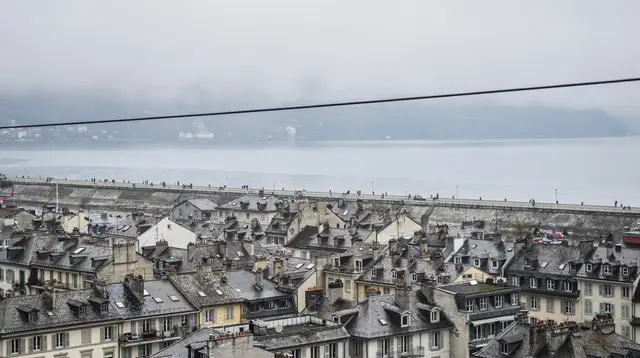
Geneva’s own winter is grey more often than white. The city sits at low altitude on the lake, and while there’s genuine charm to a cold, foggy morning on the Geneva waterfront, snow on the ground in town is occasional, not something to plan a trip around. Verbier is the opposite: a Valais resort built entirely around dependable mountain snow, freeride terrain, and an international ski crowd that has been coming here for decades. The two make a natural pair — a lakeside base and, a couple of hours away, one of the Alps’ more serious ski domains.
This guide covers Verbier on its own terms: how to get there from Geneva, what the domain and season actually look like, what kind of skiing it rewards, and how the village runs once the lifts close. For the city-side view — what Geneva itself offers in the colder months, and how a mountain day trip fits around it — see the separate Geneva in winter guide. Comparisons with Zermatt or Crans-Montana are deliberately left for other pages; this one stays focused on Verbier.
Getting from Geneva to Verbier
There is no direct train and no single unbroken road that makes this a casual half-day outing — budget it as a proper journey, not a quick hop.
By car, it’s around 160 km via the A9 motorway through the Rhône valley to Martigny, then up into the mountains toward Le Châble and Verbier. In clear conditions that’s a little over two hours; winter traffic, weekend ski-season departures, or snow on the final climb can add time. Snow tyres or chains are worth checking before a winter drive up the valley road.
By train, the route runs on the Swiss rail network from Geneva to Martigny (a well-served main line), then onto a smaller branch line to Le Châble, where a cable car carries passengers the final stretch up into Verbier village. This is at least one change, sometimes two depending on the connection, and the whole journey typically takes around two and a half to three hours door to door. It’s a scenic, relaxed way to arrive without driving in winter conditions, but it is not a direct trip — build in some transfer time rather than cutting connections close.
By private transfer, a car service can take you from Geneva or Geneva Airport straight to Verbier without the train changes — useful with ski gear, young children, or an early or late flight. If that fits your trip, a private transfer between Geneva Airport and Verbier covers exactly that door-to-door leg. Larger groups or families travelling together sometimes prefer a shared-vehicle option instead; a private minibus transfer from Geneva Airport to Verbier fits that case, since ski bags and boot bags take up real space in a standard car.
| Option | Approx. journey time | Changes |
|---|---|---|
| Car (A9 via Martigny) | ~2-2.5 hours | None, but winter road conditions vary |
| Train (Geneva → Martigny → Le Châble → cable car) | ~2.5-3 hours | At least one, often two |
| Private transfer | ~2-2.5 hours | None |
For visitors who prefer to arrange their own timing rather than book ahead, the general Geneva airport transfers guide covers the wider range of options for reaching mountain resorts from the airport, not just this one route.
The domain: altitude, season, and what “reliable snow” really means
Verbier is the anchor of the 4 Vallées, one of Switzerland’s largest interconnected ski areas, linking Verbier with Nendaz, Veysonnaz, Thyon and La Tzoumaz across roughly 400 km of marked runs. The terrain spans a wide altitude range: the valley base sits around 1,500 m, the village itself at about 1,500 m as well, and the lift network climbs to the Mont Fort glacier at roughly 3,330 m — one of the highest points reachable by cable car in the region. Most of the connected skiing sits between about 2,200 m and 3,000 m, which is high enough to hold snow well into spring in an average year.
The season generally runs from early or mid-December through to mid or late April, with the most dependable base typically from January through March. That said, exact opening and closing dates shift year to year depending on early-season and late-season snowfall, and the resort sets them closer to the time — always check current dates before booking travel or lift passes rather than assuming a fixed calendar. Nothing here is guaranteed at a specific date; “reliable” means favourable odds over a long season, not certainty on any given week.
For a broader orientation to Verbier’s winter offerings beyond the piste basics — where to ski, where to eat, how the village is laid out — the Verbier winter sports guide is the fuller companion piece to this one. Visitors weighing Verbier against another high-altitude option sometimes look at Glacier 3000 above Gstaad, or Crans-Montana further along the same Valais range — both sit at comparable altitude but offer a different mix of terrain and village character.
Terrain: built for freeride, not just cruising
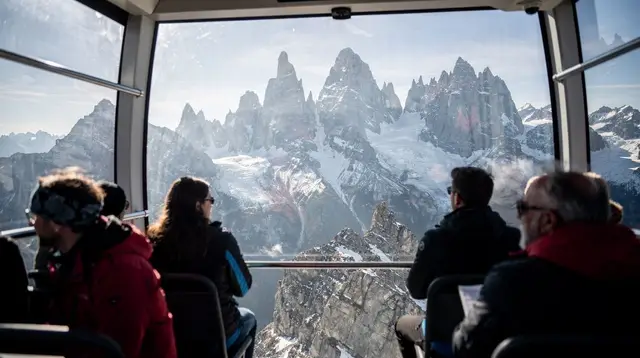
Verbier’s reputation was made off-piste. The resort is a fixture of the international freeride circuit, and its terrain above the tree line — open bowls, couloirs, and the glacier access from Mont Fort — draws skiers specifically for ungroomed, technical descents. This is part of what separates it from a purely groomed-piste destination: a meaningful share of what makes Verbier “Verbier” happens outside the marked runs, with a guide, in variable snow.
That doesn’t mean there’s nothing for less advanced skiers. The domain has groomed blue and red runs suited to lower intermediates, and beginner areas exist for a first day on skis. But the character of the resort — the terrain locals and repeat visitors talk about, the reason it draws a heavily international crowd — is built around steeper, more demanding skiing. Confident intermediates and experts get the most out of Verbier; total beginners can still have a good week, but shouldn’t expect the same breadth of easy terrain as a resort built primarily for cruising.
Given the off-piste emphasis, instruction matters more here than at a purely groomed resort — a guide who knows current avalanche and snow conditions turns “interesting terrain” into a safe, well-chosen line. A guided skiing and snowboarding day in the Swiss Alps is one way to get local knowledge on the mountain rather than guessing at conditions alone, and private ski lessons work well for anyone wanting a tailored pace, whether that’s a first-timer or someone pushing into steeper terrain for the first time.
A day, not just a lift pass: village and après-ski
Verbier’s village sits right at the base of the lifts, compact enough to walk between a hotel, a lift station and a restaurant without a car. The atmosphere leans international and, in season, lively — chalet-style architecture, a dense concentration of restaurants and bars, and an après-ski scene that’s well known within the ski world, running from relaxed terrace drinks in late afternoon sun to busier bars once the lifts close for the day.
It’s a resort that rewards spending more than a single lift-served afternoon: the terrain takes a full day or more to appreciate properly, and the village itself — shops, restaurants, the general rhythm of a working ski town — is part of the draw, not just a base to sleep in. Visitors combining Verbier with a broader Valais trip sometimes pair it with nearby Sion for a change of pace at lower altitude, whether that’s a look at the old town or something more offbeat — indoor skydiving in Sion is a genuinely different way to spend a non-ski afternoon in the valley, and a local-led walking tour of Sion’s highlights works well if you want context on the town rather than just passing through.
For visitors keen on photographing the alpine scenery beyond the pistes — the peaks, the light, the village itself — a session with a local photographer, such as the Verbier alpine memories photo experience, is a straightforward way to come away with images that go beyond a phone snapshot in ski gloves.
Where to stay: village base or Geneva day trips
Most visitors who come specifically for the skiing base themselves in Verbier village for the length of the trip, rather than commuting up from Geneva each day — the journey time on either side makes a daily round trip impractical for anything but a single showcase day. Staying in the village puts a hotel, a lift station, and the après-ski scene within a short walk of each other, which matters more here than at a resort spread across several satellite villages. Ski-in, ski-out and near-lift properties book up fastest for peak weeks, so lead time matters as much as it does for lift passes and lessons.
A smaller number of travellers use Geneva as their base and treat Verbier as a single long day out — workable for a first taste of the resort, but it sacrifices the évening and morning hours on snow that make the terrain worth the journey. For anyone undecided, the Verbier destination overview lays out the practical differences between a village stay and a day trip in more detail, alongside what the resort looks like beyond the slopes.
Equipment and getting ready for the mountain
Verbier’s altitude range and its freeride reputation both point toward the same practical advice: come properly equipped, or plan to rent on arrival. Ski and snowboard rental, along with helmets and other gear, is widely available in the village itself, but stock for popular sizes and the newer freeride-oriented equipment thins out fastest during peak weeks — reserving ahead of a late-December or February half-term trip avoids arriving to a limited selection. The same applies to lessons: instructors and mountain guides who know current snow and avalanche conditions are in higher demand here than at a purely piste-groomed resort, given how much of Verbier’s appeal sits off the marked runs.
Layering deserves its own mention. With lift-served terrain running from the roughly 1,500 m village up to the Mont Fort glacier near 3,330 m, conditions at the top can be markedly colder and windier than a clear, mild morning in the village might suggest — pack for the glacier, not just the base, even on days that start sunny.
Combining Verbier with the rest of the Alps
Verbier sits within a broader stretch of Alpine terrain that rewards a longer trip rather than a single-resort visit. Skiers curious how it compares to Switzerland’s best-known peak sometimes read up on Zermatt and the Matterhorn before deciding between the two, while others extend a Valais trip toward Sion, Crans-Montana, or even across into French Haute-Savoie to Chamonix for a contrast in style and terrain — the Chamonix winter sports guide covers that side of the border. A dedicated winter weekend from Geneva itinerary is a useful starting point for structuring the trip around Verbier specifically, including how much time to allow for the journey each way.
Travellers new to the region sometimes carry assumptions from elsewhere in Europe that don’t quite hold here — Switzerland prices in francs rather than euros even this close to the French border (see paying in francs, not euros), and while it shares open borders with its neighbours, it sits outside the EU itself (explained in Switzerland is in Schengen, not the EU). Neither changes how a ski trip runs day to day, but both are worth knowing before you arrive.
What Verbier is not
Worth being direct about, since it shapes expectations: Verbier is not a quick half-day trip from Geneva the way a lakeside town might be, it does not guarantee snow on a fixed date regardless of season, and it is not primarily a gentle, groomed-piste resort for absolute beginners looking for the easiest possible introduction to skiing. It’s a serious mountain destination that rewards a proper visit — at least a full day on the slopes, ideally an overnight or more — and travellers should plan the journey and the season dates with that in mind rather than trying to squeeze it into a rushed itinerary.
Planning notes
- Currency: Verbier, like the rest of Switzerland, prices in Swiss francs (CHF) — budget accordingly, distinct from euro-priced destinations across the French border such as Chamonix or Annecy.
- Altitude and layering: with lift-served terrain up to around 3,330 m, temperatures and wind exposure change fast between the village and the glacier — proper layering matters even on a clear day.
- Booking ahead: lift passes, equipment rental and lessons are all easier to arrange with some lead time in peak season (late December through February, and school holiday weeks), when the resort runs at its busiest.
- Combining with Geneva: most visitors treat Verbier as a dedicated ski trip of a few days rather than a single day out, given the journey time each way — pairing it with a short stay in Geneva before or after tends to work better than trying to do both in one day.
- Geneva itself won’t deliver the snow: if the appeal is powder and pistes rather than a lakeside city break, don’t count on Geneva’s own winter for it — see does it snow in Geneva for why the mountains, not the city, are where reliable snow actually happens.
- What Geneva looks like in the same season: for the part of the trip spent lakeside rather than on skis, Geneva in winter: what is open covers which sights, markets and attractions actually run during the colder months.
Frequently asked questions about visiting Verbier in winter
How far is Verbier from Geneva?
By car, Verbier is around 160 km from Geneva, typically a little over two hours depending on traffic and winter road conditions. By train, it’s a Swiss rail journey to Martigny or on to Le Châble, then a cable car up into the resort — the whole trip usually runs close to two and a half to three hours door to door.
Can I get to Verbier from Geneva without changing trains?
No. There is no direct train into Verbier itself. Rail travellers connect at Martigny onto a branch line to Le Châble, then ride a cable car up to the village — a journey with at least one, often two, changes.
When is Verbier’s ski season?
The domain generally operates from early/mid-December to mid/late April, with the most reliable snow cover from January through March. Opening and closing dates depend on snowfall each year and are set by the resort closer to the season, so they’re worth checking directly before travelling.
How high is the Verbier ski area?
Lifts and runs span roughly 1,500 m at the valley base up to around 3,330 m at the Mont Fort glacier, with most of the connected 4 Vallées terrain sitting between about 2,200 m and 3,000 m — high enough for a long, generally reliable season by Alpine standards.
Is Verbier good for beginners, or mainly for experts?
Verbier’s international reputation rests on its off-piste and freeride terrain, which favours confident intermediates and experts. There are groomed beginner and lower-intermediate runs too, and instructors can tailor a first-timer’s day, but the resort’s character is built around its steeper, ungroomed slopes rather than gentle cruising.
Is there snow in Geneva itself in winter?
Occasionally, but it isn’t reliable. Geneva sits on the lake at low altitude and gets cold, grey winters with only occasional snow in the city; the dependable snow is up in the mountains, which is exactly why day and weekend trips to places like Verbier exist.
Do I need a car to enjoy Verbier, or does the train work well?
Either works. A car gives more flexibility for stopping en route, but Verbier’s village itself is compact and walkable once you arrive, and the train-plus-cable-car combination is a straightforward, scenic alternative that avoids winter driving and parking altogether.
Winter in Geneva
Verified deep-linked GetYourGuide tours. Book through these links and we earn a small commission at no cost to you.
GetYourGuide does not provide a product photo for this activity — the image shows the meeting point, photographed by us.