Adventure Sports in Morzine: Mountain Biking, Via Ferrata and Canyoning
What adventure sports can you do in Morzine?
Morzine, at the heart of the Portes du Soleil in Haute-Savoie, is best known for downhill and enduro mountain biking served by lift-accessed trails, alongside via ferrata routes, canyoning and whitewater rafting on nearby rivers. It's an active-summer and winter-sports base rather than a sightseeing stop, roughly an hour or so from Geneva by road.
Morzine sits at the heart of the Portes du Soleil, one of the largest interconnected lift networks in the Alps, and for active visitors it’s a very different kind of destination from the lakefront towns and castle visits that fill most Geneva day-trip itineraries. This is a place built for physical engagement with the mountain — riding it, climbing it, or dropping into the rivers that flow off it — rather than for looking at it from a cable car window or a café terrace.
Unlike the paragliding-focused pages covering Annecy or Chamonix, where the appeal is largely passive — sitting in a harness while a pilot does the flying — the activities that define Morzine ask something of the visitor. Downhill mountain biking demands technique and nerve on the descents. Via ferrata routes require sustained effort on exposed rock faces. Canyoning means jumping, sliding and swimming through moving water. This guide focuses on that physical, hands-on side of the Portes du Soleil, and on the practical questions — how to get there, what the seasons actually look like, what to book in advance — that determine whether a Morzine trip from Geneva works.
Morzine is in France, part of the Haute-Savoie department, not Switzerland. It sits within the Schengen Area alongside Geneva, so there are typically no routine border checks on the drive over, but Switzerland is in Schengen but not the European Union, and it’s sensible to carry a passport or national ID card when crossing into France from Geneva regardless.
Getting to Morzine from Geneva
There’s no direct train service into Morzine, so most visitors arrive by road. The drive covers a little over an hour via Cluses and Les Gets, though actual travel time depends heavily on traffic, weather and the time of year — winter weekends in particular can add significant delays as ski traffic converges on the valley. The route climbs steadily out of the Geneva basin into the Haute-Savoie foothills before reaching Morzine’s valley, with Les Gets, another Portes du Soleil resort, along the way.
Options for making the trip include:
- Self-drive hire car — the most flexible choice, especially for a multi-day stay combining Morzine with other Haute-Savoie stops.
- Private transfer — convenient for groups without a rental car, particularly with bikes or climbing gear to transport.
- Organized day excursion — bundles transport with a specific activity, useful for a single focused day trip.
Anyone combining Morzine with a wider loop through the region might look at how it fits alongside Chamonix or Megève, both of which sit within a broader Haute-Savoie itinerary from Geneva — see the Geneva day trips guide for how the pieces connect. A short walking orientation on arrival, such as a brief guided walk through Morzine with a local, is a low-effort way to get oriented before committing to a full day of activity.
For visitors flying in rather than driving themselves, a one-way transfer straight from Geneva Airport to Morzine removes the need to arrange a hire car or navigate an unfamiliar mountain road with bike bags or climbing gear in tow — useful for a group landing with equipment and heading directly into the valley. More detail on the practical side of arriving by air, including how the Franco-Swiss border works at Geneva Airport itself, is covered in the Geneva airport transfers guide and the guide to Geneva’s French sector, which matters for anyone whose flight or pickup point sits on the French side of the terminal.
Downhill and enduro mountain biking
Mountain biking is what Morzine is best known for among the Portes du Soleil resorts. The Pléney and Avoriaz lifts carry riders and bikes uphill, turning what would otherwise be an exhausting climb into a pure descent — the point of lift-served biking is that the effort goes into handling the trail on the way down, not grinding up it.
The terrain spans a wide range:
| Trail type | Typical rider level | What to expect |
|---|---|---|
| Blue/green flow trails | Beginner to intermediate | Smooth, wide, forgiving berms and jumps |
| Red technical trails | Intermediate to advanced | Roots, rock gardens, steeper sections |
| Black downhill/enduro tracks | Advanced to expert | Big jumps, exposed sections, serious commitment |
The lift-served bike park season generally runs from late June to early September, but exact opening and closing dates shift year to year depending on residual snow at altitude and lift maintenance schedules — this is not a fixed calendar date, and it’s worth checking current status before building a trip around it. Riders without their own equipment can look at options such as an e-bike rental in the wider Mont Blanc/Portes du Soleil area for a lower-effort way to cover ground, whether on lift-served descents or valley routes between villages.
Full-suspension downhill bikes, body armor and full-face helmets are standard rental equipment at most bike shops near the lift bases, and helmets are non-negotiable on black-graded trails. Riders new to the discipline should start on blue and green trails before progressing — the jump in difficulty to red and black trails in the Portes du Soleil is real, and trail signage at the top of each lift indicates the grading.
Via ferrata: climbing without being a climber
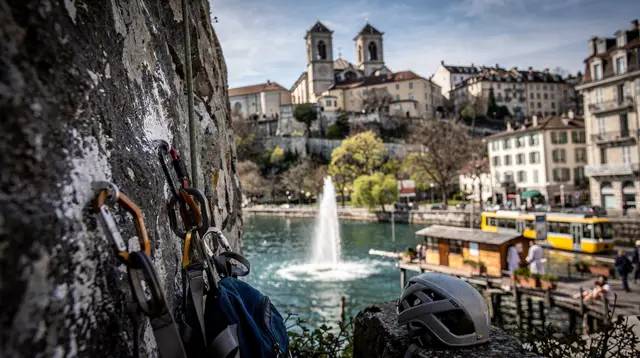
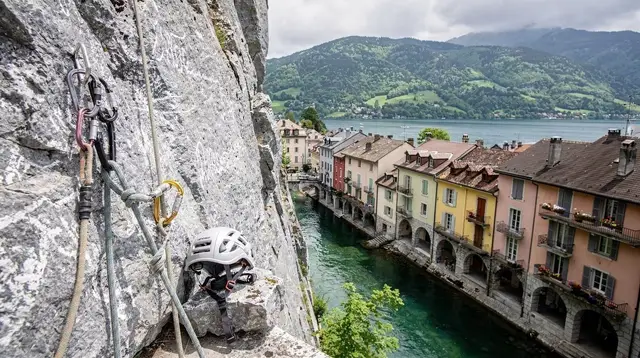
Via ferrata routes — fixed cables, rungs and ladders bolted into rock faces — let visitors experience exposed alpine climbing without needing prior technical mountaineering skills. Harnesses with via ferrata lanyards clip onto the fixed cable, so a fall is arrested rather than a genuine climbing accident, though the exposure on some sections is still real and not for anyone uncomfortable with heights.
Routes around Morzine and the wider Portes du Soleil vary from short, accessible introductions suitable for families with older children to longer, more sustained routes with sequences of ladders and suspended bridges that test stamina as well as nerve. Guided outings typically include:
- Full harness, helmet and via ferrata lanyard equipment
- A safety briefing on clipping technique before starting
- A qualified guide accompanying the group throughout
As with mountain biking, difficulty grading matters — checking a route’s rated difficulty before booking avoids signing up for something more committing than intended.
Canyoning and whitewater rafting
The rivers draining the mountains around Morzine and the neighbouring valleys create strong canyoning and rafting terrain, especially through the spring and summer meltwater season. Canyoning combines abseiling down waterfalls, jumping into plunge pools, and sliding down natural rock chutes, usually in a wetsuit with a qualified guide leading small groups through a specific gorge section.
For a gentler introduction to moving water, an introductory rafting outing paired with a Haute-Savoie apéritif combines a beginner-friendly rafting session with a relaxed regional food-and-drink stop afterward — a good option for a group that wants a taste of whitewater without the full commitment of technical canyoning. Both canyoning and rafting depend on river conditions and water levels, which shift with snowmelt and rainfall through the season, so specific dates and river choices are usually confirmed close to the activity rather than fixed months in advance.
Where to base yourself in the Portes du Soleil
Morzine itself is the natural base for most visitors: it’s the largest village in this part of the Portes du Soleil, with the widest choice of bike shops, guide offices and places to eat after a day outdoors, and both the Pléney and Avoriaz lift bases are reachable from the village centre. Two neighbouring villages offer a different flavour for those planning a longer stay:
- Avoriaz, higher up the valley, sits directly at a major lift hub and suits visitors who want to minimise transfer time between accommodation and the trailhead, at the cost of a quieter, more purpose-built resort atmosphere than Morzine’s village centre.
- Les Gets, passed on the drive in from Geneva, is another Portes du Soleil resort with its own lift-served bike terrain, and works well as an alternative base for a multi-resort trip that samples more than one valley.
Whichever village is the base, the interconnected lift pass system across the Portes du Soleil means riders are rarely limited to trails immediately above where they’re staying — the network is designed to let a single pass reach terrain across several linked resorts. Anyone weighing up whether to stay in Morzine itself versus a day-trip-only visit should also read the practical planning notes below, since the calculus changes quite a bit between an overnight stay and a single rushed day from Geneva.
Hiking as a lower-key alternative
Not every visitor to the Portes du Soleil in summer wants the intensity of downhill biking or the exposure of via ferrata. The same lift network that serves bike parks also opens up hiking terrain above the valley, with trails ranging from gentle lift-assisted rambles to longer ridge walks between Morzine and Avoriaz. It’s a useful option for a mixed group where not everyone wants to ride or climb on a given day, or for building in a recovery day between more demanding activities. For hiking terrain elsewhere in the wider Chamonix and Mont Blanc area, which has its own dedicated coverage, see the Chamonix hiking guide.
Combining Morzine with other Haute-Savoie stops
Morzine’s location puts it within reach of other Mont Blanc and Haute-Savoie highlights for visitors staying more than a day. A scenic link worth considering is a day excursion to Chamonix from the Megève area, which can be paired with a Morzine-based stay to cover both the Portes du Soleil and the Mont Blanc massif on the same trip. For a broader look at how Mont Blanc, Chamonix and the Aiguille du Midi fit together, the Chamonix and Mont Blanc excursions guide lays out the main options.
Those wanting a change of pace after an active day might also consider Megève, a short drive from Morzine, for a quieter alpine village atmosphere — see Megève’s Mont Blanc excursions for how it connects into the same region.
Practical planning notes
A few points worth keeping in mind when planning an adventure-sports trip to Morzine:
- Currency: Morzine is in France, so prices are in euros, unlike Geneva where the currency is the Swiss franc.
- Seasonality: the lift-served bike season is roughly late June to early September, but this shifts year to year — confirm current lift and trail status rather than assuming a fixed window.
- Equipment: full protective gear (helmet, body armor for biking; wetsuit for canyoning; harness for via ferrata) is standard with guided activities and rentals — check what’s included before a booking.
- Booking ahead: guided canyoning, via ferrata and rafting outings are commonly run in small groups with limited daily capacity, so booking ahead is advisable in peak summer weeks.
- Fitness level: these activities range from beginner-accessible to genuinely demanding — matching the activity grade to actual fitness and comfort with exposure or moving water avoids an unpleasant surprise partway through.
This guide covers the summer, active-sports side of Morzine specifically; for the ski season, when the same lifts and terrain serve a completely different purpose, see the dedicated Morzine winter sports guide and the destination overview for Morzine for a broader introduction to the village and valley.
None of the activities above come with a guaranteed schedule or a fixed, verified price in this guide — trail openings depend on snow and maintenance, river activities depend on water levels, and prices vary by operator and season, so treat specific figures and dates as things to confirm directly when booking rather than fixed facts.
Frequently asked questions about adventure sports in Morzine
Is Morzine in Switzerland or France?
Morzine is in France, in the Haute-Savoie department, not in Switzerland. Visitors coming from Geneva cross the Franco-Swiss border, and it’s worth carrying a passport or national ID card even though there are usually no routine checks within the Schengen Area.
How do you get to Morzine from Geneva?
By road, Morzine is a little over an hour from Geneva via Cluses and Les Gets, depending on traffic and season. There is no direct train link into the village itself, so a hire car, private transfer, or organized excursion are the practical options for most visitors.
When is the mountain biking season in Morzine?
The lift-served downhill and enduro bike season generally runs from late June to early September, though exact opening and closing dates shift from year to year depending on residual snow and lift maintenance schedules. Always confirm current lift status before planning a trip built around biking.
Do you need experience to try via ferrata or canyoning in Morzine?
No prior experience is required for introductory via ferrata routes or canyoning outings, which are typically led by qualified local guides who provide safety equipment and instruction. More committing routes and rivers are graded for intermediate or advanced participants, so it’s worth checking the difficulty level before booking.
Which lifts give access to the Morzine bike park?
The Pléney and Avoriaz lifts are the main gateways used to reach downhill and enduro mountain bike trails around Morzine without climbing under pedal power, carrying riders and bikes uphill so the descent is the main effort.
Is Morzine only a winter destination?
No. While Morzine is a well-known ski resort in winter, it runs a distinct and increasingly popular summer season built around lift-accessed mountain biking, hiking, via ferrata, canyoning and other outdoor activities in the surrounding Portes du Soleil terrain.
Can you visit Morzine as a day trip from Geneva?
Yes, a day trip is possible given the roughly hour-plus drive, but a single day only leaves time for one or two activities such as a bike park session or a canyoning outing. An overnight or multi-day stay makes more sense if the goal is combining several adventure activities without rushing.
Alpine Adventure Sports
Verified deep-linked GetYourGuide tours. Book through these links and we earn a small commission at no cost to you.
GetYourGuide does not provide a product photo for this activity — the image shows the meeting point, photographed by us.